Showing posts with label Zeitgeist alert. Show all posts
Showing posts with label Zeitgeist alert. Show all posts
Saturday, June 11, 2016
One Immigrant Who Made America Great (Books - Alexander Hamilton by Ron Chernow)

Saturday, May 10, 2014
Wet your whistle over a little science...

Thursday, November 14, 2013
At the corner of science and culture...

Jeffrey Hawkins Writer likes to say that the average drop of water entering the Mississippi River headwaters north of Minnesota will be used 11 times before it reaches the Gulf of Mexico. That drop might irrigate crops, flow through wastewater treatment plants, pour out of residential taps, move through digestive systems, arc into toilet bowls, swirl down into sewers, and then do it over again. Whatever its fate along its 2,300-mile journey South, this water will mix with all kind of chemicals, human metabolites, and unnatural compounds.
Sunday, January 13, 2013
A socio-political, musical, map that is the zeitgeist of NW London (Books - NW by Zadie Smith)

Wednesday, July 4, 2012
Positive Deviant Alert
Two positive deviants attracted my attention lately:
Natalie Angier profiled physicist Dr. Mildred Spiewak Dresselhaus, a New Yorker who defied the odds for women in science thanks to the encouragement of the Nobel laureate and medical physicist Dr. Rosalyn Yalow. She studied with Enrico Fermi at University of Chicago and then began her own research on carbon at MIT half a century ago.
Our favorite design magazine The World of Interiors, an English publication, featured an essay in the latest issue by the blogger and author of the book Spitalfields Life. Check this excellent blog out. It offers affectionate and energic appreciations of the history and contemporary culture of the hip and energetic Spitalfields neighborhood of London. The author's mission:
Natalie Angier profiled physicist Dr. Mildred Spiewak Dresselhaus, a New Yorker who defied the odds for women in science thanks to the encouragement of the Nobel laureate and medical physicist Dr. Rosalyn Yalow. She studied with Enrico Fermi at University of Chicago and then began her own research on carbon at MIT half a century ago.
Dr. Dresselhaus has also been a prominent advocate for women in physics and engineering, disciplines that are still short on high-ranking female faces and that were outright hostile to women when she began her career in the late 1950s. Even before entering science, she was well accustomed to hostility and hard times, having grown up impoverished in a rough part of the Bronx.
Our favorite design magazine The World of Interiors, an English publication, featured an essay in the latest issue by the blogger and author of the book Spitalfields Life. Check this excellent blog out. It offers affectionate and energic appreciations of the history and contemporary culture of the hip and energetic Spitalfields neighborhood of London. The author's mission:
Over the coming days, weeks, months and years, I am going to write every single day and tell you about life here in Spitalfields at the heart of London. How can I ever describe the exuberant richness and multiplicity of culture in this place to you? This is both my task and my delight.
Let me disclose to you the hare-brained ambition I am pursuing, which is to write at least ten thousand stories about Spitalfields life. At the rate of one a day, this will take approximately twenty-seven years and four months. Who knows what kind of life we shall be living in 2037 when I write my ten thousandth post?
Saturday, May 12, 2012
The costs and incentives of doing science (Books - How Economics Shapes Science by Paula Stephan)

Thursday, April 26, 2012
A cruel hand laid upon American citizens (Books - The New Jim Crow by Michelle Alexander)
 According to Michelle Alexander's The New Jim Crow: Mass Incarceration in the Age of Colorblindness, the "War on Drugs," was not waged in an effort to dispense justice to dangerous criminals, but rather to control black men by putting them behind bars and relegating them to permanent second class status upon their release. Her book is damning accusation that the execution of the drug laws has effectively continued the marginalization of black men that began with slavery, proceeded to the Jim Crow laws. The difference today is that, since many presume we have reached the colorblind nirvana dreamed of by Dr. King, this is carried out through procedures masquerading as law and race is never mentioned. Alexander's book reads less like a typical account of current affairs than a passionate case argument, a form that will come as no surprise considering her career as a civil rights lawyer and legal scholar.
Friday, March 30, 2012
What use is history? (Books - In Europe by Geert Mak)
 There is no use fixating on past mistakes, some advise. Stay in the present, say the gurus. But these approaches are anathema to the human nervous system. Even basic nervous systems use sensory equipment - eyes, ears, antennae, pressure sensors - connected to a few dozen nerves to adequately serves an organism which wishes to avoid danger, find food, or reproduce. But one advantage of having a brain is that we can accumulate information about common patterns of stimuli existing in our environment, using it to anticipate what we encounter in the future. Our brain's visual system makes
Thursday, March 22, 2012
Dastardly art about the forces that spur vioence (Film: Inglourious Basterds (2009) by Quentin Tarantino)
 Quentin Tarantino's use of violence in films like Pulp Fiction is supposed to be commentary on violence in film and television, but I have found them merely exploitative. This is not because media does not glorify violence, but because Tarantino's use of self-referential gestures and cute trademarks while using slaughter patently as entertainment is too cavalier. We already live surrounded by bloodshed - take the last 48 hours: with the murder of seven victims by a militant in Southwestern France and the outrageous shooting of an unarmed 17-year-old in Florida by a man claiming he was feeling threatened - I find the irony too disrespectful of lost lives. What the hell is so funny? So my own positive assessment of his film Inglourious Basterds (2009) surprised me.
Sunday, March 18, 2012
Who says reading is in decline?
 I was struck in reading today's New York Times that the number of pieces on reading and books must have reached some sort of critical mass. Or perhaps it was only the Times's effort to assert its own relevance?
The online edition has begun a series called Draft. It concerns the art of writing and its maiden voyage was a riffy, elegiac essay by Jhumpa Lahiri on the pleasure she finds in sentences (the written not the served kind). This was flanked in the Sunday Review by two more essays. One by Dwight Garner where the message was on the medium - what sort of reading calls for e-readers, iPads, or the printed page, he asks? He cited the recent New York Review of Books essay by novelist Tim Parks (speaking of books in the news) which championed electronic reading media as
Saturday, January 21, 2012
The alternative to positive thinking is not despair (Books - Bright-Sided by Barbara Ehrenreich) - The Tyranny of Positive Thinking I
 Barbara Ehrenreich's Bright-Sided is a feisty analysis of the American obsession with positive thinking that includes its hypothesized origins, the areas of culture that it infiltrates - big business, religion, psychology - the multi-billion dollar industry that has grown up around coaching and products to maintain that cockeyed optimism no matter what the weather tells us, a debunking of many of the beneficial outcomes claimed by proponents of positive thinking such as improved cancer prognosis or material wealth, and finally the usefulness of negative emotions, stress, and vigilance. The anecdotes as well as the facts (if you choose to listen to them) are delivered in accessible prose with a hefty dose of irony. In addition, Ehrenreich is emotionally open about the part her own experience plays with the subject she writes about as in, for example, this about her wait for test results to confirm or reject a cancer diagnosis:
Sunday, October 30, 2011
The relentless writer under the tyranny of physical paralysis (Books - The Memory Chalet by Tony Judt)
 This is the second book I have read in as many weeks in which the writing was a sheer act of will, the other being Joan Didion's A Year of Magical Thinking. The esteemed historian Tony Judt wrote the essays that became The Memory Chateau by dictating them, having become quadrapeligic due to ALS, a degenerative disease of the motor neurons that eventually killed him in 2010. What impressed me nearly as much as his perseverance while looking death squarely in the face was the fact that the form he chose was a new kind of writing for him - memoir. Given that the form of one's writing becomes a signature of our work and could be said to be integrated with our very sense of self, I thought a change in form a courageous leap so late in the game. Although one could say, that the starkly new circumstances of his disease and the mental state accompanying it necessitated such a shift. In any event, it was a highly successful one.
Friday, October 14, 2011
The usefulness of lying, genetically speaking (The Folly of Fools by Robert Trivers)
 Acerbic critique of Robert Trivers's new book on evolutionary biology Deceit and Self Deception, by Jenny Diski in The Guardian this week (hat tip: Book Slut).
 ...Now, decades on, he has arrived at a big, new universal theory, also essentially based on the arithmetic of gene selection. Deceit is useful where telling the (unpleasant) truth would hamper your progress. Progress towards what? Trivers would say your fitness, which is defined as raising the chances of replicating your genes into the next generation.
Your genes, apparently, would agree with him; but they would, wouldn't they? That is if they were capable of agreeing. I want to hang on to the fact that the building blocks of ourselves do not want or intend anything.
Sunday, August 21, 2011
On the edge of chaos and some kind of order (Books - Europa, The Great Journey, At Home in the Universe)
I have the second of my comprehensive exams coming up. Although this has not resulted in reading nothing at all, it has meant that I have not finished anything. I guess I'm a less constant reader these days. Anyhoo, I thought I'd report on what's in the works.
 Tim Parks's Europa (1997) concerns Jerry, a philandering middle-aged English professor and writer living in Milan, who considers the hash he has made of his life while he rides on a bus to the European Petition Committee to air grievances regarding his college's teaching contracts. With an international group of faculty and students who posture, who lecture, who flirt, drink, try to impress, to get into each others' pants, all while Dead Poet's Society plays on the bus video system in the background. It's written as a first-person monologue that switches from interior to exterior perspectives, a sort of string of pathetic parenthetical justifications for his screwed up marriage and loss of ambition, laced with bitter whining about "totties" who will and won't put out.
Ordinarily I detest novels with misogynist characters, set in academia (and that rules me out of quite a few). The fact that Tim Park's is himself an ex-pat Brit living in Milan translating Italian literature while teaching at a university adds an autobiographic layer that turns my impression of this book from a novel about misogynist characters to a misogynist novel, however, what I am finding impressive about the book is a) the ferocity of its voice: high-velocity sentences drive on and on in a rhythm that compels me to keep reading:
I am finding it particularly interesting how the interior personal concerns of this novel interact with the exterior, geo-political - exemplified in the seating arrangements on the coach as each rider vies to pair off with a suitable other as their roommate in the hotel that evening. It is striking me as I read that, if this were an American novel, the personal would not interact with the political but rather with the pervasive metaphor of technology or, these days, the brain. It's a different zeitgeist 14 years later. Even as I find myself liking the characters less and less, I am compelled by how Parks makes a dialogue of these two realms, and so I read on.
 Speaking of ex-pats, historian David McCullough's latest book The Greater Journey tells the story of mostly well-known American writers, painters, and doctors who came to Paris between 1830 and 1900, that is, post- Napoleon and pre-World War I, what drove them there, and how that visit contributed to what they became. As with his fantastic biography of John Adams, McCullough links places, personages, and ideas with seamless narrative that is a pleasure to read. The experience of the month-long oceanic voyage, the contrasting squalor and splendor of 1830s Paris, the cholera epidemic of 1831, are all vividly portrayed. I am finding the contrast of the shared political influences of France and the United States, what staunch allies we were, and the difference in what French and American culture value in living daily life striking, particularly in light of the recent Strauss-Kahn scandal.
 Lastly, Stuart Kauffman is feeding me lots of beautiful narrative about how a certain degree of complexity in a system can perpetuate self-organization out of initial chaos, particularly in the context of biology. In his book At Home in the Universe, Kauffman offers these self-organizing principles as endemic to all kinds of systems - economies, cultures, microscopic molecules, and macroscopic universes. He speaks particularly of when systems, such a the molecular morass that makes up the biosphere, are balanced along the edge of order and chaos and is talented at turning complex mathematical ideas into visual metaphors:
 Tim Parks's Europa (1997) concerns Jerry, a philandering middle-aged English professor and writer living in Milan, who considers the hash he has made of his life while he rides on a bus to the European Petition Committee to air grievances regarding his college's teaching contracts. With an international group of faculty and students who posture, who lecture, who flirt, drink, try to impress, to get into each others' pants, all while Dead Poet's Society plays on the bus video system in the background. It's written as a first-person monologue that switches from interior to exterior perspectives, a sort of string of pathetic parenthetical justifications for his screwed up marriage and loss of ambition, laced with bitter whining about "totties" who will and won't put out.
Ordinarily I detest novels with misogynist characters, set in academia (and that rules me out of quite a few). The fact that Tim Park's is himself an ex-pat Brit living in Milan translating Italian literature while teaching at a university adds an autobiographic layer that turns my impression of this book from a novel about misogynist characters to a misogynist novel, however, what I am finding impressive about the book is a) the ferocity of its voice: high-velocity sentences drive on and on in a rhythm that compels me to keep reading:
You should have a slug of this, boyo, Vikram Griffiths said, turning from trying to bribe the driver to take us into town in the evening of his own initiative without referring the time and expense to the coach company. You look terrible, he said, What's up? So, lying with the instinctive fluency that years of betrayal engender (and if one is lying one owes it to the world to do it well), I said the combination of the coach's movement and trying to watch Robin Williams seize the day had given me the most atrocious headache, and I told Vikram Griffiths, this feckless fragment of Empire (as he himself once described himself), this genius of broken marriage, bizarre manners and interminable good causes, this man who cam to my house just once, his dog only a puppy then, and frightened my wife with his life story - told him that I had come to the front of the coach to speak to him because I had heard, in the Chambersee Service Stations, Dimitra and Georg and her agreeing that he, Vikram, would have to be replaced, because incapable of putting a presentable face, I said (partly inventing, partly quoting), to our claims; he would make us look ridiculous, I said, they had said, with his unkempt baldness, his bushy sideburns and wild gestures.and b) while this piece often feels grossly personal either about the narrator, the writer, or both, it also manages to be a novel about the European Union. The EU, as you probably already know, is a supra-national body of independent governments charged with negotiating political and economic decisions made for the good of all its members while at the same time maintaining their autonomy. It's an arrangement that is a lot like, well, this narrator's relationships - with his employment, his marriage, his lover, his daughter. That may make it sound trite, but actually, it is a book driven by ideas while not being a book of ideas. Jerry is mostly outraged because his ex-paramour is now having an affair with someone else. The bus (a subset of the institute where he teaches) is polyglot. Everyone speaks a different language, has different priorities, and in the end they are all out for themselves, so no satisfactory union (or at least no easy union) is possible, the book seems to imply.
I am finding it particularly interesting how the interior personal concerns of this novel interact with the exterior, geo-political - exemplified in the seating arrangements on the coach as each rider vies to pair off with a suitable other as their roommate in the hotel that evening. It is striking me as I read that, if this were an American novel, the personal would not interact with the political but rather with the pervasive metaphor of technology or, these days, the brain. It's a different zeitgeist 14 years later. Even as I find myself liking the characters less and less, I am compelled by how Parks makes a dialogue of these two realms, and so I read on.
 Speaking of ex-pats, historian David McCullough's latest book The Greater Journey tells the story of mostly well-known American writers, painters, and doctors who came to Paris between 1830 and 1900, that is, post- Napoleon and pre-World War I, what drove them there, and how that visit contributed to what they became. As with his fantastic biography of John Adams, McCullough links places, personages, and ideas with seamless narrative that is a pleasure to read. The experience of the month-long oceanic voyage, the contrasting squalor and splendor of 1830s Paris, the cholera epidemic of 1831, are all vividly portrayed. I am finding the contrast of the shared political influences of France and the United States, what staunch allies we were, and the difference in what French and American culture value in living daily life striking, particularly in light of the recent Strauss-Kahn scandal.
 Lastly, Stuart Kauffman is feeding me lots of beautiful narrative about how a certain degree of complexity in a system can perpetuate self-organization out of initial chaos, particularly in the context of biology. In his book At Home in the Universe, Kauffman offers these self-organizing principles as endemic to all kinds of systems - economies, cultures, microscopic molecules, and macroscopic universes. He speaks particularly of when systems, such a the molecular morass that makes up the biosphere, are balanced along the edge of order and chaos and is talented at turning complex mathematical ideas into visual metaphors:
This poised edge of chaos is a remarkable place. It is a close cousin of recent remarkable findings in a theory physicists Per Bak, Chao Tang, and Kurt Wiesenfeld called self-organized criticality. The central image here is of a sandpile on a table onto which sand is added at a constant slow rate. Eventually, the sand piles up and avalanches begin. What one finds are lots of small avalanches and few large ones. If the size of the avalanche is plotted on the familiar x-axis of a Cartesian coordinate system [that's a conventional graph with two axes], and the number of avalanches at that size are plotted on the y-axis, a curve is obtained. The result is a relationship called a power law. The particular shape of this curve, to which we shall return in later chapters, has the stunning implication that the same-sized grain of sand can unleash small or large avalanches. Although we can say that in general there will be more tiny avalanches and only a few big landslides (that is the nature of a power-law distribution), there is no way to tell whether a particular one will be insignificant or catastrophic. ... At this poised state between order and chaos, the players cannot fortell the unfolding consequences of their actions. While there is law in the distribution of avalanche sizes that arise in the posed state, there is unpredictablility in each individual case...In other words, you are going to have to do some work to follow Kauffman's argument, he is writing at a fairly sophisticated level. But he combines complex mathematics and biology with a real appreciation for the beauty of the world, which phenomena in it can be predicted, as well as which cannot. I'm finding the reading well worth it and the concepts applicable to all sorts of observable phenomena.
Sunday, February 27, 2011
Can a computer be smart or can it only be programmed to act that way? (Books - Final Jeopardy by Stephen Baker)
 Final Jeopardy: Man vs. Maching and the Quest to know Everything concerns itself with the stunt planned by IBM to program a computer to play Jeopardy against human contestants. But Stephen Baker’s swift moving book doesn’t merely reveal backstage gossip like why the computer was named Watson or who designed his 'face,' the real reason to read this book is the story Baker tells about the nature of intelligence and whether machines can possess and use it.
Baker, as IBM did, used the contest as a scaffold. For IBM this narrowed the scope of their research and imposed a schedule. For Baker it lent his narrative thrust toward a conspicuous end. It's almost a shame that we know the outcome, the contest having already been aired, but Baker writes well enough to squeeze suspense out of the story by connecting us to the stakes experienced by scientist David Ferrucci, and his team of programmers, designers, former Jeopardy contestants, and, of course, the public relations armies for IBM and Jeopardy.
I enjoyed Baker's lay-descriptions of the evolution of computing machines and how they differ from human brains: what kind of knowledge goes into them, what sorts of computations can be expected of them, what kinds of mistakes they make, how computers can learn and how we, in turn, can learn about the nature of intelligence through the exercise of programming them to do so.
For certain types of questions, Ferrucci said, a search engine could come up with answers. These were simple sentences with concrete results, what he and his team called factoids. For example: "What is the tallest mountain in Africa?" A search engine would pick out the three key words from that sentence and in a fraction of a second suggest Kenya's 19,340-foot-high Kilimanjaro. This worked, Ferrucci said, for about 30 percent of Jeopardy questions. But performance at that low level would condemn Watson to defeat at the hands of human amateurs.
Baker is adept at explaining how fact-based knowledge can be stored in and retrieved from the neural networks of the human brain. Key to his story about so-called artificial intelligence, he makes clear the difference between designing a machine that actually performs the steps of human-like cognitive processes in a silicon medium rather than an organic one versus one that looks as though it is problem-solving like a person, but is actually coming up with the answer via different processes.
Equally interesting was the discussion Baker's book provokes about what knowledge is for. This highlights the poverty of Ferrucci's tightly-focused imagination.
"You can probably fit all the books that are on sale on about two terabytes that you can buy at OfficeMax for a couple of hundred dollars. You get every book. Every. Single. Book. Now what do you do? You can't read them all! What I want the computer to do," he went on, "is to read them for me and tell me what they're about, and answer my questions about them. I want this for all information. I want machines to read, understand, summarize, describe the themes, and do the analysis so that I can take advantage of all the knowledge that's out there. We human's need help. I know I do!"Actually, you can't get all the information period, and the best computer can't either, so calm down, David. Knowledge is not just possessing facts, nor is it analyzing them. Analysis takes place at multiple levels. Merely determining which units within a narrative are the facts is itself analysis. And just what are facts: what are the facts of Oliver Twist, for example? Is Fagin a fact? Is the theft of a pocket handkerchief a fact? Is “some more?” Facts and the juicy stuff that can be derived from them are determined by an intersection with the point-of-view of the individual using them.
To be fair, Ferrucci understands these limitations and his project embraces the challenge of finding a solution. Ultimately, the machines that we can imagine now will likely be better at generating lists for hypothesis development than they will be at making inferential leaps. The gains made in problem solving by sudden departures from the knowledge tree or standard method are legendary - that's the 'creative' part of creative problem solving and is the very stuff of the creative leap that so often precedes a solution.
Other scientists, such as Joshua Tenebaum at MIT think that one day computers will generate concepts and make inductive leaps, but that is hard to imagine reading Baker’s account of parsing the words of a single Jeopardy question well enough to determine the category of knowledge to search (let alone to answer it). A great deal more than computing speed is necessary before computers can accurately comprehend human emotion, make inferences, and take control from their inventors like Hal in 2001: A Space Odyssey. Tenenbaum said it best:
"If you want to compare [artificial intelligence] to the space program, we're at Galileo," Tenenbaum said. "We're not yet at Newton."Baker's book is thoughtful, informative, and really amusing, without being pseudo-science. I'm passing my copy along to my Uncle who was a contestant on Jeopardy in the 1970s. I think he should get a kick out of it.
Tuesday, September 14, 2010
Struggling to matter with one eye on the clock (Books - A Visit From the Goon Squad by Jennifer Egan)
 Will Blythe in the New York Times Book Review thought it was "pitch perfect." Oprah called it a tour de force. Even Mookse and Gripes liked it. It is Jennifer Egan's new metafiction of linked-stories, a concoction about the passing of time and how money can't buy you love or a sense of purpose - A Visit From the Goon Squad. At its center are two mismatched survivors. Sasha, whose deep reservoir of loss originating in her teenage years made her grow up too soon (as the Elvis Costello song Goon Squad would have it) and have turned her into a kleptomaniac; ... and Bennie, an aging rock-and-roller whose refusal to grow up as he grew old has has left him loveless.
Each of the desperate souls in Egan's modern melange struggle to make their lives matter with, again with a nod to Elvis Costello, one eye on the clock.
"I'll check the bathroom," she told Alex, and forced herself to walk slowly around the elevator bank. The bathroom was empty. Sasha opened her purse, took out the wallet, unearthed her vial of Xanax, and popped one between her teeth. They worked faster if you chewed them. As the caustic taste flooded her mouth, she scanned the room, trying to decide where to ditch the wallet: In the stall? Under the sink? The decision paralyzed her. She had to do this right, to emerge unscathed, and if she could, if she did - she had a frenzied sense of making a promise to Coz.
The bathroom door opened, and the woman walked in . Her frantic eyes met Sasha's in the bathroom mirror: narrow, green equally frantic. There was a pause during which Sasha felt that she was being confronted; the woman knew, had known all along. Sasha handed her the wallet. She saw, from the woman's stunned expression, that she was wrong.
"I'm sorry," Sasha said quickly. "It's a problem I have."[...]
Bennie's assistant, Sasha, brought him coffee: cream and two sugars. He shimmied a tiny red enameled box from his pocket, popped the tricky latch, pinched a few gold flakes between his trembling fingers, and released them into his cup. He'd begun this regimen two months ago, after reading in a book on Aztec medicine that gold and coffee together were believed to ensure sexual potency. Bennie's goal was more basic than potency: sex drive, his own having mysteriously expired. He wasn't sure quite when or quite why this had happened: The divorce from Stephanie? The battle over Christopher? Having recently turned forty-four? The tender, circular burns on his left forearm, sustain at "The Party," a recent debacle engineered by none other than Stephanie's former boss, who was now doing jail time?The bright, angular specifics of Egan's observations and the rock-and-roll tempo of her writing supplies that frenzy her characters are caught up in. The point-of-view is a 20th-century, George Eliotish, all-knowing-eye that alternately offers the reader brilliant snapshots of the media-happy, magical-thinking zeitgeist of our own time, or of past episodes that were its antecedents. Character is, to my eye, Egan's strong suit. In A Visit From the Goon Squad they are imagined in multiple time frames, sometimes introducing us first to their present and then going back into the past. At others she slips into the very marrow of a new character - a fifty-something down-and-out rocker, a has-been PR doyen, or the adolescent son of an aging rocker - and then catapults us forward in time with one of those Eliotish observations of what will happen that just knocks the breath out of you. She uses character's psyches as the engine of their actions. Her diction is literate and distinctive, but this can be the magic ingredient that weaves the spell as much as the one that breaks it. For example, I love her use of the word "shimmied" above to perfectly capture the movement of the box in a words that also describes a dance move I associate with 1960s rock-and-roll. More rarely, as for example during a particularly formative episode in Sasha's past when Egan writes that a character "origamis" himself through a living room window, I want to scream at the use of a writerly verb at the expense of my involvement. There isn't any doubt she can write:
The gold landed on the coffee's milky surface and spun wildly. Bennie was mesmerized by this spinning, which he took as evidence of the explosive gold-coffee chemistry. A frenzy of activity that had mostly led him in circles: wasn't that a fairly accurate description of lust?
It's all still there: the pool with its blue and yellow tiles from Portugal, water laughing softly down a black stone wall. The house is the same, except quiet. The quiet makes no sense. Never gas? Overdoses? Mass arrests? I wonder as we follow a maid through a curve of carpeted rooms, the pool blinking at us past every window. What else could have stopped the unstoppable parties?Stunning, no?
But it's nothing like that. Twenty years have passed.
Egan is at her most effective in this book when she weaves such an enveloping spell. She can also be hilarious, as in a chapter about a washed-up PR queen trying to revive the career of a despotic military dictator via a media campaign with a talentless B-movie star. I find her less so when she plays meta-fictional charades with forays into second-person narrative voice, celebrity journalism with foot notes, and chapters written as Power Point presentations - touches I may well have liked better if I had read these chapters as separate stories. But this book intends to mock the means it employs and sometimes those risks pay off. Egan uses hyperbole to communicate that hype does not equal content. She hops frenziedly from form to form teaching us that being busy is not happiness. Egan's book weaves together multiple layers of time and form that succeed in conveying the complexity of Egan's vision without explaining it to death however, at the end of the day, I would say that the book impressed me and challenged me more than it moved me.
Tuesday, August 31, 2010
Hurrah for positive deviance
 Just a quickie today to say, if you haven't seen the piece in the Science Times on clinician and researcher Dr. Donald Redelmeier, take a look. I have a thing for people who can not just think out of the box (because that can be as hasty and end up as wrong as sticking with cherished notions - just because you think something or belive something doesn't make it true) but those who bother to question accepted wisdom and who put their hunches to the test. Here is one of those positive deviants that our belief-obsessed world so desperately needs in a nicely written profile by Katie Hafner.
Friday, August 27, 2010
Correcting our misinterpretations of the world (Books - Full House by Stephen Jay Gould)
 As a working scientist, Stephen Jay Gould had a good deal of practice thinking about trends in the natural world in the language of statistics. Statistics get a bad rap as merely a fancy way to lie, but really they are a system of tools that allows us to infer the likelihood of something occurring in our world as a rule (and hence in the future) given what has already happened before in some subset of that world. For example, the likelihood that Drug X will cure a case of malaria can't be tested in the abstract, it must be tested by actually administering the drug to a group of people with malaria for, say, two weeks. At the end of that period, the number of people who survived or succumbed to the disease are counted. But we still don't know everything because a certain portion of any group would live or die anyway, those numbers will be estimated by comparing them to a group who does not receive the drug. This group should, if they are like most, have the same chance of living or dying as the other group. Then we can begin to infer how many people as a rule will survive because of the drug. Some math is applied to adapt the number from that small group and apply it to everyone, since it is impossible to give everyone the drug. The result is stated as a probability, the language of science, as it acknowledges the ubiquity of error and the inferential nature of estimates, as we can never know all the cases of anything.
Paleontologist, biologist, and science writer Gould was diagnosed with peritoneal mesothelioma at age 40, a disease with the median mortality rate of eight months. As most general readers of probablistic statements would, Gould first interpreted this statistic to mean he was likely to be dead in eight months however, his training as a scientist made him think twice about this interpretation of the median or the mid point of a group of numbers. This is one of three ways statistics describe the central tendency of any group of numbers - baseball scores, people who earn $30,000/year or more, people who will vote for Charlie Rangel in the next election, etc. Central tendencies are statistics way of summarizing what is usual in nature with one number. However, after thinking, Gould realized:
I am not a measure of central tendency, either mean or median. I am one single human being with mesothelioma, and I want a best assessment of my own chances - for I have personal decisions to make, and my business cannot be dictated by abstract averages. I need to place myself in the most probable region of the variation based upon particulars of my own case; I must not simply assume that my personal fate will correspond to some measure of central tendency.Full House is a 190-page disquisition of what one might assume to be dry and obscure notions - means, modes and medians, spreads of scores, skewed averages - but because they spring from a personal confrontation with mortality as well as Gould's love of baseball, and because they are written in Gould's down-to-earth prose, this book is anything but dry. It is a lively, entertaining narrative on our tendency to misinterpret the world given our misunderstandings about what statistics are telling us. The writing is cogent, the format concise, and the references various as they are learned. Plato, Shakespeare, Huxley, Darwin, nameless drunks weaving down the sidewalk, Bill Gates, and the Brooklyn Dodgers all put in an appearance in Gould's attempt to make plain to the lay-reader concepts like measures of excellence, the likelihood of survival, or whether development - of skills or species - means a trend toward greater complexity or less. These phenomena are continually misrepresented in everyday conversation and reporting about our world, sometimes unintentionally and sometimes with malice aforethought. If you have ever wanted a better understanding the daily missives we receive in the language of probability through our senses or our news sources then read this book. The next time I teach a class which would benefit from an understanding of statistics, Full House is going to be required reading.
Sunday, June 13, 2010
Battle of the brains...
 I haven't actually read Nicholas Carr's new book yet - The Shallows: What the Internet is Doing to Our Brains, but as far as I have heard in two interviews with the author, the book is an expansion on his 2008 article Is Google Making Us Stupid? - Magazine - The Atlantic? It explores the impact of recent information technology on our intellects. The reviews I have read stress that the book is non-polemic and balanced argument but that hasn't stopped others from getting their knickers twisted in a knot. Steven Pinker offered a short, worthwhile counter-argument in this week's New York Times. Yes, the brain has and will continue to evolve in relation to the media in which it is steeped. We certainly cannot stop that process. Is Carr just in mourning for the change he fears because his business is narrative? Is he Chicken Little or does he have a valid point? Brains are admittedly diverse in their ability to concentrate broadly versus deeply. That would be true with or without the internet. Most people are in the middle of the curve. At each extreme end of that continuum is a cognitive style that is the hallmark of a diagnosable condition - Attention Deficit Disorder is characterized by (among other things) an inability to sustain attention on one point for an extended period of time. On the other end are Autistic Spectrum Disorders which are characterized by (among other things) a cognitive style that gets involved more deeply in details than the gist of things, and those on the spectrum generally have a harder time shifting from one point of concentration to another. Each of those cognitive styles has its assets and liabilities. Your technology-addled brain is here reading my blog, but this is a bookish blog and therefore you probably also manage to concentrate on a fair bit of full-length narrative, so have you read Carr's book? Will you? Personal feelings are not study data but what do you think?
Tuesday, May 18, 2010
Things are looking up!
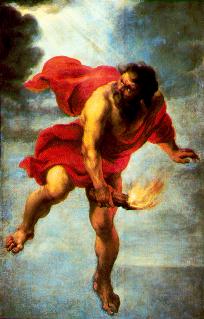 Good news! John Tierney has an article in today's Science Times on Matt Ridley's new book The Rational Optimist. Its thesis is that homo sapiens are unique not because of bigger brains, nor because of our ability to cooperate, but rather because we created ways to exchange goods and information.
"The extraordinary promise of this event was that Adam potentially now had access to objects he did not know how to make or find; and so did Oz," Dr. Ridley writes. People traded good, services, and most important, knowledge, creating a collective intelligence..."This lead to circulating the knowledge of domesticating crops, the development of alphabets, and number systems and, Ridley argues, the creation of measured time, because the worth of a good or service was measured in how long a person would have to work to pay for it. One might also argue that it circulated small pox and MacDonald's but that isn't mentioned.
"The modern world is a history of ideas meeting, mixing, mating and mutating and the reason that economic growth has accelerated so in the past two centuries is down to the fact that ideas have been mixing more than ever before."His prediction is the spread of prosperity and happiness and the decrease of disease and violence. I will have to read the book to find out how he goes from point A to point B, and Tierney's piece certainly makes me want to, but I am not sure how mixing inevitably leads only to the progress of good things and the decrease of bad. One might argue that innovation is more likely to diffuse information, that is, that it will spread randomly until it becomes equally distributed. Is knowing more always better? The myth of Prometheus, pictured above, argued otherwise. What happens when bad things spread? The spread of what knowledge we have is inevitable, but is the eternal increase of knowledge inevitably positive? What happens the day that that knowledge includes the certainty of the destruction of our planet or the extinction of our species? But Ridley is a wonderful thinker and writer and amidst crashing markets, bombings, and the growth of the Tea Party, some unbridled optimism is welcome.
Subscribe to:
Posts (Atom)