Three family sagas are the subject of this post. What I like about this form is the intertwining of the characters' narratives with a sense of place and time. When it works well, I experience both the familiarity of people wanting, thinking and behaving, and the distance of an unfamiliar time and which gradually lessens, becoming more and more like my own. Sybille Bedford's A Legacy (Counterpoint, 1956, 1999) set in late 19th and early 20th century Germany, Naguib Mahfouz's Palace Walk (Doubleday, 1956, 1990) set in early 20th century Cairo, and Angela Flournoy's accomplished debut The Turner House, (Houghton Mifflin Harcourt, 2015) set in past and present day Detroit.
Saturday, May 23, 2015
Past inhabits present in the lives of 3 families (Books - The Turner House by Angela Flournoy; A Legacy by Sybille Bedford; & Palace Walk by Naguib Mahfouz)
Three family sagas are the subject of this post. What I like about this form is the intertwining of the characters' narratives with a sense of place and time. When it works well, I experience both the familiarity of people wanting, thinking and behaving, and the distance of an unfamiliar time and which gradually lessens, becoming more and more like my own. Sybille Bedford's A Legacy (Counterpoint, 1956, 1999) set in late 19th and early 20th century Germany, Naguib Mahfouz's Palace Walk (Doubleday, 1956, 1990) set in early 20th century Cairo, and Angela Flournoy's accomplished debut The Turner House, (Houghton Mifflin Harcourt, 2015) set in past and present day Detroit.

Saturday, May 16, 2015
Two formative men of the American Theatre (Books - A Life by Elia Kazan & Tennessee Williams: Mad Pilgrimage of the Flesh by John Lahr)

 The life stories of two American Theatre makers monopolized my reading back in January: Elia Kazan: A Life, film and theatre director Kazan's hefty, probing memoir (Alfred A. Knopf, 1988) and Tennessee Williams: Mad Pilgrimage of the Flesh (W.W. Norton & Co. 2014), John Lahr's deftly paced, thoroughly researched, deeply perceptive biography of the great playwright. Two men could not have had a greater influence on the structure and build of action, the feeling of innocence and epiphany, the rhapsodic music of text, the themes of individuality and of sex that were the coming-of-age of the American theatre and film in the 1930s - 1970s, than Williams and Kazan. Two men could not have been more superficially different - Kazan was the son of Greek immigrants, born in Turkey, a scrappy fighter, and relentless womanizer, Williams a grandson of an American preacher, delicate, gay, a virgin until twenty-six years of age - but fundamentally they were remarkably similar. Aside from their obvious love of theatre, both seemed dissatisfied with the restrictions of their world, were driven to create theatre to give veiled expression to a deep sense of personal failure, both felt outsiders and compulsively pursued relief in work or, failing that, one from drink and the other from sex. John Lahr's quotes a letter from Williams to Kazan:
Friday, March 20, 2015
3-D tour through brain space for Brain Awareness Week

I talked to curious students about the Brain at BiobBase yesterday and took a really amazing tour through a 3-D brain in a planetarium...no, really. Check out my Brain Awareness Week blog by clicking here and scrolling down.
Thursday, March 12, 2015
Improvisation in the Sciences - improvisations on a panel discussion for Brain Awareness Week 2015)
 | ||||
When I heard that the opening event of Brain Awareness Week this year was on the theme of improvisation and involved arts and science, I knew that I wanted to be the one to report on it. I decided to do this blog as an improvisation; that is what follows.
Improvisation 1
I am riding the subway on my way to Improvisation in the Sciences at Columbia. It’s the first event of Brain Awareness Week and involves musicians and scientists. Given the theme, and since I am both an artist and neuroscientist, I decided to improvise this blog, a little experiment. I’m feeling a bit nervous, like I’m performing myself. Before I left my apartment, I sat down to play a sonata on the piano, I thought it would get me in the mood but I was interrupted by a phone call letting me know that the subways were delayed. I ran out of the house. Having stopped the sonata in the middle, the strains are repeating unresolved in my mind’s ear. I am anticipating music on the program, but it probably won’t be this kind of music.
Sunday, March 1, 2015
Whimsy in the face of chaos as Russian history repeats itself (Books & Opera - The Spectre of Alexander Wolf by Gaito Gazdanov, There Once Lived a Mother.... by Ludmilla Petrushevskaya, Lady Macbeth of Mtsensk by Dmitri Shotakovch)
Today, as more than 50,000 Russians march to honor Boris Y. Nemtsov, the Putin critic who was assassinated a few days ago, it seems timely to consider some of the art made in the context of Soviet and Russian regimes, which may be different for the name they give their ruler but seem alike in their repression of opposing views. While Putin is stripping off his
shirt and getting into bed with the oligarchs, politically repressing
homosexuals, and annexing Crimea as the Empress Catherine the Great did before him, I read The Spectre of Alexander Wolf, written by Gaito Gazdanov, a Russian living in Paris in the late 1940s, Ludmilla Petrushevskaya's There Once Live a Mother Who Loved her Children, Until They Moved Back In, three novellas about Soviet Life written between 1988 and 2002, and I saw the 1934 Shotakovich opera Lady Macbeth of Mtsensk at the Metropolitan Opera.
These three works plumb life's extremities, attempting the creation of some kind of meaning in the face of the suffering endured by the artist. So we can thank repressive regimes for that literary construct we call the Russian soul. Each of these works express deep longing for something better.
These three works plumb life's extremities, attempting the creation of some kind of meaning in the face of the suffering endured by the artist. So we can thank repressive regimes for that literary construct we call the Russian soul. Each of these works express deep longing for something better.
Tuesday, December 23, 2014
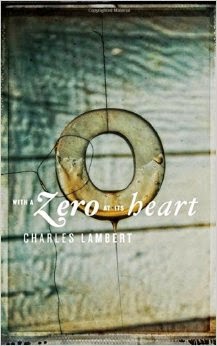
Brief flashes of memory creating the beauty of what has passed anew (Books - With a Zero at its Heart by Charles Lambert)
Saturday, November 29, 2014
Screwball comedy in 1980s New York (Books - Missing Reels by Farran Smith Nehme)

It was introduced by film writer Farran Smith Nehme on the release of her novel Missing Reels (Overlook Press, 2014), thank you, Overlook, for my copy. One could almost call the event reverse product placement. Rather than the film including the book, the book mentions The Awful Truth (and sooooo many other vintage films) in its pages, and occasioned this screening. But really, the film could not be better advertisement for Smith Nehme's entertaining novel which is part mystery, part romance, part love letter to vintage films, and a genuinely good time. The time? 1980s. The place? New York City, but this is a NYC without cell phones, without Disney in Times Square, a NYC that had payphones and vintage movie houses. I used to go to them all - The Regency, Carnegie Hall Cinema, St. Mark's Cinema, The Thalia - and see not just one classic film, but usually a double feature! Aaah, those were the days.
Saturday, November 22, 2014
Two Political Dramas in One New York Weekend (Theatre - The Death of Klinghoffer & Sticks and Bones)
Some question the relevance of live theatrical performance in the age of Tivo and live streaming, but you wouldn't if you had seen two productions we attended, one off-Broadway and the other at the Metropolitan Opera. The New Group's production of David Rabe's 1971 Sticks and Bones is a still-fresh indictment of American hypocrisy, while the 1991 The Death of Klinghoffer by John Adams and Alice Goodman, although an over-literal production fails to ignite the material, is still resonant, especially in its having been mounted against the fear (unfounded) that its content would be incendiary fodder for anti-Semites.
 First the opera. It is based on the 1985 hijacking of a cruise ship by Palestinians. The American, British and Jewish passengers are taken hostage, and a wheelchair-bound Jewish man is murdered. The ship's captain, rather than reporting the killing and trading lives for demands, reports to the authorities that nothing has occurred, forestalling escalation and letting the hijackers go free. It's a tactical decision, not a referendum on the value of a man's life. One could say that the captain chose not to value Klinghoffer's life more than that of any other passenger. As played by Paulo Szot, it was not a choice the captain took lightly. Of course, that doesn't make it any more tolerable for Klinghoffer's loved ones.
Monday, November 17, 2014
Ted at TED-Ed - on the brain, naturally.
I recently co-created a neuroscience lesson for TED-Ed. It just went live. Check us out!
Friday, October 31, 2014
Distinguishing between data & interpretation in popular science can help the public learn to think about the evidence (Books - The Organized Mind by Daniel J. Levitin)

Pop-neuroscience satisfies this expectation with books falling somewhere between science and self-help. Daniel J. Levitin's The Organized Mind (Dutton, 2014) creatively hews to this formula. I thank Dutton, a Penguin imprint, for my copy. Of course the popularity of science, is not all bad. It is wonderful to have the ear of non-scientists and encouraging that interest requires that the public enter the discussion somewhere. But books that realistically convey how experimental outcomes find their way into the fund of general knowledge are in short supply. The wider the dissemination of half-baked knowledge, the more discerning the eager-to-consume non-scientist must become. In this age in which everything from raw experimental data and top notch interpretation to crackpot appropriation of small study outcomes and outright lies are easily available on line, and look superficially the same, the scientist has a responsibility to help the public develop a critical eye.
Tuesday, October 21, 2014
Giving beauty and form to the inexplicable (Books - The Narrow Road to the Deep North by Richard Flanagan)

Sunday, October 19, 2014
An addiction to betrayal (Books - A Spy Among Friends by Ben Macintyre)

Two middle-aged spies are sitting in an apartment in the Christian Quarter, sipping tea and lying courteously to each other, as evening approaches. They are English - so English that the habit of politeness that binds them together and keeps them apart never falters for a moment. The sounds of the street waft up through the open window, car horns and horses' hooves mingling with the clink of china and the murmured voices. A microphone, cunningly concealed beneath the sofa, picks up the conversation and passes it along a wire, through a small hole in the wainscoting, and into the next room, where a third man sits hunched over a turning tape recorder, straining to make out the words through Bakelite headphones.So begins Ben Macintyre's atmospheric, brisk paced A Spy Among Friends: Kim Philby and The Great Betrayal (Crown, 2014). You can read this book as fascinating political history, or as a thriller that just happens to be true, but I read it as a book about character. Kim Philby and his close friend Nicholas Elliott went to English public school together, Cambridge together, and went into intelligence in MI6 together following World War II. Elliott became a company man who climbed the ranks of British intelligence, while Philby infiltrated himself deeper and deeper into the circles of power. He stints included several years in Washington D.C. at the height of the Cold War. At that time he managed to befriend CIA Counterintelligence head James Angleton, a man known for paranoiac secrecy. All the while he communicated everything he knew about British and American plans to Russian intelligence. Philby made a hash of key British and American maneuvers for decades. He did it without a computer, zip line, disguise, or walkie-talkie watch, and for years few people thought to give him a second look.
The two men are old friends, They have known each other for nearly thirty years. But they are bitter foes now, combatants on opposing sides of a brutal conflict.
Saturday, October 18, 2014
When even magic is not enough (Books - The Magician's Land by Lev Grossman)

Sunday, October 12, 2014
A son and historian's attempt to understand the world of his father (Books - Year Zero by Ian Buruma)

The story of postwar 1945 is in some ways a very old one. The ancient Greeks knew well the destructive force of the human thirst for revenge, and their tragedians dramatized ways in which blood feuds might be overcome by the rule of law; trials instead of vendetta. And history, in the East no less that the West, is littered with dreams of starting afresh, of treating the ruins of war as an open building site of societies based on new ideas, which were often not as new as people thought.
Saturday, September 20, 2014
Two short comedies on knowing oneself and being known by others (Books - The Uncommon Reader & The Laying on of Hands by Alan Bennett)

When Virginia Woolf collected her essays on the uses of reading (the Elizabethans, Montaigne, Austen, etc) in a volume she called The Common Reader in 1925, she commenced
There is a sentence in Dr. Johnson's Life of Gray which might well be written up in all those rooms, too humble to be called libraries, yet full of books, where the pursuit of reading is carried on by private people. "...I rejoice to concur with the common reader; for by the common sense of readers, uncorrupted by literary prejudices, after all the refinements of subtilty and the dogmatism of learning, must be generally decided all claim to poetical honours." It defines their qualities; it dignifies their aims; it bestows upon a pursuit which devours a great deal of time, and is yet apt to leave behind it nothing very substantial, the sanction of the great man's approval.
The common reader, as Dr. Johnson implies differs from the critic and the scholar. He is worse educated, and nature has not gifted him so generously. He reads for his own pleasure rather than to impart knowledge or correct the opinions of others. Above all, he is guided by an instinct to create for himself, out of whatever odds and ends he can come by, some kind of whole - a portrait of a man, a sketch of an age, a theory of the art of writing...
Woolf's unassuming introduction to her essays is something of a pretense. Woolf as a woman of her time and of certain means, was meant to occupy herself with her appearance and her household. She did not attend Cambridge like her brother, but her father's library permitted her to educate herself liberally, and her tongue is fully planted in her cheek in calling her opinions common while, at the same time publishing them. Remember that even in the hallucinations produced by Woolf's mental illness, the birds spoke in Greek. Alan Bennett's novella The Uncommon Reader (Picador, 2007) continues the joke by imagining it's way into the experience of another reader possessed of no ordinary library, whose standing might be described as anything but humble, and whose life is among the least private of any person's on earth. Yet for all that, she has acquired a habit, perhaps out of professional obligation, of not be too interested in any one thing more than another.
Sunday, September 14, 2014
Bringing order out of chaos in Wisconsin by way of the Soviet gulag (Books - The Mathematician's Shiva by Stuart Rojstaczer)

Saturday, August 16, 2014
Longing for a world both near and far (Books - The Emigrants by W.S. Sebald)

Sunday, July 27, 2014
Hating often, easily, and beautifully (Books - Dept. of Speculation by Jenny Offill)

My plan was to never get married. I was going to be an art monster instead. Women almost never become art monsters because art monsters only concern themselves with art, never mundane things. Nabokov didn't even fold his own umbrella. Vera licked his stamps for him.
Tuesday, July 8, 2014
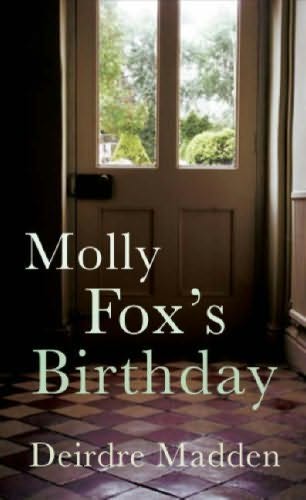
Only through time time is conquered (Books - Time Present and Time Past by Deirdre Madden)

Saturday, July 5, 2014
Today's brilliance is brought to you by the letter "S" - a meme
I couldn't resist playing along with a meme I saw at Danielle's and Stefanie's blogs. Danielle gave me my algorithmically generated (and therefore not completely random) letter of the alphabet, and I am charged with telling you my favorite book, author, song, film, and object beginning with that letter, as well as telling you that I will happily generate a letter for you if you would like to play along. Just leave a request in the comments.
Book
 A favorite book beginning with 's' is Sonya Hartnett's Surrender. She is a lyrical, imaginative, and thematically serious Australian author who, although she writes books for young people, assumes them to be mature and intelligent readers. Surrender is a suspenseful, veiled, poetic tale related by two first-person narrators - an angel and a demon.
Author
 I think I'll go with May Sarton, poet, diarist, and novelist. This underappreciated American writer has long been a favorite of mine. I wrote about her 1955 Faithful are the Wounds for the 2007 Outmoded Author's Challenge.
Song
The second of Richard Strauss's Four Last Songs - 'September.' Sung here by Renee Fleming.
 Film
Film
Michel Gondry's fantasmagorical low-tech The Science of Sleep in which Gael Garcia Bernal is delightful.
 Object
If you are an asparagus fan, as I am, you will certainly never want to be without your spargel schäler. This highly specific kitchen utensil, mine was made in Germany, so I call it by its German name. It is specifically designed to trim and peel asparagus. If you manage not to overcook them, they come out perfectly every time.
Care to play along? Leave me a comment and I'll give you a letter.
Book
Author
I think I'll go with May Sarton, poet, diarist, and novelist. This underappreciated American writer has long been a favorite of mine. I wrote about her 1955 Faithful are the Wounds for the 2007 Outmoded Author's Challenge. Song
The second of Richard Strauss's Four Last Songs - 'September.' Sung here by Renee Fleming.
Michel Gondry's fantasmagorical low-tech The Science of Sleep in which Gael Garcia Bernal is delightful.
If you are an asparagus fan, as I am, you will certainly never want to be without your spargel schäler. This highly specific kitchen utensil, mine was made in Germany, so I call it by its German name. It is specifically designed to trim and peel asparagus. If you manage not to overcook them, they come out perfectly every time.
Care to play along? Leave me a comment and I'll give you a letter.
Subscribe to:
Posts (Atom)