Showing posts with label Glorious New York. Show all posts

Saturday, April 5, 2014

A delayed account of bookeywookey's New York cultural wanderings (Books - The View from the Tower, Robert Oppenheimer, Night in Shanghai) (Film - Les Petits Mouchoirs) (Art - Gaugin, Sonnabend, and Jasper Johns)


I have gotten hopelessly behind with a regular accounting of my reading this year, never mind the theatre, films, operas, and exhibits that make up my New York life.  Take this week.  I finished the new Charles Lambert thriller The View from the Tower which I heartily enjoyed (I'll link the post when I write it).  I dipped again into Ray Monk's Robert Oppenheimer: A Life Inside the Center, a biography of the influential physicist which I have had going since late last year.  While Monk makes the case for an interesting life full of internal conflict, his rendering is too comprehensive.  You lose the forest for the trees, the forest in this case, being the narrative throughline.  I'm disappointed by biographies that seem to be nothing more than repositories for the totality of an author's research plopped on the page in chronological order, rather than the crafting of a narrative which has an opinion about that life.  To be fair, Monk has a strong point of view about Oppenheimer's judaism which, he asserts was repressed and the source of tremendous interior conflict,however, that opinion fails to cull his narrative.

I started and gave up on Night in Shanghai (thank you Henry Holt for this copy) which was promising for its setting in 1930s Shanghai and the way the author Nicole Mones created atmosphere, but I couldn't for the life of me keep track of the characters.  The unfamiliar language impeded my remembering who was who and my lack of historical knowledge added to my difficulty remembering which side of the nationalist versus communist struggle they were on, so I couldn't follow what motivated the plot and, unfortunately, I lost the thread.  The sense of place was successfully pervasive and the writing entertaining, so don't let my faulty memory discourage you.

I went to the Antiquarian Book Fair yesterday, which, given the average price of the items displayed there was more of an antique book museum for me.  I came across a novel by Tennessee Williams I had never heard of called Moise and the World of Reason and would have bought the beautiful first edition if I had had $295 to spare.

I then wandered down to MOMA where I saw a very interesting exhibit of Gauguin's prints, how they interacted with his painting, a show whose theme was the gallerist Ileana Sonnabend and the works she brought to public attention at her Paris and New York galleries.  I have to say I found this more interesting for its history than likeable for the work in it.  I also saw a small exhibit of Jasper John's latest works: Regrets, based on a photograph of Lucien Freud.  Small, tightly curated shows are always my preference.  I didn't merely enjoy the work for itself, I appreciated how the prints and paintings on grew from the original photograph, which is also on display. This is a show that's about creative process more than anything, and how the act of an artist doing something as a result of their experience of some source, becomes the seed of new work. Wonderful show.

Finally, I made my chilly, rainy way home, poured a glass of red wine, got under a blanket and watched Guillaume Canet's 2010 Les Petits Mouchoirs; the English title is Little Whie Lies. This is a French Big Chill, complete with a tight ensemble cast of solid actors, great music choices, and a somewhat sentimental story of a group of middle aged friends minus one.  The love and pathos of old friendships is beautifully captured by the cast in that undemonstrative way that French films are so good at, where people seem like people because they are free to feel but not getting off on showing you that they can.  Be prepared to use at least one mouchoir if you're at all moved during films.

Wednesday, February 13, 2013

The solo voice in NYC


The 105th Helicon Symposium, a series of salon-like chamber music concerts in intimate settings, presented solo works by Bach, including Johnny Gandelsman playing the Chaconne from the violin Partita #2 in D Minor. It's meditation listening to an extended piece for a single instrument while New York's own never-ending score plays in the background.


Brooklyn Rider
The Knights

Sunday, August 1, 2010

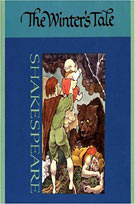
More than just speaking the speech (Theatre - The Winter's Tale by William Shakespeare)

A bunch of us did a quintessential summer in New York thing Saturday. We waited on line in Central Park for free tickets for Shakespeare in the Park. There are two shows to see. One of them is the line. The cast: New Yorkers - interested in what's going on in their city, always the expert on it, not too nosy, generally respectful of the rules (you have to be in a city of 8 million people). There were Risk players, people playing guitar quietly to themselves, nappers, those studying up for the play, those who brought their New York Times (half of it is printed Saturday), their laptops, library book readers, bookstore book readers, kindle readers, those who brought their picnic (us - whole wheat french bread with nutella, and fruit), and those who called the local deli which actually delivers to the line. They sat on benches, lay on blankets, reclined in beach chairs, and snoozed on inflatable mattresses. There were the line monitors employed by the theatre, the tourists capturing the line on their video cameras, the saxophonist playing Mozart and Cole Porter, and the conspiracy theorist parading up and down the line playing for our sympathy. Then, of course, there was also The Winters Tale by William Shakespeare.

I would call The Winter's Tale Shakespeare's redemptive comedy. It offers one of the most complex plot of any of his plays, probably his strongest female character (Paulina), and it could perhaps be thought a more "modern" play in that the dramatic situation and character trump the beauty of poetry. While I could take a bath in the language of Shakespeare's Richard II or Antony and Cleopatra, one cannot get away with just 'speaking the speech' in this play. In it Leontes, a king, is visited by his childhood friend Polixenes. He becomes rabidly suspicious that his queen Hermione is having an affair with Polixenes and eventually condemns her to death and banishes her newborn child. The child is taken away by a trusted servant and grows up the daughter of a peasant in Polixenes's country named Perdita. She eventually falls in love with Florizel, the son of Polixenes. Meanwhile, Leontes becomes a penitent and Paulina, unbeknownst to any soul, has kept Hermione alive. 16 years pass and this time it is Polixenes who becomes angry when he discovers his son wishes to marry a peasant. So the former advisor to Leontes brings the couple back to Leontes's country where the peasant is revealed as Leontes daughter, Paulina brings Hermione back to life, and the two kings are reunited in friendship, the two children marry. The end.

I find this tale of unrestrained impulse turning to regret one of Shakespeare's deepest and most touching. The plays success relies on the arc of Leontes's feelings being deeply and believably invested by the human being that plays him and in this director Michael Greif was unlucky with the casting of Ruben Santiago-Hudson who strutted about with his heart empty of anything that Shakespeare asks for, apparently unaware that he was asked to do more than speak the words loudly and clearly with some variation in inflection. The fact the playing space was well designed, making good use of the Delacorte theatre's outdoor setting, that Marianne Jean-Baptiste gave a strong performance as Paulina, that Perdita was played with intelligence and vulnerability by Heather Lind, and that Tom Kitt composed a lovely score, played live didn't matter in the end because Leonte's grief is the spine of this play. The one turn that saved the evening for me were the antics of Hamish Linklater as the clown Autolycus. He brought the text to life with colloquial ease, was responsive in the moment to what is going on around him, and filled himself with the circumstances of his character, ridiculous as those are. Usually the stagebusiness of Autolycus who is not only a rustic clown but also a conman, pickpocketing everyone around him, takes up so much energy that I don't know who the man actually is. Not in this case. Linklater seems born to the stage. His performance exuded joy. I'm looking forward to seeing him play Bassanio to Al Pacino's Shylock when the other play of this summer's season, The Merchant of Venice, transfers to Broadway later this season.

Sunday, April 4, 2010

Glorious New York update, gallery hopping, book hopping, book shopping, collapsing in a heap...

What a glorious New York day I had yesterday! Had brunch with a friend in from L.A. Then met The Ragazzo and we walked the Highline (left), an innovative urban landscape made from a disused elevated structure used for unloading freight train cars in the 1930s, with native plantings, viewing areas of New York streets, places to sit and enjoy a picnic or a read. On your next trip to NYC, be sure to walk it.

Departing the Highline in the West 20s, we went gallery hopping - there are a couple of hundred galleries in the Chelsea neighborhood. Highlights were a Patrick Pietropoli show at Axelle Galerie, he paints wonderful Canaletto influenced contemporary cityscapes, as well as a group show at Gallery Henoch. I particularly enjoyed the work of Richard Combes (left) and Steve Smulka (below).


It was but a short walk to Three Lives Bookstore - my favorite. And then we dropped exhaustedly into two seats at Cafe Loup, for a cozy dinner and home to read and rest my weary feet.

I'm working on a pile of books right now and spent time last night with three of them. Antony Beevor is known for bringing World War II history to vivid life through his writing. The Fall of Berlin 1945 is a fascinating subject, but I find I just cannot get my head around history when it involves endlessly moving battalions around. I don't know if I'm going to make it through this one, although I don't think its any fault of Mr. Beevor's. I suppose some people probably feel the same way reading about the brain.

Thomas Mann's The Magic Mountain continues to amuse. Hans Castorp is thoroughly ensconced in the Davos sanitorium, having been upgraded from visitor to patient. In the days before antibiotics, tuberculosis treatment consisted of rest, food, and fresh air (and usually eventually dying of the disease). Think lying about in blankets, a few x-rays, frustrated romance, and much philosophizing.

I received an ARC of Howard Norman's new novel What is Left the Daughter, due out this summer. I am making slow progress through what amounts to a literary legacy written as a long letter from father to daughter that is intended to lay bare long kept secrets. The form of address is personal yet the writing of the events is distant. I'm finding the disconnect is leaving me feeling uninvested, but I will read on.

I'm looking forward to a few new treasures. Sarah's Key by Tatiana de Rosnay is a novel set in Nazi occupied Paris and, judging from the rapt reading of the woman across from me on the subway the other day, is an enveloping read. The Master and His Emissary: The Divided Brain and the Making of the Western World by Iain McGilchrist sees Western culture as having evolved the way it has due to the assymetrically divided human brain. When in doubt, just chalk everything up to the "split brain." This looks to either be a fascinating and original take on history or the kind of book that will make me want to scream. Obviously I am hoping it will be the latter. I'm also looking forward to Richard Bausch's new collection of stories: Something is Out There. I read bits of them one day in a bookstore and was hooked instantaneously.

And how was your weekend?

Monday, September 7, 2009

New York, the ecosystem

It is not usual for me to think of the island I live on (Manhattan) as an ecosystem, but whether an environment is urban or rural it is still made up of flora and fauna, its materials exist uncultivated or are put to use as food, shelter, clothes, and means of travel. I live in an ecosystem as much as the next kangaroo and Manahatta, an exhibit currently on at The Museum of the City of New York, means to encourage its visitors to occupy that point of view for a while. It projects the viewer back to Manhattan in 1609 before Henry Hudson arrived, when it was inhabited by the Lenape people, forward to our own time, and beyond to a possible version of Manhattan in 2409. It's interactive maps let you view the island city block-by-city block, with every buildings and subway stations visible, or to see its many plants, its voles, bear, and bird species, where its springs and streams were, and where the Lenape had their trails to walk from camp to camp. Whether you live nearby or are coming for a visit (prior to mid October), I found it a provocative view of a place I generally think of very differently. If you can't make it, Manahatta is also a book and a website. Come and meet New York - the ecological community.

Saturday, April 4, 2009

Red rooms, red poems, read books....

A fabulous New York night yesterday with my fabumanic old friend Shiela. After four hours of neurosicence, I headed down to the East Village to bar KGB, Soviet themed, as it sounds. Old Russian posters on the red, red walls, Baltika beer served in large bottles, and what looked suspiciously like a painting of my favorite film director - Nikita Mikhailkov - (if you haven't seen Anna or Burnt by the Sun, put them on your list!). Anyhoo, we were there for not for the fabulous red wine, nor for the fabulous red atmosphere, but for a reading by Red Hen Press authors which included Ernest Hilbert reading from his accessible and thoughtful Sixty Sonnets, and Timothy Green reading, among other things, his breathless American Fractal, which I loved. There was also a short story from Greg Sanders's Motel Girl about a woman and a bear she rescues from a Moscow circus (appropriately enough) that was touching and memorable. Tapas,more wine, and much conversation followed - a great evening. Thanks Sheila! (You can see pictures over at her place).

This week has also brought some new reads. From the library come Kissing Doorknobs and Total Constant Order, both YA novels about obsessive compulsive disorder, on which I'm doing a presentation for school. I also received The Lunar Men in the mail. It is by Jenny Uglow and concerns the Lunar Society, a group of experimenters and creative thinkers who met regularly in late 18th Century England. It included James Watt - the inventor of the steam engine, Erasmus Darwin - poet and inventor, and Joseph Priestley - scientist and political and religious radical who I just learned about in Steven Johnson's book The Invention of Air. In fact, it is from that book that I learned about this one, which will probably end up on the summer reading list given what I have to do before the semester is over.


I also picked up and started Will Lavender's Obedience, which is another college campus thriller in the vein of Donna Tartt's The Secret History or Barry McCrea's The First Verse. It concerns a logic class offered as a thought experiment in, well, obedience. Given the frequent mentions of Stanley Milgram, famous for social psychology experiments testing people's willingness to listen to authority, I have a feeling I know where this one is going. I would not describe the writing as long on subtlety, but I bought it for the plot, which does really keep things moving. I also bought a copy of Cynthia Ozick's The Puttermesser Papers. I have only read the occasional short story of Ozick's in The New Yorker. I have never actually read a novel and thought it was high time. Mark Sarvas thinks she's the cats meow, so what more can you ask? And a lovely Persephone Classics edition of Little Boy Lost by Marghanita Laski also caught my eye. I had never heard of Laski or any of her novels, written in the 1950s. I have only sampled a couple of pages, but the story of a lost child in post-war France and the taut writing really have my interest piqued. And finally An Equal Stillness by Francesca Kay, a recommendation of Cornflower Books', and I Haven't Dreamed of Flying for a While by Taichi Yamada, which writer Junot Diaz talked about in a radio interview, are also on their way. An embarrassment of riches.

Monday, August 11, 2008

Cultural prescription vs seeing art for pleasure (Other culture - Dali and Kirschner at MOMA)


From MOMA's website


We visited The Museum of Modern Art (MOMA) yesterday and took in three exhibits - one on the architecture of modular housing which was fairly interesting, the giant Dali exhibit which I found an unfocused monster of a show, and the highlight for me: Kirschner and the Berlin Street. With shows like the Dali, I cannot understand what anyone finds pleasurable about them. One room after another was as crowded with canvases, boxes, and articles on the wall as the viewers were in the room. The conceit was to tie together his paintings and his film designs but as usual in these blockbuster shows, too many works meant I was able to see almost nothing at all. These big shows featuring popular artists end up attracting so many people to the gallery that we stood three deep to glance at little canvases hung too closely. Families line up with their children offering this experience as a kind of cultural prescription - no wonder there is so little appreciation for art in the U.S.

In stark contrast to the Dali was the tightly focused Kirschner and the Berlin Street, I knew I would like it just comparing the on-line descriptions of the two shows. The first thing you learn about the Dali in the intro is that it features 130 of his paintings. Wow - and how many cans of paint did he use to paint them? The exhibit of German expressionist Ernst Kirschner chooses only works painted or drawn between 1913 and 1915. They feature evocations of Berlin that narrow the streets with an angular perspective seeming to cut at the viewer like knives. The acid colors and 'primitivist' influence tell a story of a violent end to bourgeois politesse and places the prostitutes and dancers of the city center stage as World War I encroaches on an old way of life. It's ironic that the critics of the day (members of the bourgeoisie themselves) called these works primitive, as the paintings called to mind African masks, sculpture and dance that were making their way into the awareness of twentieth century artists. World War I would seem to indicate that the bourgeoisie were no less primitive. In this exhibit, boldly drawn lithographs, vivid paintings, and sketchbooks sit side-by-side so that you can see an evolution from rough idea to finished work. One can comfortably walk through the rooms in half an hour if one chooses and Kirschner, not having been in the employ of Warner Brothers, although well attended did not attract nearly the number of viewers the Dali did so you could actually see the paintings. Having just a few themes to focus on and a reasonable number of works spaced comfortably on the walls, one could string together one's own narrative and move back and forth among the images to relate vision and theme. The show is on through November 10.

Sunday, April 20, 2008

Spring has sprung!


Out for a walk today...the park in walking distance from our apartment is in full bloom!

Sunday, January 13, 2008

Bookish New York


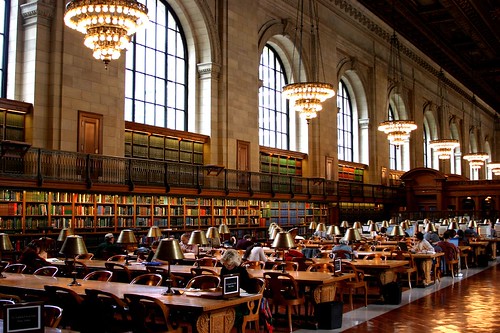
If and when any of you bookish types visit my fair city, today's New York Times has an article about the jewels in the crown of our library system. The big 42nd Street branch really is worth a look. Both it and the Performing Arts Library at Lincoln Center offer exhibits that are usually interesting AND (a big plus in NYC) it's free, free, free. The Morgan Library isn't bad either and they're all way less crowded than the Met Museum or Times Square.

Sunday, November 4, 2007

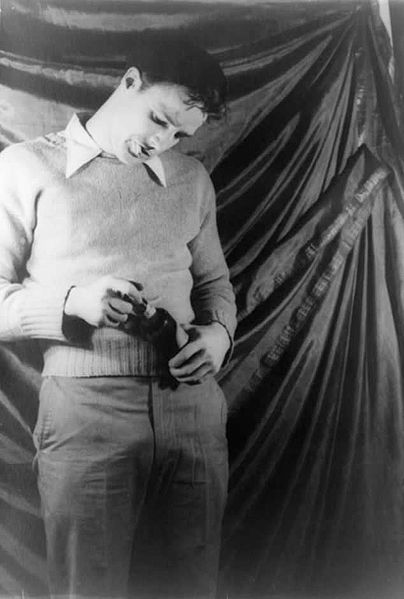
The Automat is Gone And So is Brando - Does That Really Mean That Broadway Is Dead?


If you are a fan of theater or of acting, Broadway The Golden Age is a not-to-be-missed love song to the Broadway of the 1940s, 50s, and 60s. It consists of reminiscences of many people of the theater - Ben Gazzara, Hal Prince, Stephen Sondheim, Mary Rodgers, Lanie Kazan, Angela Lansbury, Elizabeth Ashley, Maureen Stapleton, Anne Margaret, Martin Landau, Kaye Ballard, Uta Hagen, Frank Langella, Gena Rowlands, John Raitt, Barbara Cook, Elaine Stritch - I could go on and on.

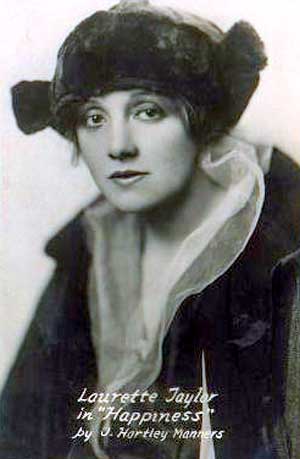
The anecdotes are marvelous and, as usual, I wish there had been more actual footage to accompany them - although there are some gems - Brando in Streetcar on sound recording, footage of Kim Stanley in Bus Stop and a short moment from Lee Strassberg's production of Three Sisters with Stanley, Geraldine Page, and Sandy Dennis (Stanely's reaction to Vershinin leaving in the last act is one of the most devastating things I have ever watched), and a Hollywood screen test of the legendary Laurette Taylor, most remembered for creating the role of Amanda Wingfield in The Glass Menagerie. Her performance in that play and in Outward Bound have had such profound impact on those that saw them that the shock waves still seem to ripple down Broadway. I somehow feel I can get close to what that must have been like just by watching Ben Gazzara, and Maureen Stapleton tear-up as they remembered the multiple times they returned to the theater to watch her. Although it made me almost fiercely jealous too. I wanted to be there. I recalled as I watched it some of the memorable performances I have seen - John Raitt in Carousel (even in the 1960s, he was still fantastic in the revival), Maureen Stapleton as Birdie in Little Foxes, Roger Rees as Hamlet, Angela Lansbury in Sweeny Todd (wow), I'll even say Liev Shreiber in Betrayal, and of course the great Geraldine Page in everything I saw her in, on stage that included Agnes of God, Clarence, Viva Vivat Regina, and The Madwoman of Chaillot.

I found myself agreeing with some of the film's outlook - the golden age is dead, it will never come again, Broadway is all hype and helicopters now, it's impersonal, it's too expensive, the theater is not an integrated part of our culture any more, microphones ruin all the music. Yes it's all true. I mourn it. Miss Saigon is not West Side Story. Just the little clips we got of the golden oldies had me in tears sometimes with their immediacy, the guts that seemed to pour off the television screen, but it made me kind of resentful too - are there any great theatrical experiences out there? I've seen some, although I tend to see them off-Broadway now or in Europe. There was a part of the nostalgia of the film maker - a kid who was hoping to find 1940s Broadway when he came to New York from Indiana in the 1980s - that just struck me as whiny. Alright, coffee cost a nickel - I get it already. There are no more automats - I liked them too. Times change. We still drink coffee. We still like it. We can never see Brando as Stanley - is the theater really dead?

Anyway, what is marvelous about the film are the stories and the clips, so if you love the theater - I recommend it.


Friday, November 2, 2007

Greenwich Village Halloween Parade


Brian at New York Daily Photo has posted a selection of his photos from the NYC Halloween Parade! Feast your eyes.

Tuesday, October 23, 2007

Imagine that

Varsity Aesthete emailed me about a place called Philoctetes here in NYC. I had never heard of it but apparently they explore imagination and creativity via a multidisciplinary approach. Thanks, VA. They are having an event this Thursday evening (check the above link for details) about hyper and hypographia - the first is when you can't stop writing and the second is when you can't start (familiarly known as writer's block). Guests including among others a neurologist, an architect and the novelist Jonathan Lethem. So if you're in the neighborhood check them out; I will be studying for an exam on Friday so you won't find me there, but if you go let me know what they're like.

Monday, October 15, 2007

How to get your child to eat vegeteables

For a continuation of today's culinary theme (see below) head over to New York Daily Photo today for purple cauliflower and other evidence of the lushness of the Union Square greenmarket. A great alternative to Times Square for your next visit to New York. If your child won't eat anything green you could always put veggies that look like they've been dipped in finger paints on the menu and see if that will sway them.
Friday, September 28, 2007

The Gardens of NYC

Speaking of inflorescences (my regular Friday poetry post, in case you're unfamiliar) today's New York Daily Photo has a piece about New York City's little and little-known gardens. They are one of the pleasures of our concrete jungle. If you're ever visiting, for Pete's sake don't only walk around Times Square and eat expensive corned beef sandwiches - there is much beauty in New York - and some of it is even free.

Friday, September 21, 2007

Picture of the day


Margaret Bourke-White's portrait of the Chrysler Building - is there any building that better exemplifies the romance of New York?

Monday, August 13, 2007

Home is where the books are


As a companion piece to Matt's post about those who buys books by the yard, here's a lovely story by Jim Dwyer from Saturday's New York Times about a man whose home is books - Kurt Thometz. And I didn't know this was possible, he owns a New York book store I have never heard of - Jumel Terrace Books. It's in a neighborhood full of gorgeous old homes and lovely gardens, that receives little traffic by those who visit New York - North Harlem. There's also a tie-in with one of this blog's topics as Mr. Thometz son, Adam, is said to have autism:
By the age of 5, Adam had not yet spoken an intelligible word - not Mommy, not Daddy, not milk or no. Mr. Thometz read to him every night for two and a hlaf years. With Adam in the crook of his arm, the weight of the day on him, Mr. Thometz was reading Thomas the Tank Engine for the 200th time.

"Henry the engine," he read.

"Green," Adam interrupted.

Yes: the proper name was Henry the Green engine. Mr. Thometz had dropped the word. "He supplied it,k" Mr. Thometz said. "It was the first time he had used a word on purpose." And it was the first rung on the ladder he climbed from his isolation.

This is not a story of scientific explanation - I don't know how or by whom his son was diagnosed, etc., and the reading is not discussed as formal "treatment." But it is a lovely story about a man persisting and finally reaching across the divide to his son with the power of a story.

Friday, August 10, 2007

Frank O'Hara redux - because too much was never enough for him


POEM
"A la recherche de Gertrude Stein"

When I am feeling depressed and anxious and sullen
all you have to do is take your clothes off
and all is wiped away revealing life's tenderness
that we are flesh and breathe and are near us
as you are really as you are I become as I
really am alive and knowing vaguely what is
and what is important to me above the intrusions
of incident and accidental relationships
which have nothing to do with my life

when I am in your presence I feel life is strong
and will defeat all its enemies and all of mine
and all of yours and yours in you and mine in me
sick logic and feeble reasoning are cured
by the perfect symmetry of your arms and legs
spread out making an eternal circle together
creating a golden pillar beside the Atlantic
the faint line of hair dividing your torso
gives my mind rest and emotions their release
into the infinite air where since once we are
together we always will be in this life come what may


POEM

Light clarity avocado salad in the morning
after all the terrible things I do how amazing it is
to find forgiveness and love, not even forgiveness
since what is done is done and forgiveness isn't love
and love is love nothing can ever go wrong
though things can get irritating boring and dispensable
(in the imagination) but not really for love
though a block away you feel distant the mere presence
changes everything like a chemical dropped on a paper
and all thoughts disappear in a strange quiet excitement
I am sure of nothing but his, intensified by breathing

Sunday, June 10, 2007

Paris and Berlin, Desire and Bohemians


After working at the lab this morning, yes on Sunday, I paid a visit to one of my favorite places - Three Lives, a real old fashioned bookshop. I can never resist paying them a visit, even if only to browse, which is rarely the case anyway. Today was no exception. Books are so appetizing in that setting. Having read a post about Julio Cortazar's Hopscotch by JCR on Frequency of Silence, I bought it. I've meant to read it for years and the description of a writer living in Paris, his Bohemian friends, and his return to Buenos Aires - where I very much want to visit - were too much for me to resist. Artists on the left Bank in 1920s Paris, 1950s Paris - whenever in Paris - that's always been my exemplar of romantic. Sigh.

Three Lives has a knowledgeable staff and boasts a recommended books table, I always like the personal touch. I picked up Seven Lies by James Lasdun, which tell of an East German who maintains a fantasy of going to America. It looks like an enticing combination of political novel, story of longing, and thriller. Now when, amidst the 9 books left on my summer reading challenge and my 50 articles on autism, I'm going to read these is a different matter.

We met friends for tea afterward at an unlikely find in the old meatpacking district - now filled with trendy restaurants and expensive boutiques. Arium has about 100 kinds of tea and lots of dainty food, so if you're into tea at all, as I am, it's a lot of fun. Tried a new white tea called snow dragon which tastes like apricots and smoke, which is a good thing.