1. What did you do in 2011 that you’d never done before?
Published an article in a science journal.
Showing posts with label silly memes. Show all posts
Showing posts with label silly memes. Show all posts
Sunday, January 1, 2012
2011 - the year that was... (A meme)
Happy 2012. I got this meme from Katherine, who, she tells us, is always walking into things, well into bookstores anyway.

Sunday, May 1, 2011
Four things...
- Seller of typewriter ribbons and office supplies on the phone - yuck
- Charge box office at Lincoln Center
- Lab assistant to a parasitologist (feed and anesthetize the snails...no really)
- Teaching acting to opera singers
- A Room with a View
- Diner
- Fanny and Alexander
- Burnt by the Sun
- Waltham, Massachusetts
- Chicago, Illinois
- Milwaukee, Wisconsin
- Pittsburgh, Pennsylvania
- Angel of Repose by Wallace Stegner
- Brideshead Revisited by Evelyn Waugh
- Howard's End by E. M. Forster
- The Great Gatsby by F. Scott Fitzgerald
- Skagen, Denmark
- Amsterdam, Holland
- St. Paul de Vence, France (but anywhere in Provence, really)
- Berlin, Germany
- Olives
- Cheese
- Sushi
- very dark and bitter chocolate
- Red wine from Bordeaux
- Really great black coffee
- Green tea
- Rivella (rot)
- In a garden in the Cotswolds after a hike and tea
- In a certain hotel room in Granada, Spain looking up from my book at the Alhambra any time I feel like it.
- In Engelberg, Switzerland, gazing at the mountains
- in a theatre
Four Things That Are Very Special in My Life:
- The Ragazzo
- family
- friends
- that I'm getting a chance to go back to school after a whole career and do something different
Friday, December 31, 2010
2010 in review
Now a tradition (although I had to be reminded by Pete), the first lines of the first post of each month in 2010...
January
Typically, the new year is rung in here with friends and fondue but The Ragazzo has been so sick that he was in bed and I celebrated by doing the laundry, watching a video, and going to bed at 10:30. Woo- hoo. Hope you brought in 2010 with more appropriate pomp.
February
Raise High the Roofbeams Carpenter & Seymour and Franny & Zooey are some of my favorite writing ever (J.D. Salinger, those italics were for you). By now, most inveterate readers have heard that J. D. Salinger died last week at the age of 91.
March
Rodolfo Llinas's 2001 book, i of the vortex attempts to bridge our knowledge about the concepts of mind and self and our knowledge about brain cells.
April


I do not remember a time when I couldn't read. My earliest reading memories are the books I loved as a child - The Snowy Day, Little Blue and Little Yellow, I am a Bunny, The Little Bear. Even though in some of those memories I was read to and in some I held the book, they all seem to my current memory to be memories of reading the books myself.
May
In anticipation of writing about Anita Brookner's precisely observed, and sardonic The Debut in the coming days, here is a Paris Review interview with her from 1987. Very exacting in her moral outlook and somewhat rigid in her thinking, she started writing novels in her 50s and has produced one per year.
June
Hmmm, so much for checking in... Returned today from points both Mid Atlantic and Midwest. A little road trip starting in Wisconsin, through Illinois and Indiana, Kentucky, West Virginia, ending up in Pennsylvania at a great little log cabin/b&b. Much seeing of friends and family, (and one fellow book blogger!), and a little bit of post-semester relaxation on our own as well.
July
It was probably a good year-and-a-half ago that Dovegreyreader conducted a wonderful interview with author Charles Lambert where I learned of his collection of stories The Scent of Cinnamon and his novel Little Monsters. I bought the second and for some reason it then festered on my TBR pile unread. Then a few weeks ago I heard described a new novel that Lambert had written set in Italy. I immediately ordered Any Human Face, it arrived this week and I glanced at the first page Thursday evening, becoming instantly hooked.
August
A bunch of us did a quintessential summer in New York thing Saturday. We waited on line in Central Park for free tickets for Shakespeare in the Park. There are two shows to see. One of them is the line. The cast: New Yorkers - interested in what's going on in their city, always the expert on it, not too nosy, generally respectful of the rules (you have to be in a city of 8 million people). There were Risk players, people playing guitar quietly to themselves, nappers, those studying up for the play, those who brought their New York Times (half of it is printed Saturday), their laptops, library book readers, bookstore book readers, kindle readers, those who brought their picnic (us - whole wheat french bread with nutella, and fruit), and those who called the local deli which actually delivers to the line. They sat on benches, lay on blankets, reclined in beach chairs, and snoozed on inflatable mattresses. There were the line monitors employed by the theatre, the tourists capturing the line on their video cameras, the saxophonist playing Mozart and Cole Porter, and the conspiracy theorist parading up and down the line playing for our sympathy. Then, of course, there was also The Winters Tale by William Shakespeare.
September
English-born historian and travel writer William Dalrymple has spent 25 years writing about Asia, particularly India. His Nine Lives bemoans the erosion of the many idiosyncratic and little-known practices of faith, some ascetic, some hedonistic, some bloody, some obsessively non-violent, some monotheistic, others pantheistic, that have co-existed in the region comprising India, Pakistan, and Tibet. One price of the region's modernization is the homogenization of these traditions.
October
As far as I am concerned, a vacation is an opportunity to read away from the typical pressures of life, acquire new books at bookstores I've never been to, take a look at the books in the libraries of the b&bs we stay at, and get through my stack of old New Yorker and New York Times Book Reviews to get new ideas for reading I want to do. In fact, a vacation is not a vacation for me if I can't read.
November
The folks at Edify Media were kind enough to send me an copy of Frank Cottrell Boyce's novel for young readers (8 - 12 says the marketing) - Cosmic.
December
Usually the word bestseller sends me running for cover (I'm such a snob), and I no longer remember what lead me to Nicole Krauss's The History of Love, but it is smashing.
January
Typically, the new year is rung in here with friends and fondue but The Ragazzo has been so sick that he was in bed and I celebrated by doing the laundry, watching a video, and going to bed at 10:30. Woo- hoo. Hope you brought in 2010 with more appropriate pomp.
February
Raise High the Roofbeams Carpenter & Seymour and Franny & Zooey are some of my favorite writing ever (J.D. Salinger, those italics were for you). By now, most inveterate readers have heard that J. D. Salinger died last week at the age of 91.
March
Rodolfo Llinas's 2001 book, i of the vortex attempts to bridge our knowledge about the concepts of mind and self and our knowledge about brain cells.
April


I do not remember a time when I couldn't read. My earliest reading memories are the books I loved as a child - The Snowy Day, Little Blue and Little Yellow, I am a Bunny, The Little Bear. Even though in some of those memories I was read to and in some I held the book, they all seem to my current memory to be memories of reading the books myself.
May
In anticipation of writing about Anita Brookner's precisely observed, and sardonic The Debut in the coming days, here is a Paris Review interview with her from 1987. Very exacting in her moral outlook and somewhat rigid in her thinking, she started writing novels in her 50s and has produced one per year.
June
Hmmm, so much for checking in... Returned today from points both Mid Atlantic and Midwest. A little road trip starting in Wisconsin, through Illinois and Indiana, Kentucky, West Virginia, ending up in Pennsylvania at a great little log cabin/b&b. Much seeing of friends and family, (and one fellow book blogger!), and a little bit of post-semester relaxation on our own as well.
July
It was probably a good year-and-a-half ago that Dovegreyreader conducted a wonderful interview with author Charles Lambert where I learned of his collection of stories The Scent of Cinnamon and his novel Little Monsters. I bought the second and for some reason it then festered on my TBR pile unread. Then a few weeks ago I heard described a new novel that Lambert had written set in Italy. I immediately ordered Any Human Face, it arrived this week and I glanced at the first page Thursday evening, becoming instantly hooked.
August
A bunch of us did a quintessential summer in New York thing Saturday. We waited on line in Central Park for free tickets for Shakespeare in the Park. There are two shows to see. One of them is the line. The cast: New Yorkers - interested in what's going on in their city, always the expert on it, not too nosy, generally respectful of the rules (you have to be in a city of 8 million people). There were Risk players, people playing guitar quietly to themselves, nappers, those studying up for the play, those who brought their New York Times (half of it is printed Saturday), their laptops, library book readers, bookstore book readers, kindle readers, those who brought their picnic (us - whole wheat french bread with nutella, and fruit), and those who called the local deli which actually delivers to the line. They sat on benches, lay on blankets, reclined in beach chairs, and snoozed on inflatable mattresses. There were the line monitors employed by the theatre, the tourists capturing the line on their video cameras, the saxophonist playing Mozart and Cole Porter, and the conspiracy theorist parading up and down the line playing for our sympathy. Then, of course, there was also The Winters Tale by William Shakespeare.
September
English-born historian and travel writer William Dalrymple has spent 25 years writing about Asia, particularly India. His Nine Lives bemoans the erosion of the many idiosyncratic and little-known practices of faith, some ascetic, some hedonistic, some bloody, some obsessively non-violent, some monotheistic, others pantheistic, that have co-existed in the region comprising India, Pakistan, and Tibet. One price of the region's modernization is the homogenization of these traditions.
October
As far as I am concerned, a vacation is an opportunity to read away from the typical pressures of life, acquire new books at bookstores I've never been to, take a look at the books in the libraries of the b&bs we stay at, and get through my stack of old New Yorker and New York Times Book Reviews to get new ideas for reading I want to do. In fact, a vacation is not a vacation for me if I can't read.
November
The folks at Edify Media were kind enough to send me an copy of Frank Cottrell Boyce's novel for young readers (8 - 12 says the marketing) - Cosmic.
Mom, Dad - if you're listening - you know I said I was going to the South Lakeland Outdoor Activity Center with the school?
To be completely honest, I'm not exactly in the Lake District.
To be completely honest, I'm more sort of in space.
I'm on this rocket, the Infinite Possibility. I'm about two hundred thousand miles above the surface of the Earth. I'm all right . . . ish.
December
Usually the word bestseller sends me running for cover (I'm such a snob), and I no longer remember what lead me to Nicole Krauss's The History of Love, but it is smashing.
Thursday, July 15, 2010
Hot enough for you...?
Well, folks, I don’t know about where you are, but right here, it’s HOT. So … when you think about “hot reading,” what does that make you think of? Beach reading? Steamy romances? Books that take place in hot climates? Or cold ones?
It's hot here too and that doesn't lead me to think of a particular genre but rather of just one book and one scene in that book:The next day was broiling, almost the last, certainly the warmest, of the summer. As my train emerged from the tunnel into sunlight, only the hot whistles of the National Biscuit Company broke the simmering hush at noon. The straw seats of the car hovered on the edge of combustion; the woman next to me perspired delicately for a while into her white shirtwaist and then, as her newspaper dampened under her fingers, lapsed despairingly into deep heat with a desolate cry. Her pocket-book slapped to the floor.
"Oh my!" she gasped.
I picked it up with a weary bend and handed it back to her holding it at arm's length and by the extreme tip of the corners to indicate that I had no designs upon it - but every one near by, including the woman, suspected me just the same.
[...]
"The master's body!" roared the butler into the mouthpiece. "I'm sorry Madame but we can't furnish it - it's far too hot to touch this noon!"
What he really said was "Yes,...Yes...I'll see."
He set down the receiver and came toward us, glistening slightly, to take our stiff straw hats.
"Madame expects you in the salon!" he cried, needlessly indicating the direction. In this heat every extra gesture was an affront to the common store of life.
The room, shadowed well with awnings, was dark and cool. Daisy and Jordan lay upon an enormous couch, like silver idols, weighing down their own white dresses against the singing breeze of the fans.
"We can't move," they said together.
Jordan's fingers, powdered white over their tan, rested for a moment in mine.
"And Mr. Thomas Buchanan, the athlete?" I inquired. Simultaneously I heard his voice, gruff, muffled, husky, at the hall telephone.
Gatsby stood in the center of the crimson carpet and gazed around with fascinated eyes. Daisy watched him and laughed her sweet exciting laugh; a tiny gust of powder rose from her bosom into the air.
"The rumor is," whispered Jordan, "that that's Tom's girl on the telephone."
If you hadn't realized it at first, you have probably figured out by now that this is from F. Scott Fitzgerald's The Great Gatsby. It is THE hot scene in a novel, in my estimation. As I was walking in the 103 degree heat last week, I thought of Daisy and Jordan lying on their sofa with the fans whirring saying, "it's too hot to move." Later they all decide to drive into town (New York City) and go to the Plaza Hotel and Daisy wants to "hire five bathrooms and take cold baths," and that turns into an idea to have mind juleps. The heat, not only of the weather, but of the story with Daisy's dangerous affair with Gatsby coming to the boiling point. Such a fantastic book; there are scenes in it I can touch they are so real to me, and this is one of them.
Thursday, June 24, 2010
More news than the news...
Do you read book reviews? Do you let them change your mind about reading/not reading a particular book?
Do I read reviews? Are you kidding? I write them, I had better read them. I read book reviews, theatre reviews, film reviews, music reviews, visual arts reviews and I read both the finer art of professional criticism and the opinions of my fellow enthusiastic amateurs. I read them for three reasons: 1) to become a better critic and reader myself; 2) to offer some structure and alternative point of view for my own opinion (if I have already read or seen the piece) or to advise me as to whether to read it or see it or listen to it, but with performing arts I do this less often. As I have been a professional in the field I often already know what I want to see and might save a review to read after I've seen it. Although, when I am visiting another city and want to see something I most certainly read the papers and the Time Out equivalent for suggestions. With books, I am interested in the recommendations of my fellow bloggers. That's part of the fun of being in this community, and over the years I have learned whose opinion is most often like my own. 3) Most importantly, I read reviews as a news source - a zeitgeist meter. The book review is the first section I go for in the Sunday paper. If I'm spending time in England, I'll read The London Review of Books. Once I'm done with graduate school, I will renew my subscription to The New York Review of Books. The books that are written in a time, and the opinion of contemporary writers and thinkers about them are a record of what our society is thinking about. I consider it more news than the news. I certainly trust it over any American television news source which, these days, is little more than packaged entertainment. Just one more "reality" television show. So, indeed yes, I read reviews and am glad to be influenced by them.Thursday, June 17, 2010
Books of the times...
I read them all. There is nothing about the time in which the book was written that is any guarantee of quality, although one would like to think that time provides a kind of filter so that more and more of the greatest works are what remain from times past. When push comes to shove I tend to read more recent books and books from our recent past. Recent books are a good measure of our own zeitgeist, particularly fiction, as wearing the mask of that form encourages a narrative that is not just descriptive of events but is rather of them, out of them. It is like sticking a tap into the heart of our times and seeing what flows beneath the surface. One quality that can be felt in writing of different eras is relationship to time. The quality of narrative flow is different in a book from 1860, a book from 1960, and a book from 2010 because the circumstances that surrounded the writing and the reading were so different. Writing for a pre-antibiotics reader, a pre-World War I reader, a pre television reader, or a pre-internet reader occasioned different relationships to lifespan, to the content of the human mind, to the rhythm and flow of information. I think it is those forces that make me expect a particular kind of music from writing of one period or another (although that expectation is not always met). It is this expectation that unconsciously draws me perhaps to wishing to read a book from one era or another.Do you prefer reading current books? Or older ones? Or outright old ones?
Thursday, June 10, 2010
Can I have your autograph?
Do signed copies excite you? Tempt you? Delight you? Or does it not matter to you?
Signed copies don't affect the content of a book, so in that way I can take or leave them, but they do make the book as physical object more exciting. If I like a book and author, and I like to own books (and I do) then having a signed copy enhances the pleasure of that ownership. I have even stood in line to get a copy of a book signed (Ethan Canin and Sasa Sanisic are the two authors I recall doing that for). I also think that a signed copy makes a good gift. I already like giving books as gifts and it makesa book a little more distinctive. It personalizes it.
Thursday, June 3, 2010
My drug of choice...
Which do you prefer? Short stories? Or full-length novels?
I enjoy a good short story, have been moved by them, interested by them, and admired them. They are a great way to study the art and craft of writing as the whole work can be taken in at a sitting and multiple readings can easily be compared side by side. Some of the best writing I have read has been in shorter works by Ethan Canin, Lorrie Moore, Anton Chekhov, Thomas Mann, Dostoevsky, Andre Dubus, and Alice Munro. I also feel I come at my critical appreciation of a short story differently than a novel because they are the fictional form I have tried my own hand at, but nothing sustains me like a good novel. Though I admire short fiction, it does not generally possess the scope of a novel because there is less room for development. Even with the most economical writing, the reader isn't spending as much time with the the characters, events, and ideas of a story. The greatest works I have read, the stuff that has convinced me that I knew the characters intimately, that has shattered me, that has comforted me, that seems to have changed my life, have been novels. Novels are my drug of choice.Thursday, May 6, 2010
Triple-threat
So … you’re halfway through a book and you’re hating it. It’s boring. It’s trite. It’s badly written. But … you’ve invested all this time to reading the first half. What do you do? Read the second half? Just to finish out the story? Find out what happens? Or, cut your losses and dump the second half.
If the book is trite, boring, and badly written I doubt I would have gotten half way (unless it's only 100 pages long - I'm willing to give most bad reading experiences 50 pages). There is no question for me on this point - dump it. What am I reading for? Fun, enlightenment, information - whatever the case - it's all for me. I have no obligation to anyone connected with my reading. Even if I have received the book for free to review I won't finish it (in fact, especially then, as I am trying to give an honest reaction to what I have read and it is usually something I would never have read in the first place). Who am I kidding? The author is not hanging around waiting for my opinion, ARCs are publicity, kids. I don't read for my many adoring fans, much as I love them both. Two exceptions - reading for school, I almost always complete assigned reading unless I am simply tortured by it, and reading something written by a friend, although my friends don't usually write things that are trite, boring, and badly written. They don't tend to sin in threes. Where I might sit on the fence is if a book has a dull subject but is brilliantly written (I almost never find this to be the case), or has a killer story but is written in illiterate fragments or a string of endless cliches. Even in these cases, I don't agonize over not finishing a book. Closing doors is healthy. There are enough choices to make in this information-saturated world and ruling one out lightens the burden. Lastly, although I sometimes talk about investing time, an economic metaphor in this case isn't entirely appropriate. If I have invested $1000 in a stock and it disappoints me by going down, to not sit it out means I have lost my money. Having spent a few hours in reading the first half of a book - if it was a good investment, then my time was not a wasted regardless of whether I continue or I stop. If it was obviously not a good investment from the get-go I shouldn't have read so far (and generally I don't). I may invest time to read, but it is only by continuing to invest it when I am getting nothing in return that I experience a loss. That is the reason I don't agonize about pulling out, there is only a cost for continuing. If a book is good enough to make me wonder whether, if I read on, it would improve then there is something compelling in it and I should consider the pleasure of that anticipation its own reward. Any way I look at it, reading is sheer indulgence and I'm going to trust my taste and follow my pleasure since I can't do that as relentlessly in most other areas of life.Thursday, April 29, 2010
Plain vanilla fiction
I don't know if this is cheating, but I would go for contemporary fiction - not historical novels, not romance, not mystery, not sci-fi - just plain vanilla new fiction in English. The advantage of that is a variety of subject matter and prose styles that would change over time, as styles and themes reflect the time and place of which they are a part and the writing going on around it. Just looking at a few examples of the contemporary fiction that I have read so far this year - The Magicians, Authenticity, In the Beginning, and The Unnamed - there is such richness of subject matter, setting, and prose style. In fact, I might even be willing to restrict myself to reading fiction that came out in the year in which I was reading it, allowing that I could carry over the book I'm in the middle of reading on December 31 but that I hadn't finished yet. But I'd rather not, reading for me is an exercise in indulging my intellectual and experiential fancy, not restricting myself.
Thursday, April 1, 2010
The power of the printed word
I still remember the distinct moment that the concept of reading clicked, with a meglomaniacal realization that, all I needed to do was learn the words and I could read anything in the whole world. (That’s my kind of world domination.) Do you remember learning to read? What’s your earliest reading memory?

I do not remember a time when I couldn't read. My earliest reading memories are the books I loved as a child - The Snowy Day, Little Blue and Little Yellow, I am a Bunny, The Little Bear. Even though in some of those memories I was read to and in some I held the book, they all seem to my current memory to be memories of reading the books myself. I do remember learning to write - practicing the letters of my name on the telephone message pad sitting by the phone on my mother's night table. This was prior to starting kindergarten, but it is a vivid memory. I also remember Suzanne in 2nd grade deciding that she would teach all of the eager learners in our class cursive writing, which seemed to me a bunch of undecodable scribbles. It was a heavily guarded secret code of adult society and therefore highly desirable. I was in. The remainder of the class, the hoi polloi, was going to have to wait until third grade. I dutifully practiced my squiggles, only to find in 3rd grade that Suzanne did not know script at all. She had made it up. I was pissed. I think my writing has suffered ever since. I have the worst penmanship on earth.
Thursday, March 25, 2010
The pause that refreshes or a deathly silence?
As someone who generally reads more than one book at a time, as well as having a fair bit of reading for school, it is the natural state of things to take breaks. Reading one book straight through is the exception, not the rule, although the length of the break could suggest that I have lost interest. Usually I switch between two or three books at a time as the interest strikes me; I'm not methodical about it. Sometimes a book will grab me by the horns as this one did lately, and this one, and then I will answer its call and read away until it's done. Sometimes, a book-in-progress sits for months atop the pile before I dive in again, reading 100-page chunks at a time. Middlemarch is like that for me. I know I will finish it. I'm just not in the right mood to read it through. With others though, that long pause is a death knell, the sure sign that I've moved on to another book, even if I can't quite admit it yet.
Thursday, March 18, 2010
Form emerges from the meeting of artist and content
Which do you prefer? Lurid, fruity prose, awash in imagery and sensuous textures and colors? Or straight-forward, clean, simple prose?
Form should emerge from the meeting of artist and content. I am not drawn to one or another kind of prose in the abstract. Most experienced writers' voices are distinctive, and likely they are drawn to particular kinds of stories and at particular times I find myself drawn to them. Perhaps to echo some feeling or rhythm I have brewing inside me but can't put the words to, or perhaps to counter it. But I wouldn't want Hemmingway to write Margaret Drabble's stories, nor would I want her to have written about Scout and Atticus, and to ask William Maxwell to write Shakespeare's plays would be ludicrous. Prose is an artform. It has a place for both decorative beauty and utility, obfuscation and clarity. Bring it on and keep it various.Thursday, February 25, 2010
The pleasures of insufficiency...
Suggested by Janet: I’ve seen this quotation in several places lately. It’s from Sven Birkerts’ ‘The Gutenberg Elegies: The Fate of Reading in an Electronic Age’:
“To read, when one does so of one’s own free will, is to make a volitional statement, to cast a vote; it is to posit an elsewhere and set off toward it. And like any traveling, reading is at once a movement and a comment of sorts about the place one has left. To open a book voluntarily is at some level to remark the insufficiency either of one’s life or one’s orientation toward it.”
To what extent does this describe you?
To travel to another place (or time) is certainly one kind of volitional reading experience. When I conducted an informal research project (1, 2) on susceptibility to the reading experience, the sense of being transported away from the place we're in or to another place, was a commonly reported occurrence in the 92 respondents who participated, so one might even say that it is more than merely metaphoric. I do sometimes specifically read to go elsewhere, i.e. to escape, however I can also read to go more deeply towards myself. I would consider that a travel of sorts, but not a move away. I also read volitionally for information, and when I do I feel rather that I am holding my place in the present by seeking a specific piece of information referent to it. I may go briefly to another place, but with one eye fixed firmly on my current location. I'm reading to come back when the information is gained. It's like beginning to go through the wardrobe to Narnia, but constantly looking back and seeing the coats.As for the second part of the question, I would answer yes. To seek the world of a book is to at some level admit the insufficiency of your current place and time, but not necessarily admit its wholesale failure. I read for new experience and new information and insomuch as I do that, I must be considering my current fund of information or my current experience less than perfectly pleasing. I know we supposedly seek pleasure and avoid danger on a very basic level, but I think of complacency as a dirty word. I want new experiences - set in fiction or as memoir, biography or travelogue - I crave to know more about the states and actions of other people, other places, and other times. I want new recipes, new scuttlebutt about Stalin, a new way of thinking about the impact of World War I, new information about how the brain works, new insight into a favorite artist's process (and a picture of their work space) and a new story about some attorney who contracts a disease that forces him to walk endlessly forward. I want the frame they provide to open up the way I experience my own life or to reinvigorate what I think I already know. I want after reading to see greener greens. I want my wine to taste better. I want to enrich the context that is my life, and to the extent that I crave that, I admit its current insufficiency. That's not to say that I'm eternally miserable, only that I know that I don't know everything and that its worth finding out more. And inherent to that ritual of going out from this place to new places via books (and other means like experience of other arts, or actual travel) is the search for new books, their acquisition, and the pleasant anticipation of reading them from this place of comfort. I enjoy that pleasure every day, which is to say that being in this place of insufficiency is not endless pain, even if I live in longing. If I'm honest about it, it will never be sufficient and that insufficiency is, in itself, a kind of pleasure.
Thursday, February 18, 2010
Does reading Magic Mountain count?
You may have noticed–the Winter Olympics are going on. Is that affecting your reading time? Have you read any Olympics-themed books? What do you think about the Olympics in general? Here’s your chance to discuss!
That's an easy one. No, it's not affecting my reading time in the least. No, I have not read any Olympics-themed books although I have begun re-reading Magic Mountain which is set on an Alp and for which, if I finish, I should probably get a medal. And, I don't actually think much about the Olympics, unless I'm made to, like right now. I don't have a television (although I do have a monitor on which I watch DVDs). If I'm going to do anything even vaguely related to sports or fitness, I'm going to do it, not watch it. I like to hike and to ice skate, but then I want to do it, not watch someone else do it. I know the athletes have trained for years and have developed grace or strength I could never imagine having in my wildest dreams, but they have plenty of other admirers and I don't really care for competition. I don't even like it in the arts. That is a cultural pastime I do participate in, but I don't watch the Oscars or the Tonys either. I don't get enough exercise as it is. I barely get to see my friends. I almost never go to the theatre any more, and although some people think I read a lot, it's not enough for me, so the last thing I'm going to do is crowd my life with corporate-sales-driven sports programming on television. Sorry. There are too many better things to do.Thursday, January 21, 2010
Underappreciated author pep rally...
Who’s your favorite author that other people are NOT reading? The one you want to evangelize for, the one you would run popularity campaigns for? The author that, so far as you’re concerned, everyone should be reading–but that nobody seems to have heard of. You know, not JK Rowling, not Jane Austen, not Hemingway–everybody’s heard of them. The author that you think should be that famous and can’t understand why they’re not…
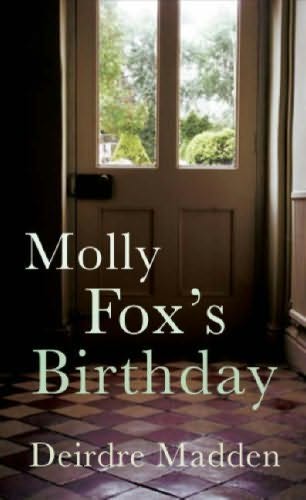
I had to think about this one, because although for a while people had not heard of Australian novelist Tim Winton, I think that Breath changed that. Richard Powers seems to be on the map too since The Echo Maker and Deirdre Madden with Molly Fox's Birthday (but if you say 'who?' to any of these names, then that's my answer to you - go out and read them .) Iris Murdoch also achieved popular fame, unfortunately more for a movie about her Alzheimer's disease in which she was played by Judy Dench than for her books (so read her too!). I almost answered Nicholas Mosley, but the last sentence of your question changed that. Mosley's work is dense as well as stylistically challenging. His masterpiece - Hopeful Monsters - is a wide ranging novels of ideas spanning history and biology across the 20th century (as well as being a love story). If you can get through this brilliant book then read it. But I cannot say, as the last sentence of your question stipulates, that I don't understand why he's not famous. His work is very demanding. So if I am to include that last sentence, then I would answer with Chiam Potok and Herman Hesse, who have both had their moments of fame, but they have passed. Potok wrote all his beautiful works about Orthodox as well as secular Jews living in a little corner of Brooklyn, N. Y. I think his stories are all set between the 1940s and the 1970s, but the human content of his stories could not be more universal or his writing more accessible. His books include The Chosen, The Promise and my favorite, My Name is Asher Lev. A beautiful author whose works deserve to be widely read. I'll also campaign for Herman Hesse, the German author from the first half of the 20th century who wrote Siddhartha and Steppenwolf which may currently doom him as an author of classics. Funny enough, in the 1960s, he was embraced as a writer who connected with the Eastern mysticism popular at the time and who was willing to be a critic of the institutions of his day. Really, he is a wide ranging author of immense passion and humanity. Beneath the Wheel is a wonderful example of his early work. I am also a fan of Demian, Narcissus and Goldmund, and The Glass Bead Game. And just for good measure - I will also put in a plug for reading the wonderful novelist and diarist May Sarton and one of my current but underappreciated favorites - Sarah Salway. You must read her Tell Me Everything.Thursday, January 14, 2010
Charleston, Charleston...

Suggested by Prairie Progressive: Do you read the inside flaps that describe a book before or while reading it?
Am I a flapper, you ask? Sure. I'll read a hard cover's book jacket or a paperback's rear cover (or the quotes and blurb on the book's on-line page) as one criteria if I'm considering whether to buy it in the store or borrow it from the library. If it is giving away too much of the plot I will skim over it lightly, just looking to see if my appetite is whetted by theme, setting, a description of the writing, or anything else. If it is peppered with obviously over-the-top hyperbole I will usually put it down. I'll also read reviews and blog posts and I love it when bookstores have employees who read and who post their own recommendations. I will also dip into the book for a page or two - usually the opening and one other page - and see if the quality and tone of the writing are what I'm in the mood for. Books are very much a thing of the moment for me. I have to be taken by the right book at the right phase of the moon, or something. Some days I want Buddenbrooks and some days I want Harry Potter and I'm not beneath flapping to figure out if a volume has my name on it. I will break into a Charleston if I have to. I also have such a, er, generous TBR pile, that I will often read the book jacket a second time, along with several pages, when I am deciding what to read next. Then when I settle down to read a book, I will read everything. The the title page, the copyright page, the dedication, the acknowledgments, and will often skim the book jacket again, just to increase the anticipation as I begin!Thursday, January 7, 2010
Recent Acquisitions Department
Barbara wants to know:What books did you get for Christmas (or whichever holiday you may have celebrated last month)? Do you usually ask for books on gift-giving occasions or do you prefer to buy them yourself?
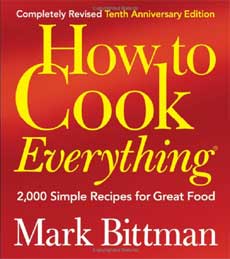
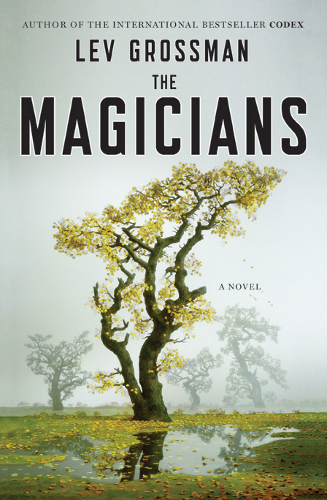
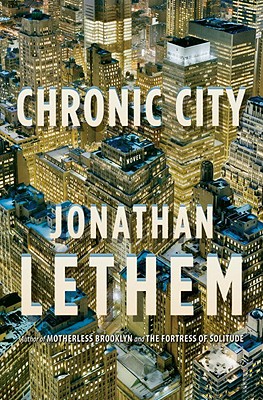
Not that the holidays are merely acquisitive, but they did yield some lovely book loot. I love to get people books as gifts but many people are nervous of getting me books, so this year I had made a list on Amazon that included a number of titles I was hoping to read. The Ragazzo gave me a lovely design book that was not on the list - Jacques Grange Interiors. His parents got me How To Cook Everything, a cookbook by Mark Bittman that I had been wanting and had put on the list. I needed to buy myself everything else bookish that I wanted. Some were professionally related and rather expensive: Geriatric Neuropsychology, Diagnosing Learning Disorders, Brain, Behavior, and Learning in Language and Reading Disorders, and The Human Frontal Lobes - sounds fun huh? I'm actually really looking forward to them. Then, given a little holiday money and time off from school to actually read book reviews and favorite book bloggers more thoroughly, I ordered a book of poetry: Sakura Park by the late Rachel Wetzsteon, Jonathan Lethem's new novel Chronic City, Deirdre Madden's Nothing is Black, The Magicians, Reading in the Brain, and The Selected Works of T. S. Spivet. So much to look forward to! And yourself?



Thursday, December 31, 2009
My best fiction reads for 2009
It’s the last day of the year, and you know what that means … nostalgia and looking back.
What were your favorite books of the year? (Books that were new to you in 2009, if not necessarily published this year.)
It just so happens that BTT's question corresponds with the post I was planning to write today. I read 52 books this year (see my reading stats for 2009 here) and have divided my favorites into subcategories which I have posted over the past week. Here are the links:my favorite non-fiction of 2009
my favorite fiction written for young readers of 2009
my favorite mystery or thriller of 2009
my favorite science fiction or fantasy of 2009
and now... drum roll please...my favorite all around fiction of 2009
This last category was the subject for my planned post today and it's a toughie. I read some mighty strong novels this year. Listing the strongest that do not fit the above categories in the order in which I read them:
The Witches of Eastwick - Updike
The Imposter - Galgut
Little Boy Lost - Laski
An Equal Stillness - Kay
The Puttermesser Papers - Ozick
I Haven't Dreamed of Flying for a While - Yamada
Molly Fox's Birthday - Madden
One by One in the Darkness - Madden
The Children's Book - Byatt
Pictures at an Exhibition - Houghteling
A Gate at the Stairs - Moore
Forgetfulness - Just
The Needle's Eye - Drabble
Generosity - Powers
The Translator - Just
Remembering Light and Stone - Madden
That's a good reading year and offers me some tough choices. Here's how I am going to call it (my original posts for these books are linked to the titles):
Pictures at an Exhibition by Sara Houghteling is the most promising novel by a newcomer I read in 2009
The Puttermesser Papers by Cynthia Ozick was the most eruditely entertaining novel I read in 2009
Little Boy Lost by Marghanita Laski is a beautifully written and compassionate book written by an unjustly forgotten and prolific novelist of the mid 1900s
And finally, Molly Fox's Birthday by Deirdre Madden and Forgetfulness by Ward Just are tied for the best novels I read in 2009.


May your 2010 be filled with great reading and lots of other great things too.
Wednesday, December 30, 2009
First posts of the month for 2009 meme
I had forgotten about this end-of-the-year meme which I enjoyed last year, but thankfully Pete reminded me of it! I've been concentrating on the best of, here's the first of - the first lines of the first post of each month of 2009:
January:
Backtracking to some brief thoughts on my last read of 2008, Saul Bellow's novella The Actual, I found it a fluid, mischievous set of intertwining character studies at the center of which is Harry Trellman, a Chicago businessman - an eternal outsider with a talent for assessing character.
February:
The Superbowl mystifies me. This year particularly, when the sound of adults screaming their heads off both in pleasure and in agony, made me think that the same phenomenon that causes this reaction is going to be what eventually turns the economy around.
March:
After working for 11 hours on a homework assignment yesterday, I fell into bed and didn't really feel like tackling Middlemarch, so I reached into the TBR pile and pulled out Neil Gaiman's Anansi Boys. I wasn't wild about American Gods but I did like The Graveyard Book and Coraline and, in fact, the new 3-D film of Coraline is terrific, so I'm not sure what to expect from this one. So far, a hapless fellow named Charlie learns that his father has dropped dead while singing karaoke in a bar and flies to his funeral. After it, he learns from an old neighbor that his father was a god...no really. This tale is told in a whimsical voice - half Dickensian saga, half comic pop fiction - it is fast-moving, funny, and the language has a kind of permanence.
April:
An excellent essay from the New York Times about why computers might never outperform the human brain.
May:
With the economy gone to the dogs and our health going to the pigs and an all-round atmosphere of hysteria that is becoming the real reason for worry, I thought it the perfect time to bring back our favorite psychopath, Tom Ripley to really give us somewhere to place our anxiety.
June:
The semester is finally over, my last paper handed in, and five films I had requested all came in to my local library at the same time, so we watched Le Scaphandre et le Papillon last night. Based on the memoir by the journalist Jean-Dominique Bauby who was paralyzed by a stroke yet able to understand everything that went on around him - locked-in syndrome. Scaphandre is French for diving bell, which is Bauby's metaphor for what it is like to be trapped inside himself.
July:
The day's musings are by Frank O'Hara, not me. His warped angle was necessary to counteract all the rain and all the talk. This poem has the best opening line.
Meditations in an Emergency by Frank O'Hara
August:
The pickin's have been slim here lately, I know. I have my first comprehensive exam to prepare for and most of my reading has been on experimental design and analysis. I am nearly done with Jedediah Berry's The Manual of Detection which I have heretofore described as a kind of surrealist Encyclopedia Brown.
September:
What’s the biggest book you’ve read recently? (Feel free to think “big” as size, or as popularity, or in any other way you care to interpret.
That would be A. S. Byatt's The Children's Book. It is big in its number of pages, big in its ambitions to encompass many sweeping social, political, and artistic themes of a recent period of history in Europe (in my post on finishing it I called it 'vast').
October:
Two-thirds of Brits have lied about reading books they haven’t. Have you? Why? What book?
We don't do that on this side of the Atlantic (yeah, right).
November:
I had yet to read a book by Ward Just before picking up his latest, Exiles in the Garden. It is set in Washington D. C. and concerns Alec Malone, a senator's son who rejects a life in politics in favor of one as a photographer.
December:
I wrote in my first post about Richard Powers's new novel Generosity that I was afraid this was going to be one of his novels that I couldn't get through. I am glad to say it did not turn out that way.
It's a fun way to review the year - care to join me?
January:
Backtracking to some brief thoughts on my last read of 2008, Saul Bellow's novella The Actual, I found it a fluid, mischievous set of intertwining character studies at the center of which is Harry Trellman, a Chicago businessman - an eternal outsider with a talent for assessing character.
February:
The Superbowl mystifies me. This year particularly, when the sound of adults screaming their heads off both in pleasure and in agony, made me think that the same phenomenon that causes this reaction is going to be what eventually turns the economy around.
March:
After working for 11 hours on a homework assignment yesterday, I fell into bed and didn't really feel like tackling Middlemarch, so I reached into the TBR pile and pulled out Neil Gaiman's Anansi Boys. I wasn't wild about American Gods but I did like The Graveyard Book and Coraline and, in fact, the new 3-D film of Coraline is terrific, so I'm not sure what to expect from this one. So far, a hapless fellow named Charlie learns that his father has dropped dead while singing karaoke in a bar and flies to his funeral. After it, he learns from an old neighbor that his father was a god...no really. This tale is told in a whimsical voice - half Dickensian saga, half comic pop fiction - it is fast-moving, funny, and the language has a kind of permanence.
April:
An excellent essay from the New York Times about why computers might never outperform the human brain.
May:
With the economy gone to the dogs and our health going to the pigs and an all-round atmosphere of hysteria that is becoming the real reason for worry, I thought it the perfect time to bring back our favorite psychopath, Tom Ripley to really give us somewhere to place our anxiety.
June:
The semester is finally over, my last paper handed in, and five films I had requested all came in to my local library at the same time, so we watched Le Scaphandre et le Papillon last night. Based on the memoir by the journalist Jean-Dominique Bauby who was paralyzed by a stroke yet able to understand everything that went on around him - locked-in syndrome. Scaphandre is French for diving bell, which is Bauby's metaphor for what it is like to be trapped inside himself.
July:
The day's musings are by Frank O'Hara, not me. His warped angle was necessary to counteract all the rain and all the talk. This poem has the best opening line.
Meditations in an Emergency by Frank O'Hara
Am I to become profligate as if I were a blonde? Or religious as if I were French?
August:
The pickin's have been slim here lately, I know. I have my first comprehensive exam to prepare for and most of my reading has been on experimental design and analysis. I am nearly done with Jedediah Berry's The Manual of Detection which I have heretofore described as a kind of surrealist Encyclopedia Brown.
September:
What’s the biggest book you’ve read recently? (Feel free to think “big” as size, or as popularity, or in any other way you care to interpret.
That would be A. S. Byatt's The Children's Book. It is big in its number of pages, big in its ambitions to encompass many sweeping social, political, and artistic themes of a recent period of history in Europe (in my post on finishing it I called it 'vast').
October:
Two-thirds of Brits have lied about reading books they haven’t. Have you? Why? What book?
We don't do that on this side of the Atlantic (yeah, right).
November:
I had yet to read a book by Ward Just before picking up his latest, Exiles in the Garden. It is set in Washington D. C. and concerns Alec Malone, a senator's son who rejects a life in politics in favor of one as a photographer.
December:
I wrote in my first post about Richard Powers's new novel Generosity that I was afraid this was going to be one of his novels that I couldn't get through. I am glad to say it did not turn out that way.
It's a fun way to review the year - care to join me?
Subscribe to:
Posts (Atom)