

Headed to points east for a conference and a couple of days of relaxation. Be back soon.

One of the early chapters of this book touches at some retrospective length on the way things began to change; how I moved from the fairly predictable company of fellow army-candidates into older circles which were simultaneously more worldly, more bohemian and more raffish: the remainder, more or less, of the Bright Young People, but ten years and twenty thousand double whiskies after their heyday, and looking extremely well on the regime. This new and captivating world seemed brilliant and rather wicked; I enjoyed being the youngest present, especially during the dissipated nocturnal ramblings in which every evening finished: ("Where's that rather noisy boy got to? We may as well take him too"). I had reached a stage when one changes very fast: a single year contains a hundred avatars; and while these were flashing kaleidoscopically by, the idea of my unsuitability for peacetime soldiering had began to impinge. More serious still, the acceptance of two poems and the publication of one of them - admittedly, only on foxhunting - had fired me with the idea of authorship.But Patrick Leigh Fermor's self-study period as a writer fails to solidify as he had hoped.


 When Poland still sat behind the iron curtain, Polish journalist Ryszard Kapuscinski traveled to far flung countries both Eastern and Western - Iran, Egypt, India, China. Early on he reported for the Soviet-run press services but he is now remembered as having been the writer of observant, beautifully written, book-length pieces of journalism about places most of his countrymen would never see - generally distant and sometimes dangerous places undergoing some political unrest or outright revolution. Many of his travels were made with Herodotus's 2500-year-old The Histories in tow. Kapuscinski's Travels with Herodotus looks back on his travels using The Histories as a lens through which to reflect on what forces influence the formation of a country from a clan or a culture from a country, and what happens when those cultures collide.
Cast into deep water, I didn't want to drown. I realized that only language could save me. I started to think about how Herodotus, wandering the world, had dealt with foreign languages. Hammer writes that Herodotus knew only Greek, but because Greeks at the time were scattered over the entire planet, had their colonies, ports, and factories everywhere, the author of The Histories could avail himself of help offered by the countrymen he encountered, who serves as his translators and guides... I approached India not through images, sounds, and smells, but through words; furthermore, words not of the indigenous Hindi, but of a foreign, imposed tongue [English], which by then had so fully taken root here that it was for me an indispensable key to this country, almost identical with it. I understood that every distinct geographic universe has its own mystery and that one can decipher it only by learning the local language. without it, this universe will remain impenetrable and unknowable, even if one were to spend entire years in it.Spoken like a writer.
Once, as I was leaving the hotel, one of these people stopped me and asked that I follow him - he would show me an old mosque (I surmised that the man was one of them, as he always stood in the same spot, surveying what was probably his beat). I am by nature quite credulous, to the point even of regarding suspicion not as a manifestation of reason but as a character flaw; now the fact that an undercover agent proposed a visit to a mosque instead of ordering me to report to a police station brought me such relief - joy, even - that I agreed without a moment's hesitation.The second was the recognition that he has much to learn about other people. The third was a quality that he brought to finding out about them - that is a curiosity coupled with imagination. The result is that what he sees on his travels or what he reads in Herodotus generates questions about the place he is in or the people he is with, questions about the specifics of their circumstances or their internal life. For example in reading of Herodotus:
What sort of child is Herodotus? Does he smile at everyone and willingly extend his hand, or does he sulk and hide in the folds of his mother's garments... Is he obedient and polite, or does he torture everyone with qeustions...and in school? With whom does he share a bench? Did they seat him, as punishment, next to some unruly boy? Or, the gods forbid, a girl? Did he learn quickly to write on the clay tablet? Is he often late? Does he squirm at lessons? Does he slip others answers? Is he a tattletale?As he reads Herodotus on the sixth century Babylonian uprising against the Persians:
Once their rebellion was out in the open, this is what they did. The Babylonian men gathered together all the women of the city - with the exception of their mothers and of a single woman chosen by each man from his own household - and strangled them. The single woman was kept on as a cook, while all the others were strangled to conserve supplies...Travels with Herodotus is chock full of these waterfalls of marvelous questions. That is what encounters with history generate in Kapuscinski, and that is why he is such a marvelous writer - an artists, really - about the things which generate countries and cultures. They remind me of the kind of the questions actors and directors ask in order to translate the generalities provided by scripts into the specifics of behavior. They are the means Kapuscinski uses to make abstract ideas observed about places most of us have never been into human terms, recognizable to the reader as close to their own. Kapuscinski introduces many such ideas - the notion that the construct of culture is at base an aristocratic one, or this one, probably my favorite:
Our Greek says nothing more about this mass execution. Whose decision was it? That of the Popular Assembly? Of the Municipal Government? Of the Committee for the Defense of Bablylon? Was there some discussion of the matter? Did anyone protest? Who decided on the method of execution - that these women would be strangled? Were there other suggestions? That they be pierced by spears, for example? Or cut down with swords? Or burned on pyres? Or thrown into the Euphrates, which coursed through the city?
There are more questions still. Could the women, who had been waiting in their homes for the men to return from the meeting during which sentence was pronounced upon them, discern something in their men's faces? Indecision? Shame? Pain? Madness?
If reason ruled the world, would history even exist?Travels with Herodotus is not a light read, but Kapuscinski's jaunty voice and his adventures provide rich insights on the world we live in and that is why I love reading him.








 Bernard MacLaverty's Cal - 150 pages that are as densely packed with passion and tension as any I've read in Dostoyevsky or Hardy. The 19-year-old title character lives in Northern Ireland. A Roman Catholic, he is hounded and physically attacked by the Protestant Orangemen. His friends have joined the IRA in response to the violence with which they are threatened. Cal finds the violence too much for him. The struggles of nations would not be important if they didn't effect the lives of individual people. This book is about the converging of conflicts political and personal - the political and religious struggles of an oppressed people, a first great passionate love, and the dilemmas of a sensitive and thoughtful teenager as he makes the moral choices that are going to shape his whole life. I felt deeply the greatness of these struggles as I read. Read my full rave here.
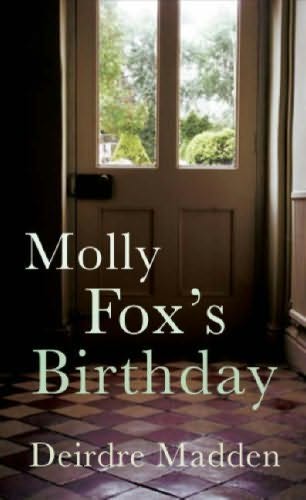
 This book has everything - love, suspense, moral conflict, social criticism, psychological acuity, and crack writing. It is pitch-perfect on the a fast-paced, ostentatious, brutal beauty of Rome. Lambert's writing is rich with observations both interior and exterior that imbue character and place with clarity and instantaneous complexity. This novel, though entertaining to read, is an unambiguous critique of the moral hypocrisy that infects the powerful and the nature of crime which combines an abuse of power with the dehumanization of innocent people. Read my full rave here. Molly Fox is a celebrated actress - a woman who delves deep into what makes up a 'self.' It is her profession to create characters from that knowledge through the medium of her self. Yet, when it comes to letting others truly know her, she does not. 'Can we ever know another?', this novel asks. The Irish novelist Deirdre Madden fashions a deep and beautiful book on this potentially abstract musing that is redolent with the pain of the distance we have from all others - even those we love most - and simultaneously rich with the rewards of the communion we can make through long acquaintance. She is particularly good at using the processes of the actor and writer to reflect on the ways we can inhabit the inherent contradiction of knowing another, but the mechanisms are so integrated with the events of this narrative that it is difficult to reveal them without ruining your reading of this book. This book is a powerful work of art with an undisturbable sense of wholeness. Read my full rave here.
 The struggle to keep the champagne bubbling when it's gone flat is the action filling Evelyn Waugh's 1930 satire Vile Bodies. Stephen Fry's brilliant film adaptation, Bright Young Things released in 2003 captures the feel of a breathless, manic party. Jim Broadbent, Stockard Channing, Peter O'Toole, Simon Callow, Stephen Campbell Moore, Emily Mortimer, James Mcavoy, Imelda Stuanton, and Fenella Woolgar are some of the beautifully cast actors who maintain an understated hysteria, if you can imagine understated hysteria. The love that director and cast have for these characters is what impresses me the most. It would be so easy to show us how vile these people are - how silly, how louche, how fey - but instead they love them to death. Raveworthy. Read my full rave here.
 Tell Me Everything by Sarah Salway . I opened this book last night and didn't stop reading it until I had finished it. The nearest voice I can think to compare Sarah Salway's to is Lorrie Moore's, and coming from me that is a big compliment. In it Molly experiences a few breaches of trust as a young woman that leave her seriously wounded. She closes down and protects herself by eating. When we meet her she has become one of life's castaways, seriously overweight without a job, a home, or any sense of herself. She meets five people - Mr. Roberts who gives her a job, Mrs. Roberts, Tim - a man of mystery, Liz - a librarian who recommends French authors, and Miranda, a hairdresser. With these relationships she begins to reclaim herself. The story is full of perfectly wrought descriptions, complex observations of human pain and fantasy, and cogent storytelling. Read my full rave here.


