A head of department, working quietly in his room in Whitehall on a summer afternoon, is not accustomed to being disturbed by the nearby and indubitable sound of a revolver shot.I'm looking forward to my first Murdoch in a while and am glad Cornflower Books has ended up choosing it for the August book club.
At one moment a lazy fat man, a perfect sphere his loving wife called him, his name Octavian Gray, was slowly writing a witty sentence in a neat tiny hand upon creamy official paper while he inhaled from his breath the pleasant sleepy smell of an excellent lunch-time burgundy. Then came the shot
[....]
Octavian noticed the neatness of the recently clipped grey hair upon the warm vulnerable neck. He had an impulse to touch it, to touch the material of Radeechy's jacket, to pulp it timidly, curiously. Here were the assembled parts of a human being, its clothes and carnal paraphernalia. The mystery appalled him of the withdrawal of life, the sudden disintegration of the living man into parts, pieces stuff. Radeechy, who muffed most things had not muffed this.
Saturday, July 25, 2009
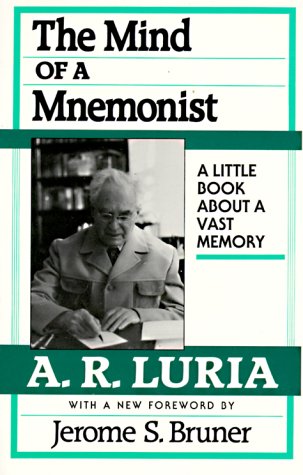
Mishmash (Books - David's Revenge, The Manual of Detection, The Nice and the Good, and The Mind of a Mnemonist)
Saturday, June 20, 2009
Hiking, opera, tea, theatre, book shopping, friends, and home again...
This is the B&B we stayed at in the Cotswolds and its garden. Some rain gave us lots of time for reading, but we also took several hikes on the wonderful network of pubic footpaths that cut through fields and woods across the U.K. Unlike the U.S., where keeping other people off one's land seems a priority, in England, although the farm belongs to the farmer, its beauty is shared with walkers. One can walk for hours uninterrupted and mostly skirt main roads, enjoying a quiet walk in a natural setting. It appears that hikers are respectful, we did not see a single piece of trash along the way. After one of our hikes we had a great afternoon tea in Chipping Camden. I love meeting artists and visiting their studios and try to do this wherever we visit. Our hosts introduced us to a local artist whose work we we found interesting and we had some coffee with her and checked out her work. Our long hike from Chipping Norton took us to an ancient stone circle known as the Rollright Stones. Chipping Norton also boasts a very nice independent bookshop and Cafe - Jaffe and Neale. As you can soon read in a future post, I was pretty wowed by Molly Fox's Birthday and was able to find a copy of her earlier novel One by One in the Darkness there.
We also attended the Glyndebourne Opera Festival in Sussex, seeing our friends there, 2 completed productions, and 1 in rehearsal. Giulio Cesare, a revival, has justifiably been a great sensation. I had seen it on DVD but it's much more fun live. Our friend, Danielle de Niese, sings, dances and acts Cleopatra (pictured below left) in a performance of gob-smacking energy and beauty. Falstaff is a wonderfully conceived production by Richard Jones set in World War II England. Christopher Purves blends great singing and detailed acting into one unified whole is the title role and Marie-Nicole Lemieux is fantastic as Mistress Quickly. The Fairy Queen, which we saw in rehearsal, looks like it is going to be great fun as well. It features The Orchestra of the Age of Enlightenment under the always strong direction of William Christie and I thought the choreography by Kim Brandstrup particularly strong.
We stayed in the big house at Glyndebourne (pictured above left) which was a lot of fun. Sussex was also the stomping grounds of some of my favorite Bloomsburyites. We visited Vanessa Bell and Duncan Grant's house - Charleston (above right) - and it is well worth a visit. Having worked on a play about Virginia Woolf and her circle for years, finally standing in those rooms next to the wall paintings, their studios, and garden was amazing. Unfortunately, we did not get to see Virginia and Leonard Woolf's Monk's House. Maybe next time.
We also visited Oxford, just strolling around for a few hours. The Blackwell Bookstore there is amazing. Having enjoyed William Fiennes The Music Room so much, I found his The Snow Geese there and picked up a copy. Finally, we spent several days in London. We found the Wellcome Collection's exhibits about mental health and art very interesting and they have a great bookstore as well! We also saw Sir John Soane's Museum, which we missed on our last several visits. His collection includes the Hogarth A Rake's Progress and many antiquities. It's quite a house to spend a few hours in (and it's free). We also attended two productions, both at the National Theatre, J. B. Priestley's Time and the Conways - certainly a play before its time in terms of cinematic use of time. The productions is, sadly, an unimaginative bore - lazily substituting screaming and cliches for acting, actors working from the neck up only. The production would have required some sort of physical language to reveal the special qualities of this play. Sadly, they never didn't come up with one in the first two acts and I wasn't waiting around for the third. The second play we saw was a very hot ticket - Hellen Mirren is playing the title role in Phedre in a strong and accessible translation by Ted Hughes. The production also features Margaret Tyzack and Dominic Cooper. There were some nice moments here and there. I thought John Shrapnel as Theramene turned in the strongest work of the evening. Dominic Cooper's peformance was pretty intelligent and centered and Stanley Townsend had a couple of moments where he was filled with the pain of Theseus's circumstances, but sadly those did not a Phedre make. I found most of the actors substituted vocal technique for real connection with these extreme circumstances. Mirren told us she was moved, horrified, devastated, but rarely succeeded in actually showing us that that was so. When she did her connection seemed banal, theatrical, rarely human. We attended the production with my cousin and his fiancee and heading off to the restaurant, he said to me that he couldn't understand why anyone would want to mount Greek tragedy (via French neo-classicism) as it had no meaning today. This seems to me the one reason for mounting any play - that it has some meaning in the context of our own lives. This production has a clear financial motivation for its mounting and one that would fascinate fans but it did not ably communicate to me any esthetic one. We didn't luck out with our theatre-going in London this time but our visits with friends and family and walking around the beautiful city were pleausures enough.
Saturday, November 29, 2008
Heaven, the graveyard, love and ambition in Thatcher's England (The Graveyard Book, A Matter of Life & Death, My Beautiful Laundrette)
There was a hand in the darkness, and it held a knife.Hmmm, turn the page or no? It creates a fun contrast to A. S. Byatt's Possession on which I'm taking my time and have nothing new in particular to report.
My Beautiful Laundrette written by Hanif Kureshi and directed by Stephen Frears came out in 1985 and was then a startling film. It is in some ways an innocent mess - awkwardly edited, produced on a shoestring, stiffly written and delivered - but is ambitious in the range of societal themes it tackles and its intentions shine through nonetheless. It takes on the racial tension between lower class whites and Pakistani immigrants in Thatcher's England. Critical of all - the poor hoodlums on-the-dole who taunt and attack the ambitious immigrants, the ostentatious, equally bigotted Pakistanis slumlords. Kureshi and Frears also made Sammy and Rosie Get Laid and then Kureshi made London Kills Me with himself directing. This trio of movies are all scathingly observant critiques of racial and class-based tensions in England through the 1980s and 1990s and make an interesting trio to watch. But although My Beautiful Laundrette is the roughest, in some ways it is the most, well, beautiful. Omar, the clueless child of Pakistani immigrants, eschews university and wanders London with nothing to show but ambition and a lovely smile. His mother has died and his father, once a brilliant journalist, gives up on life, pickling himself in vodka and longing for the old country. The papa is played with love and intelligence by Roshan Seth. Omar's uncle is an avaricious businessman, who gives the boy a chance to run a delapidated laundrette and prove himself a worthy heir to the family business empire. Omar pairs up with his childhood friend, Johnny, played by a young Daniel Day Lewis, and the fun begins. The film has no plattitudes to offer. No one group or one character is the good guy and the other the bad guy. This film reaches to tell a complex story about greed, class, race, and love. I remember well the first time I saw the film because it was the first gay story I ever saw that was not about AIDS and not about sex, but instead about two boys who lived complicated lives in the context of family, community, and personal ambition, and also happened to love each other. Gordon Warnicke, who plays Omar, is not done any favors by the green filmmaking. I've never actually seen him do anything else to learn whether he is any good as an actor. But Daniel Day Lewis is quietly charismatic - acting on, in, and around the lines. Always alive. It is striking to see this film along with another film with the young Daniel Day Lewis that came out at exactly the same time - Merchant-Ivory's A Room With A View, the adaptation of the E. M. Forster novel, in which he played the priggish Cecil. Truly a brilliant film. I first saw the two films in the same week, and Day Lewis is so completely different in them I didn't even know it was the same actor. Watching the two back-to-back makes for a starkly contrasting pair of films.
Sunday, August 31, 2008
Progress Notes and a Challenge
This has had the unfortunate consequence of adding a book to my concise list for the fall (truth be told, I have added two and it took only a week and one day). At least the short story volume, The Dead Fish Museum by Charles D'Ambrosio, was on my TBR pile. It comes highly recommended by The Elegant Variation so I can blame that one on Mark. The other is the novel In the Land of No Right Angles by Daphne Beal. For that one I have only myself to blame. Which leaves the list:
Jude the Obscure
Middlemarch (in progress)
Tanglewreck
Among the Russians
Red Cavalry (in progress)
Eclipse
Darkmans
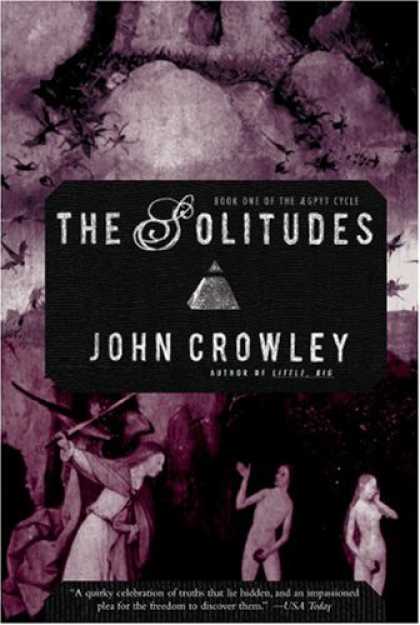
The Solitudes (started, don't know if I'll get through it)
Rhythms of the Brain
Neuroscience of Cognitive Development (in progress)
The Dead Fish Museum
In the Land of No Right Angles
Friday, August 29, 2008
Dr. Who's David Tennant attempts the indecisive Danish prince and other gob-smackers
BBC television did a three-part adaptation of Alan Hollinghurst's 2004 Booker-winning novel The Line of Beauty about 1980's politics, hypocrisy, and the lure of the superficial. I reviewed the novel here and, while the adaptation lacks some of the psychological complexity and the grace that is afforded it by the quality of the writing, it's not bad at all. Thank you New York Public Library (my Netflix).
Meanwhile, The Neuroscience of Cognitive Development - The Role of Experience and the Developing Brain continues to impress me for its conciseness and George Eliot has this to say on the subject of human psychology in Middlemarch:
We mortals, men and women, devour many a disappointment between breakfast and dinner-time; keep back the tears and look a little pale about the lips, and in answer to inquiries say, "Oh, nothing!" Pride helps us; and pride is not a bad thing when it only urges us to hide our own hurts - not to hurt others.
And this:
The human mind has at no period accepted a moral chaos; and so preposterous a result was not strictly conceivable. But we are frightened at much that is not strictly conceivable.Her certainty is, at times, shattering.
One last question: can one eat too many blueberries? I hope not. Off to class.
Thursday, August 28, 2008
It's just you.
If you’re anything like me, one of your favorite reasons to read is for the story. Not for the character development and interaction. Not because of the descriptive, emotive powers of the writer. Not because of deep, literary meaning hidden beneath layers of metaphor. (Even though those are all good things.) No … it’s because you want to know what happens next?
Or, um, is it just me?
It's just you. Well, maybe not just you; but it's not me. Story can keep the pages turning, no doubt about that. When a book has nothing else going for it, story can pull me through, but I read for character, even more than that for relationships. Relationships between the characters and each other, the characters and themselves, and the characters and the events transpiring. I also read for the delight of how an author is going to pull me through those events. With some authors, the pleasure is how they delay getting to the next plot point, and what they tell me along the way rather than the fact that something new is happening. With Sarah Salway's Tell Me Everything for example, it was the characters and Salway's wonderful descriptions that kept me reading. My prejudices probably would have made me care a lot less about what happened to Molly were it not for the way Salway told her story.
What happens in the Zooey section of Franny and Zooey? Almost nothing. Some cute, obnoxious know-it-all takes a long bath and tries to kick his worried mother out of the bathroom. It's through the humor of their relationship and the amusement of Zooey's monologue that we finally do learn something about a character who isn't there, but that takes a while to get going. But what pleasure Bessie and Zooey are to hang out with. If you read Virginia Woolf's Jacob's Room or The Waves wanting to know what happens next, good luck. The Waves is one of the greatest modern novels written English, if you ask me. Whole lives are lived in it, but its pages are an archive of private experience happening inside each character. The other passages in it are descriptions of the sun on the water at different times of day, and yet people graduate from school, become employed, World War I occurs, and life and death are bridged in this book! A stunner, many stories, and yet no stories unfolding in that and then this happened kind of way.
Tim Winton's new book Breath barely has a plot. There are events that happened to the central character as an adolescent that he remembers, and those comprise the plot, such as it is. But mostly there are two contrasting characters drawn with great complexity and idolize a third character - also interestingly drawn but whose complete story is shrouded in mystery. They do a bunch of surfing. The book is about big things - the value of risk taking and what we live life for - but there are only small sections of the book where what happens next is the reason for turning the page.
Even though Dickens is a story teller, and his plots central to the pleasure of reading him, they would take up far fewer pages without his descriptions of character and place. It is the pleasure of his elaborate and hilarious descriptions that a) delay the plot so that there is dramatic tension b) helped him get paid by filling out the reading experience to fit the serialized format of the day and c) they allow one to build a relationship with the characters over time so that, when something big does happen to them, you really care (the author's emotive power). OMG, Smike's death in Nicholas Nickleby - what a killer. I've read it over and over and cry every time.
My current read - Middlemarch - forces the reader to slow down by not just writing about what happened. I have been thinking about that as I read it. I must take time. The whole reading experience is about who it is happening to, where it is happening, and because of this context, what it means, because Eliot is an author of ideas, not just events. She moves back, back, back with her camera - until the context encompasses the entire world. To support the boldness of some of her statements, she tempers them with humor and offers plenty of context.
Finally, layers of meaning are probably one of the features of a novel I read for the most. How complex and interrelated are the parts of the book and how successfully does the author take big ideas or simple motifs that comprise the content of the book and weave them through the form of the book. Tim Winton did this beautifully with the idea of breath in Breath. Richard Powers is amazing at weaving together science, psychology, and a love story in broad books that are as intellectually satisfying as they are beautiful artistic creations. Iris Murdoch is wonderful in the ways she intertwines excruciatingly soap-opera-y plots with ideas. Hopeful Monsters by Nicolas Mosley (one of Sheila's and my favorite books ever) is - well what is is not about? It is the history of the 20th century, it is physics, biology, politics, philosophy..., it's a love story too. It is as all-encompassing a reading experience as I have ever had. Multiple layers of meaning that keep me interested, and the way form can be integrated with content when those meanings feed the language and the structure of what your reading is what distinguishes a great book from a nice read. I don't just read to turn the page. Some books should make you linger, some books should be hard, some shake you up. I love when the experience a book puts the reader through exists on so many levels that it seems to be about the entire world. I look for those books. That is one of my favorite reasons to read.
Saturday, August 23, 2008
Autumn leaves
Classes begin for me next week. I have bought my new pens and pads, a new laptop is on order (yikes!), and I have now registered for all my classes. I guess I have to face the fact that summer is drawing to a close and that my fiction reading is going to be curtailed in favor of textbooks on neural structure, action potentials, and multisensory integration. Well, that has its pleasures too and it means that fall is soon to begin - my favorite season. Leaves changing, coolness returns to the air, red wine takes precedence over white, and I can wear sweaters.
As I looked over my reading so far this year I realized that I have read 51 books - 46 novels and the rest non-fiction. I don't count my textbooks. 16 of those books were written by women, 32 of their authors are not American, 6 were translated from other languages. That also puts me 1 book away from my original goal for the year of reading one book per week. So I will aim to push myself over the edge before classes start on Wednesday, that way I can consider the rest of my reading for the year gravy and make my choices for sheer pleasure (as if I don't?). Which brings me to my fall TBR pile. I have promised Matt that we're going to read Middlemarch simultaneously. I have already begun, in fact. So if that leaves me time for anything else, I would like to read Darkmans and finish up the Man Booker Challenge. There is no way I will complete either the Chunkster or the Russian Reading Challenges, but I do hope to at least read Among the Russians by Thubron, I enjoy his writing and it is short. Natasha's Dance will, for the third year running, worm its way to the bottom of my reading pile and as for The Gulag Archipelago fuggetaboutit. I have Jude the Obscure on the way and also John Banville's Eclipse, a recommendation of the Incurable Logophile. Jeanette Winterson's fantasy Tanglewreck sits on the pile and seems a likely light read to distract me some time between my assignments and I have borrowed Angelica from the library but, having started it, it seems transparent and stilted and I don't think I'm going to make it through. So that leaves me a shortish revised list for the fall. I like that:
Jude the Obscure
Middlemarch (just started)
Tanglewreck
Among the Russians
Proust and the Squid (in progress)
Red Cavalry (in progress)
Eclipse
Darkmans
The Solitudes (started, don't know if I'll get through it)
Rhythms of the Brain
Neuroscience of Cognitive Development
Making a neat little list means I am sure to diverge from it, it's inevitable, but it's a place to start.
Thursday, August 21, 2008
Library Memories
Inspired by Booksplease
Whether you usually read off of your own book pile or from the library shelves NOW, chances are you started off with trips to the library. (There’s no way my parents could otherwise have kept up with my book habit when I was 10.) So … What is your earliest memory of a library? Who took you? Do you have you any funny/odd memories of the library?
Friday, August 15, 2008
An embarrassment of riches (Books - The Solitudes by John Crowley & Recent Acquisitions)
They had been at work not a quarter of an hour before the stone when the first creature appeared: their soft prayers and invocations had ceased, and for a time the only sound was the rattle of the mullions in a hard March wind that filled up the night.
And yet, Crowley gives Moffett a home in the fictitious town of Blackbury Jambs, New York. Given the fact that this fantasy is praised most often for its erudition, makes me glad that the author has a sense of humor. The narrative voice has an alluring cozy-tale lilt to it that is drawing me in:
So he woke by a brass alarm clock that stood on four feet and had a bell atop it that two clappers struck alternately, as though it were beating its brains out. It was so loud that the first moments of its ringing didn't even seem like sound, but like something else, a calamity, he was awake and sitting up before he understood what it was: the clock, hollering and walking on its feet across the bureau top. His cousin Bird in the other bed stirred beneath her covers, and was still again as soon as he stilled the clock.
Such a commonplace event - waking to an alarm in the morning. Crowley anthropomorphizes the clock even as he makes me nod with familiarity at the experience of waking, yet with a completely original choice of words - the ringing sounds like something else, a calamity - all in a tight, consistently voiced paragraph that has me smiling with the promise that I am going to like this book.
Also on the docket:
This weekend promises an embarrassment of reading riches. Hope yours does too.
Wednesday, July 9, 2008
American Idealism (Books - America America by Ethan Canin)
I just have to say, after all my ranting and raving about how many books I have to read this summer - I believe the number was 20, possibly whittling it down to 13 if I was smart about it - I could not resist getting the new novel by Ethan Canin. I have read everything Canin has written and his For Kings and Planets is one of my favorite novels of all time. America America is his latest and I couldn't help starting it as soon as it was in my hot little paws, once again side lining Russell Banks The Darling. Those two will make interesting bedfellows, both are about American idealism and politics over the last forty years.
Thursday, July 3, 2008
Devoutly to be wished but not to be expected
It’s a holiday weekend here in the U.S., so let’s keep today’s question simple–What are you reading? Anything special? Any particularly juicy summer reading?
Here's my answer (with a little glimpse of my workspace thrown in):
And here are my thousand words:
Simple!?! On the left you see my pile of summer pleasure reading, mostly fiction, including books already in-progress: The Changeling, White Noise, Red Cavalry, and The Darling (two-word titles seem to be the order of the day) and books devoutly-to-be-wished: The Informers by Juan Gabriel Vasquez, Breath by Tim Winton, The Road Home by Rose Tremain, Thirteen by Sebastien Beaumont, The Book Thief by Markus Zusak, The Story of a Marriage by Andrew Sean Greer, The Lazarus Project by Aleksandar Hemon, Grace Notes and The Anatomy School by Bernard MacLaverty, Proust and the Squid by Maryanne Wolf, and The Pickwick Papers. Yeah, right. And that's just the column delicately toppling on the left. On the right my school/work related reading hopes: a text on Sensation & Perception, another on neuroanatomy as told through case histories, a third called Patient-Based Approaches to Cognitive Neuroscience, a text on attention, The Poetics of Mind, and Reading David. This does not include the six issues of The Journal of Cognitive Neuroscience festering next to my big purple armchair, nor the articles I should be reading for my studies.
I'm taking bets folks - will I make it? I think not. My prediction is I will never even touch the Dickens, a shame since reading a Dickens novel has become an annual summer project with me. It started with Dombey and Son three years ago, then The Old Curiosity Shop, and the magnificent Bleak House last summer. I've already taken my hopes of re-reading Middlemarch off the docket. I think I'll only spot-read the texts, never get through The Poetics of Mind or Proust and the Squid and read Reading David with resentment, because it's a quick read but I hate the my-experience-with-disease-X books. I'm afraid I may hate the new Andrew Sean Greer, though I'm going to give it a chance, I've already looked into The Book Thief and while everyone raves about it, it seems rather cutsey and gimmicky to me. I have hopes for the rest. That would take the wrecking ball to my towering list, hewing it from 20 to a more manageable 13 for the remaining two months of the summer plus some reading around in the texts. Hmmmm, maybe if I don't go to work, turn off my phone, and cut down on sleep. Oh, and there are two books reserved for me at the library - so what am I doing writing here?
Sunday, June 29, 2008
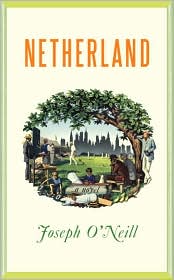
Vacation Reading (Books - The Chosen, Lost Paradise, The Soul Thief, The House on Fortune Street, Netherland
In case this sounds to you like an exotic book which would have little to do with your own life, think again. Though there are scenes in this book for anyone interested in the details of these two boys very different religious lives, but the real theme here is friendship and love - and learning how to be your own person in the context of ones family and ones broader cultural context. I might add that this all takes place during the 1940s, when the world was in the throws of the second World War - not an easy time no matter who you were, but additionally difficult if you were Jewish. This adds another layer to the novel's events. Certainly developing a sense of who you are and what you think is meaningful to anyone interested in thinking in the first place, but moral and religious identity become particularly charged in this setting. Potok is not a brilliant writer as far as beautiful stringing together of words is concerned, his strength is building strong characters, putting them together in a detailed environment you can perceive with ease, and having them behave with one another in a plot that breathes. The story is intensely human and moving and I cannot recommend it enough. I was excited all over again by reading a book about kids growing up who don't just think about who to date or beat up (although orthodox Jewish children are teenagers too) but who THINK. I would give you an excerpt of two, but my old copy of the book is enroute from Lewes, England to New York City via the slowest of snail mails. That is a story in itself! As I mentioned in my travel posts, we attended the opera at Glyndebourne, which is a formal affair - literally, it's black tie. So we have our evening wear with us but didn't want to lug it around with us through Sicily, so we shipped it home, with anything else we were finished with at that point. It turned out to be a rather expensive affair, so my tux and copy of The Chosen are on the slow boat. Perhaps to China, who knows.
Angels are mythical creatures. In this day and age, however, they are usually relegated to the realm of kitsch, irony or theatre. And yet that tiny curled-up body, those bare feet, the whole of that womanly being...And yet... and yet for me this book never rose above the realm of kitsch. ***SPOILER ALERT *** While the whole point of book seemed to be the surprise of finding the extraordinary through something hackneyed - finding the spiritual in ones cup of coffee - the redemption attempted in this novel rang wholly false to me. Perhaps if one is more in-tune with new age language in general, or angels specifically, one might find this book more meaningful but it was not my cup of tea. It is, however, compact and pleasantly readable in a two-hour plane flight. The writers shows evident imagination, compassion, and an interesting way with words so I would like to attempt something else by him - any recommendations?
She admits her yearning to inhabit an intellectual realm that she had not by rights acquired citizenship to. "Oh, everyone else around here is so smart." she confesses, "and all I can do is to put on an act." Really, she says, she is just a simple girl brought up in buttfuck Iowa, the daughter of a manufacturer's rep who sold prefabricate silos. She's afraid of being dumb, a silo salesman's daughter - that's her breathy assertion.The two actors conspire to steal his soul, having none of their own - or do they? This is the interest of this curious little book. It's one of those stories where the characters are really interesting and I end up raising my eyebrows at a lot of the events. The narrative voice is distinctly distancing - Baxter has his reasons for that, which although it is couched as a surprise was rather obvious to me. At any rate, I enjoyed the book well enough, but if you're coming fresh to Baxter, I would say that Saul and Patsy, The Feast of Love, First Light, and Shadow Play are all better than this one.
She has mastered somehow a tonal mixture of the bogus and the seductive, so Nathaniel interrupts. "But you were quoting Valery last night!" he says. "Who else does that?"
"That line, that's the one line I know," she says. "That one. I always quote it. 'Beau ciel, vrai ciel, regard-moi qui change!' That gets me in the door, that line, it's the key to the city."
When Abigail was asked about her first memory, what she most often recounted was the afternoon she and her grandfather had gone for a walk and found a Roman plate buried in the muddy foreshore of the River Medway. She would describe herself in her T-shirt and shorts, skipping along beside her grandfather. He was wearing a white shirt, faded gray trousers, and a straw hat that was almost the same color as his mustache. The tide was out, and he had said they should dig for Roman remains, or Saxon as a second best, but only for twenty minutes.
"We can't excavate the entire shore, " he said, "so we depend on luck. Without it, we could dig all day and find nothing but stones and worms."
"I like worms," Abigail said, thrusting he trowel into the mud. What she did not like was her grandfather mentioning the mysterious phenomenon which played such a large and aggravating role in the lives of her parents.
I enjoy this passage not only because it lays bare one of the centers of this book - fortune - but because it gets at what became the chief theme for me - unearthing the past. How we are composed of the stories that lie beneath us. An act can have an effect years later, just as an ordinary plate come become a treasure if it is found. If we do exhume the remains of the past we will all tell a story to complete them and that story is likely to be something slightly different for each teller. This was given particularly interesting context given that I read this book while wandering through the Greek and Roman ruins of Sicily.
There are some tumultuous happenings in this novel, some very dark events, a great deal of loss, but Livesey's story telling is quiet, and eschews the hysterical. While I didn't feel everything necessarily hung completely together satisfyingly as I read it, I finally appreciated how the events collected through different eyes and eyes mounted over time to yield a rich and multi-faceted narrative with material that could easily become preachy and melodramatic.
"We won't be gone for very long," I said, playing down my good fortune. That was, in fact, the plan, conceived by my wife: to drop in on New York City for a year or three and then come back.
"You say that now," he said. "But New York's a very hard place to leave. And once you do leave..." The S.V.P., smiling, said, "I still miss it, and I left twelve years ago."
It was my turn to smile - in part out of embarrassment, because he'd spoken with an American openness. "Well, we'll see," I said.
"Yes," he said. "You will."
His sureness irritated me, though principally he was pitiable - like one of those Petersburgians of yesteryear whose duties have washed him up on the wrong side of the Urals.
But it turns out he was right, in a way. Now that I too, have left that city, I find it hard to rid myself of the feeling that life carries a taint of aftermath. This last-mentioned word, somebody once told me, literally refers to a second moving of grass in the same season. You might say, if you're prone to general observations, that New York city insists on memory's repetitive power - on the sort of purposeful postmortem that has the effect, so one is told and forlornly hopes, of cutting the grassy past to manageable proportions. For it keeps growing back, of course. None of this means that I wish I were back there now; and naturally I'd like to believe that my own retrospection is in some way more important than the old S.V.P.'s, which, when I was exposed to it, seemed to amount to not much more than a cheap longing. But there's no such thing as a cheap longing, I'm tempted to conclude these days, not even if you're sobbing over a cracked fingernail.
Joseph O'Neill's Netherland is a retrospective look at Hans's time in New York which coincides with September 11th 2001, forcing him and his wife to relocate to the Chelsea Hotel and removing, particularly for her, any sense of certainty. Rachel moves back to London with their child, telling Hans she does not wish him to accompany her. Hans, originally out of nostalgia, takes up playing cricket in New York. Far from the great American past-time, the leagues are mostly comprised of West Indian immigrants and the games played in out-of-the-way greens on Staten Island and in the Bronx's Van Cortland Park. He meets a small-time shyster named Chuck Ramkissoon with a hearty passion for giving cricket in its rightful place in the sports economy, and so begins an almost dream-like existence for Hans and he is drawn further and further into his association with New York cricket while he commutes to London to see his three-year-old son and try to revive his broken marriage. It is amazing to me how much detail O'Neill goes into about the game, how well that interwove with the story, and how interesting it actually was to me, and I'm about as into competitive sports as I am to knitting sweaters.
O'Neill's prose is fluid, intricately descriptive but in a way that is always fascinating, and contemporary but not gimmicky (like its making it easy for anyone who wants to turn it into a film script). He weaves in and out of two time periods - one in the very recent past and the other a few years earlier - effortlessly and that never left me wondering where I was. This is a deeply thoughtful story of a crisis in confidence and a crisis in love both between two people and in the world-at-large. It is an achingly familiar and powerful book about the birth and death of dreams. I can see what everyone is going on about.
Friday, June 13, 2008
Artists feeding artists (Books - Red Cavalry by Isaac Babel & How the Soldier Repairs the Gramophone by Sasa Stanisic)
One of the many tales in Sasa Stanisic's new book How The Soldier Repairs the Gramophone concerns the 'three-dot-ellipsis man,' so called because this old Rabbi is robbed of the 'breath for saying long sentences' after being tortured for his Judaism. It's a vivid segment, made all the more touching this evening by Stanisic's own reading of it this evening at McNally Robinson Bookstore. Stanisic explained that he sought to reveal some parallels between the Second World War and his own native country's 1992 civil war. (Did any of my New York area readers take me up on my exhortation to attend this reading? If not, you really missed out). Not only does Stanisic do a good job of giving context to the segments he has chosen, his reading style is engaging, exuberant, and warm and his manner full of humor. I really enjoyed some of the creative process nuggets he shared - like that fact that his inspiration for this segment came from Isaac Babel's Red Cavalry. Although I know who Babel is, I have never read him and didn't know anything about this set of short essays - part reportage, part literary fiction - that chronicle the Soviet Army's 1920 sally into Poland to spread the Soviet love. Good things readings are held in bookstores. I went to McNally Robinson's well stocked shelves and found the book and bought it immediately. Some of the essays are written from the point of view of a Cossack, others from the point of view of a Jewish journalist who goes under cover with one of the units to witness and report the devastation of his country and his people. I find the whole notion chilling - the importance of being a witness and recording these acts crossed with the horror of watching the murder of your own people while never revealing who you are so that you may do so - never stopping the carnage (I know one person couldn't, but the whole notion makes me choke). But I can see why he felt he served best in this role - the writing is exquisite:
...Silent Volhynia is turning away, Volhynia is leaving, heading into the pearly white fog of the birch groves, creeping through the flowery hillocks, and with weakened arms entangling itself in the underbrush of hops. The orange sun is rolling across the sky like a severed head, gentle light glimmers in the ravines among the clouds, the banners of the sunset are fluttering above our head. The stench of yesterday's blood and slaughtered horses drips into the evening chill. The blackened Zbrucz roars and twists the foaming knots of its rapid. The bridges are destroyed, and we wade across the rive. The majestic moon lies on the waves. The water comes up to the horses' backs. purling streams trickle between hundreds of horses' legs. Someone sinks, and loudly curses the Mother of God. The river is littered with the black squares of the carts and filled with humming, whistling, and singing that thunders above the glistening hollows and the snaking moon.
Prose so sumptuous it should be set to music and sung by a baritone. The writing tingles the eye, the ear, tongue - it is impossible to be left without a sensory experience of the scene:
Eliza, the Jesuit's housekeeper. She gave me a cup of amber tea and some sponge cake. Her sponge cakes had the aroma of the crucifixion. Within them was the sap of slyness and the fragrant frenzy of the Vatican.
I can't believe I have never read Babel before. I can't believe I was 'this close' to not going to this reading because I have to pack for my trip and I'm feeling kind of crappy. I would never have heard about this book, which is now an addition to my Russian Reading Challenge and is coming with me on my vacation. Thank you, Sasha! I have mentioned before that I am a creative-process freak. One of my pleasures of reading about or listening to other artists talk about how they make work, is learning how they feed themselves. I can understand why this book fed this particular writer and it's very satisfying to have left the reading with a new book recommendation from a writer I admire.
Thursday, June 12, 2008
Acquisitions Department
I have really enjoyed Charles Baxter's other work, Shadow Play is a particular favorite but The Feast of Love is pretty great too. And then Scott Pack's big mouth went on and on about him and I discovered he had a new one out - The Soul Thief. A prodigy who steals others' souls because he has none himself! Sounds intriguing.
So many authors I like have new books coming out. Ethan Canin has a new book coming, but sadly it was at not at the shop yet, and I've read quite a bit about the newish Rose Tremain, but that isn't available in the U.S. yet, so I'm going to pick it up when I'm in London.
Tim Winton's Cloudstreet is in my top ten - what a magnificent book. So I am loyal and when he has a new one I'll always get it as soon as I hear about it. Breath is a surfer's coming-of-age story, but it's not so much the subject that has me interested - Winton is an observant and bleak psychologist.
Andrew Sean Greer's The Story of a Marriage has been everywhere lately, I think I heard about it from Mark Sarvas. In it, a mysterious stranger visits the home of a 1950s American couple and, upsets the understandings upon which their lives were built. It is told from the point of view of Pearlie, the wife. I found Greer's The Path of Minor Planets quite a beautiful book (I think it was his first) so I am looking forward to this one.
Last, but definitely not least, Joseph O'Neill's Netherland, has been raved about as the tragedy you didn't know you were missing. Falling under the post-9/11 niche, it concerns a transplanted New Yorker who, after his marriage falls apart, discovers the world of cricket. Cricket is not exactly a New York mainstay, but the Times lets it be known that there is a culture here in New York - it was profiled recently in connection with this book. That's hardly what the book is about but it is the backdrop against which the character's loss is played out.
Don't forget, if you're near NYC Sasa Stanisic is giving a reading from his new book How the Soldier Repairs the Gramophone this Friday at McNally Robinson. If you're nowhere near NY it looks like he will be in San Francisco too and maybe his tour will swing by wherever you live. If it doesn't - read this book in any case - here's my rave.
I am so hungry for good reading right now, and with our big trip and a six-hour plane ride fast approaching, I'll have some time, now I've just got to get rid of this pesky sinus thing that keeps hanging around.
Thursday, June 5, 2008
I'm greedy, that's my problem...
Have your book-tastes changed over the years? More fiction? Less? Books that are darker and more serious? Lighter and more frivolous? Challenging? Easy? How-to books over novels? Mysteries over Romance?
My reading stems from an innate curiosity about people and states of mind and, if I'm honest, from a greed for knowledge. I am greedy to possess knowledge. Sometimes it turns out that I'm more interested in the possession than in the acquisition - if bookstores were smorgasboards I would say that my eyes are bigger than my stomach. I think 'oh, I really do want to know everything there is about amateur telescope use,' but really when it comes to getting through the book, I'd rather read a novel. If anything has changed it is perhaps my knowledge of myself. I know my taste better. I kid myself less. I still love fiction best and still flip back and forth between older works of fiction (more classic literature) and contemporary novels. I'm still a fan of English and Irish writers, and particularly contemporary women's voices. I still love biographies - though I don't read them as greedily as I used to. I still loathe self-help, I don't really like how-to either unless I really, really want to know (and even then I'm impatient), and I have a hard time getting through a book about history or politics no matter how interested in them I originally think I am. Sheila has gotten me to read some Robert Kaplan and some Ryszard Kapuscinski but it is always slower going for me than fiction. Any changes that have evolved in my reading have evolved because my work has changed dramatically. As a theater and opera director and acting teacher I used to read more biographies of composers, conductors, other artists. I read pretty much every acting technique book that came out if it had even the remotest connection to the way I worked. A lot of my reading was driven by research - even the fiction I read was the collecting process for a project's setting, a character's psychology, or I was thinking of adapting the entire work itself to a piece of theater. But when I worked in that field I did read books about science, particularly medicine, psychology, and the brain-mind-body connection. As an acting teacher that's what I was working with. In fact, those interests lead me to my interest in neuroscience, of which I'm now a student. I read more books about the brain now, and I read much more 'hard' science. There are also more books available for the reading public now about cognition in general and neuroscience in particular. It has become a niche. I am continually surprised that I'm actually interested in something that's popular when it's popular.
Friday, May 23, 2008
Reading Frenzy - (How the Soldier Repairs the Gramophone by Sasa Stanisic)
Aleksandar Krsmanovic is a young boy living in Tito's Yugoslavia whose unique view gives voice to the political events that finally propel his family to emigrate to Germany.
I'm looking forward to seeing Great-Grandpa and Great-Granny again. Ever since I can remember they haven't smelled very sweet, and their average age is about a hundred and fifty. All the same, they're the least dead and the most alive of the whole family if you leave out Auntie Typhoon, who doesn't count - she's more of a natural catastrophe than a human being and she had a propeller in her backside. So Uncle Bora sometimes says, kissing his natural catastrophe's back.
It is Sasa Stanisic who gives voice to Aleksandar. He is a 30-year-old Bosnia-Herzagovina born writer now living in Germany and How the Soldier Repairs the Gramophone is his first novel. His voice lays the sepia patina of well-worn urban-bougeoisie over the bright colors of childhood - its the way the film Amelie looks, if you are familiar with it. Memory tints all the colors slightly brown and odd shots makes someone's ear look bigger than the rest of their face and then the lens swings and focuses on the air vent in the wall. He describes the day his grandfather died in the opening pages of the book.
I noticed that Granny's china dog on the TV set had fallen over and the plate with fish bones left from supper was still standing on the crochet tablecloth. I could hear every word the neighbors said as they bustled about, I heard it all in spite of Granny's whimpering and howling. She tugged at Grandpa's legs and Grandpa slid forward off the sofa. I hid in the corner behind the TV. But a thousand TVs couldn't have hidden Granny's distorted face from me, or Grandpa falling off the sofa all twisted sideways, or the thought that I'd never seen my grandparents look uglier.
I'd have liked to have put my hand on Granny's shaking back - her blouse would have been wet with sweat - and I'd have liked to say: Granny, don't! It will be all right. After all, Grandpa's a Party member, and the Party agrees with the Statutes of the Communist League, it's just that I can't find my magic wand at the moment. It's going to be all right again, Granny.
But her grief-stricken madness silenced me. The louder she cried: leave me alone! flailing around, the less courageous I felt in my hiding place. The more the neighbors turned away from Grandpa and went to Granny instead, trying to console someone obviously inconsolable, as if they were selling her something she didn't need, the more frantically she defended herself. As more and more tears covered her cheeks, her mouth, her lamentation, her chin, like oil coating a pan...
The curling sentences and the quirky humor are a stark contrast to Cormac McCarthy's The Crossing, which I'm also reading now. I've been greedy for some real reading time and with exams over and a weekend with The Ragazzo's family near Columbus, Ohio, I may actually get some.
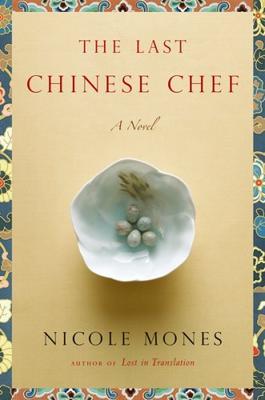
I did go home with How the Solder Repairs the Gramophone as well as The Last Chinese Chef, a novel by Nicole Mones the author of Lost in Translation. It is billed as a foodie-mystery-love story. And Margot Livesey's new novel The House on Fortune Street. I really enjoyed her The Missing World, with its neuropsychological theme, and after hearing an interview with Livesey on this new novel, I found myself tempted. As if I'm a hard sell!
Thursday, May 22, 2008
Books and Films
Suggested by: Superfastreader:
Books and films both tell stories, but what we want from a book can be different from what we want from a movie. Is this true for you? If so, what’s the difference between a book and a movie?
Books and films are both not limited to telling stories, there are some of each medium that are distinctly non-narrative and mean to be, but both can. Certainly these media, though I prize both, are not interchangeable; either I want one or I want the other. 
Movies are externalized, someone has had to chose what Mrs. Danvers in Rebecca or Margaret Schlegel in Howard's End looked liked and has eliminated all other possible choices with the appearance and behavior of a single actor. Yet at the same time, I find most films a more passive experience - usually I am asked to sit back and let it happen. Reading is private, interior - I create it as I go. I may sit still to do both, but reading requires me to act, movies do the acting for me.
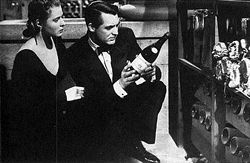
That is not to say that film is not involving, I can get quite caught up. Cary Grant replaces a bottle in the wine cellar during the party scene in Notorious, the suspense Hitchcock creates as he replaces the bottle on the shelf and on the other end of the shelf another bottle is misplaced and seems to take forever to fall was so engrossing the first time that I saw it in the theater I actually got half out of my seat to try to prevent the bottle from crashing to the ground.
Reading asks that I interplay my own ideas and experiences internally with that of the narrative as I read - sometimes as an intellectual discussion other times as more of a day dream, sometimes it is directly of the world of the book but other times it is my personal fantasy interacting with that of the book - whereas film generally is showing me the one and only story I am supposed to pay attention to. I don't think a film director is hoping that I will day dream during the film, if I am caught up it should be in the film's world exclusively.and I felt like somehow film brought out the atmosphere even more palpably than the book, while the book excelled at the characters and their relationship with each other more satisfyingly. I love adaptations that dare to take their original form to the next place - like Clueless - which sets Austen's Emma in a 1990s Hollywood high school. It's a mediocre movie if appreciated simply for its teeny-bopper angst and scenes in the mall, but when layered with the knowledge of the book it adapts it's really kind of brilliant. But they can fail too - take the Great Expectations with Ethan Hawke and Ann Bancroft - oh dear. "Faithful" adaptations can fail miserably as well.