Sunday, February 27, 2011

Can a computer be smart or can it only be programmed to act that way? (Books - Final Jeopardy by Stephen Baker)

Final Jeopardy: Man vs. Maching and the Quest to know Everything concerns itself with the stunt planned by IBM to program a computer to play Jeopardy against human contestants. But Stephen Baker’s swift moving book doesn’t merely reveal backstage gossip like why the computer was named Watson or who designed his 'face,' the real reason to read this book is the story Baker tells about the nature of intelligence and whether machines can possess and use it.

 Baker, as IBM did, used the contest as a scaffold. For IBM this narrowed the scope of their research and imposed a schedule. For Baker it lent his narrative thrust toward a conspicuous end. It's almost a shame that we know the outcome, the contest having already been aired, but Baker writes well enough to squeeze suspense out of the story by connecting us to the stakes experienced by scientist David Ferrucci, and his team of programmers, designers, former Jeopardy contestants, and, of course, the public relations armies for IBM and Jeopardy.

I enjoyed Baker's lay-descriptions of the evolution of computing machines and how they differ from human brains: what kind of knowledge goes into them, what sorts of computations can be expected of them, what kinds of mistakes they make, how computers can learn and how we, in turn, can learn about the nature of intelligence through the exercise of programming them to do so.

For certain types of questions, Ferrucci said, a search engine could come up with answers. These were simple sentences with concrete results, what he and his team called factoids. For example: "What is the tallest mountain in Africa?" A search engine would pick out the three key words from that sentence and in a fraction of a second suggest Kenya's 19,340-foot-high Kilimanjaro. This worked, Ferrucci said, for about 30 percent of Jeopardy questions. But performance at that low level would condemn Watson to defeat at the hands of human amateurs.

Baker is adept at explaining how fact-based knowledge can be stored in and retrieved from the neural networks of the human brain. Key to his story about so-called artificial intelligence, he makes clear the difference between designing a machine that actually performs the steps of human-like cognitive processes in a silicon medium rather than an organic one versus one that looks as though it is problem-solving like a person, but is actually coming up with the answer via different processes.

Equally interesting was the discussion Baker's book provokes about what knowledge is for. This highlights the poverty of Ferrucci's tightly-focused imagination.
"You can probably fit all the books that are on sale on about two terabytes that you can buy at OfficeMax for a couple of hundred dollars. You get every book. Every. Single. Book. Now what do you do? You can't read them all! What I want the computer to do," he went on, "is to read them for me and tell me what they're about, and answer my questions about them. I want this for all information. I want machines to read, understand, summarize, describe the themes, and do the analysis so that I can take advantage of all the knowledge that's out there. We human's need help. I know I do!" 
Actually, you can't get all the information period, and the best computer can't either, so calm down, David. Knowledge is not just possessing facts, nor is it analyzing them. Analysis takes place at multiple levels. Merely determining which units within a narrative are the facts is itself analysis. And just what are facts: what are the facts of Oliver Twist, for example? Is Fagin a fact? Is the theft of a pocket handkerchief a fact? Is “some more?” Facts and the juicy stuff that can be derived from them are determined by an intersection with the point-of-view of the individual using them.

To be fair, Ferrucci understands these limitations and his project embraces the challenge of finding a solution. Ultimately, the machines that we can imagine now will likely be better at generating lists for hypothesis development than they will be at making inferential leaps. The gains made in problem solving by sudden departures from the knowledge tree or standard method are legendary - that's the 'creative' part of creative problem solving and is the very stuff of the creative leap that so often precedes a solution.

Other scientists, such as Joshua Tenebaum at MIT think that one day computers will generate concepts and make inductive leaps, but that is hard to imagine reading Baker’s account of parsing the words of a single Jeopardy question well enough to determine the category of knowledge to search (let alone to answer it). A great deal more than computing speed is necessary before computers can accurately comprehend human emotion, make inferences, and take control from their inventors like Hal in 2001: A Space Odyssey. Tenenbaum said it best:

"If you want to compare [artificial intelligence] to the space program, we're at Galileo," Tenenbaum said. "We're not yet at Newton." 
Baker's book is thoughtful, informative, and really amusing, without being pseudo-science. I'm passing my copy along to my Uncle who was a contestant on Jeopardy in the 1970s. I think he should get a kick out of it.

Friday, February 25, 2011

Tellings stories to keep a son alive (Books - To the End of the Land by David Grossman)

When Ora's son Ofer decides to stay beyond his required military service in the Israeli army to serve in an important military mission rather than hike with her in the Galilee, Ora feels hurt and deserted. She commandeers Avram, her husband's best friend and her old love, who has been living on the fringes since his capture and torture in the Yom Kippur War, to hike with her in a desperate act of avoidance. If she is not there to receive the news that Ofer has been killed, she reasons, he is not dead. She can indefinitely keep him alive by telling the stories of Ofer, his brother Adam, his father Ilan, and herself, to Avram. This is story telling as an act of defense. People approached with love are bottomless, says David Grossman's powerful new novel To the End of the Land, no matter how much you know, there is still more. This act of desperate story telling doubles as an act of intimacy, because Avram has missed out on Ofer's childhood, refusing to see him even though he is actually Ofer's father.
Thousands of moments and hours and days, millions of deeds, countless actions and attempts and mistakes and words and thoughts, all to make one person in the world.

She reads it to Avram.

"He'll be fine, you'll see. We're making it so he'll be fine."

[...]

"One person, who is so easy to destroy. Write that."

He writes.
This book, in some ways, is nothing more than the act of trying to capture a life, hold it still so one can appreciate its beauty, yet those things that make it most beautiful aren't there when you hold them still. Grossman captures both the sweetness and regret which, for Ora turns to loss, when Ofer returns to the army. He writes with directness that is visceral, delicate, and complex.
Two decades earlier, in the garden at night, in the middle of hanging up the boys' clothes, Ilan had walked through the crowded lines and hugged her, and they had both rocked together, entangled in the damp laundry, laughing softly, sighing lovingly, and Ilan had whispered in her ear, "Isn't it, Orinkah? Isn't it the fullness of life?" She had hugged him as hard as she could, with a salty happiness pulsing in her throat and had felt that for one fleeting moment she had caught it as it rushed through her, the secret of the fruitful years, their tidal motion, and their blessing in her body and his, and in their two little children and in the house they had built for themselves, and in their love, which finally, after years of wandering and hesitating, and after the blow of Avram's tragedy, was now, it seemed, standing up on its own two feet.
At the same time, Ora and Avram, walk a trail that circumnavigates their country, acquiring a knowledge of their country which neither of them had had before. Grossman does not makes this Israel a symbolic or one-sided representation, it includes Jew and Palestinian,peacenik, military zealot, and those who are ambivalent and tormented by guilt . The others they encounter on the trail - the hippy guru and his followers, a widowed Dr. interviewing each person he meets on the trail, and particularly the wild dog which ends up becoming subdued as she follows them, give the tail a classic epic quality. The dog, particularly, seemed almost the mirror spirit of Ora herself - from wild to domestic, as Ora profresses from domestic to wild.

We come to know all the characters in To the End of the Land deeply and richly. Many others have written about the monumental creation of Ora, comparing her to Tolstoy's Anna Karenina, so I thought I would focus my thoughts on Avram, also a strikingly well-written, uncliched character, who strongly evoked a few intensely creative misfits I have known in my life. He seemed a creative act of love and I wondered of his origins. Admirable and pitiable. A deeply original spirit, instilling the love of others, but not because he is physically attractive. Rather because he is prolific, brilliant, playful, but also deeply afraid, childish, demanding, his brilliance finally holding others at a distance.
"Even before Ofer was born, ever since the war, since you came back, I've lived with the feeling that I'm always being watched by you."

There. She'd told him what for years had embittered and sweetened her life at the same time.

"Watched how?"

"In your thoughts, in your eyes, I don't know. Watched."

There were days - but of course she will not tell him this, not now - when she felt that at each and every moment, from the second she opened her eyes in the morning, through every motion she made, every laugh she laughed, when she walked and when she lay in bed with Ilan, she was acting a part in his play, in some made sketch was writing. And that she was acting for him perhaps more than for herself.

"What is there to understand here?" She stops and suddenly turns around and unwillingly hurls at him: "It's something Ilan and I felt all the time, all those years - that we were acting out a play on your stage."
This is a potent scene, perhaps the one that stayed with me most even after nearly 600 pages of text. In some ways, Avram took on the spirit of Israel in the book - an alluring, inspiring presence that elicits the passion of others, but also consumes them to protect itself.

It is impossible to read David Grossman's To the End of the Land now without knowing that, while writing it, his son Uri was killed while doing his military service. In some ways To the End of the Land is a deeply political work. Born of grief and anger at continued aggression as the only solution. There is a particularly memorable segment in the book that struck me as arising from the madness of grief. Set around a series of bus bombings, Ora compulsively rides the buses, trying to fit herself into the head (perhaps) of a bomber.

However, despite its length and sweep, and its complex reckoning with the legacy of war upon which the existence of that nation (some say) survives, Grossman's book finally treats Israel as a character, and in so doing becomes an intimate work. One about the struggle to encompass the complexity of others deeply.

Here is my other post about To the End of the Land.

Tuesday, February 22, 2011

The 3 faces of Shirin (Irianian Film Blogathon)


Shirin is a 12th-century poem of the Persian people, telling of the great love of King Khosrow for the Armenian princess Shirin. Some see it as a tale of her sacrifice, as she agrees to marry Khosrow despite her love for Farhad, an artist. As the king has banished him, one could also see it as her submission, or alternatively perhaps his genuine success at wooing her through valiant acts. The great Iranian filmmaker Abbas Kiarostami's unusual 2008 film of Shirin does not show actors enacting the characters and plot of the poem, it rather collects the great actresses of Iran (plus Juiliette Binoche) in a movie theatre to watch one of the many film adaptations of Shirin. The film is a series of lingering and luxurious close-ups on the actresses, reacting to the film as we hear its sound track. We see them watch, many of them with an exquisite relaxed privacy, as they concentrate quietly on the well-known story, then gasp, then smile, then weep. One feels, at times, that we are getting demonstrations of that rare commodity in acting referred to as 'being private in public,' as each woman seems to experience the story for herself in the darkened theatre.

When I watched the film this summer, I thought first that I was seeing an experimental film about women whose individual experiences of Persian pride or romantic longing are subdued by a repressive regime, only to be let out in the dark of the theatre. This was an homage to the artistic roots of the Persian people and the freedom woman once had to be themselves. But is that really what I was seeing? Then I watched a documentary on the making of Shirin and learned that the actresses were each shot alone in a couple of theatre seats watching some ideal movie in their mind's eyes as Kiarostami whispered directions to them between takes. He spliced their individual sessions together later. At first I felt had. Kiarostami first manipulated his actresses. Whipped them into whatever state he wanted through private means, and then he sicced them on me, with a film that has no meaning for me playing in the background, to make me believe they happened together. However, I directed actors for years, using whatever means I wanted to end up with behavior or relationships that created an experience for the audience. In the end, it was hard to get too resentful of Kiarostami for using whatever means he had to make the art he wanted. So what, then, was I watching?

Shirin then became for me the ultimate exercise in artifice. I was allowed to see the results of each actress's very private story, not knowing what it was, but experiencing it used in the context of this national story. One could say this was each artist's own private Persia (Iran). In this film I watched many actresses I didn't know have private fantasies. The lingering concentration on their secret inner stories had a certain beauty, but it was ultimately a little precious. Despite my love for acting and for individual narratives, I was not interested in watching it again. But then Sheila created the Iranian Film Blogathon and I was forced to think about the film again, this time in light of film director Jafar Panashi's 6-year prison sentence and the repression of his voice for the next 20 years. In this context, Shirin again became something else.

Now Shirin became a meditation on individualism. Each woman's face was a voice. Each voice was silent outside, but in the darkened theatre they were free to sing their private songs. Now I loved knowing of their manipulation because I was aware how private their inner content really was. It could, in fact, have nothing to do with Shirin. And in light of that it was unrepressable. Kiarostami himself could tell them whatever he wanted, but Juliette Binoche or Hedye Tehrani were free to remember their first kiss or think of what they would have for dinner that evening. This was more like going to a gallery than a film, I became more aware of what I was bringing to the story (although I had brought something before - I had brought along my slightly judgmental artist-self - but I wasn't aware of that context, nor did I get absorbed enough in the film to shed it). Now, half in touch with my own life the whole time, I looked deeply into a face sometimes, drifted off at others. I looked at one face while remembering another. Then I dipped into my own private memory. It's the way I look at paintings or photographs. This time I came to the film with a mission to speak out on behalf of the silenced voice of a fellow artist. I'd like to think, perhaps, that that motivated state is a little closer to what it it's like to watch the film as an Iranian (although I am surely exaggerating the similarity as my circumstances are far safer and more comfortable). Now the layers of narrative - the epic poem's, Kiarostami's, the actress's, my own personal and political - interacted: the historical facts of the poem, the mundane tangible realities of making and attending an art film, the psychological reality of the woman as actress, and then as the character of "audience member," the psychological reality of myself as another audience member, the private thoughts and fantasies I brought to viewing the film. No wonder dictatorships fear artists - religious dictatorships even more so - they would like to dictate each citizen's inner content: their morals, their symbols. The complexity of the contributions meeting in this film is uncontrollable. And this film of women's faces is a powerful protest in a culture in which so many women are silenced by the wearing of the veil. Shirin now became a protest film because its about the kind of speaking-out that it much harder to stop. Granted, imprisonment is stopping Panashi's film output, but it is not necessarily stopping his thoughts, nor is it stopping the many other like-minded souls giving their individual thoughts a voice, even if they are currently just thinking those thoughts to themselves in the darkness of a theatre.

Saturday, February 19, 2011

Required reading for xenophobes (Books - The Arrival by Shaun Tan)

Shaun Tan, an Autstralian artist, and a prolific author of picture books, created The Arrival, a graphic novel which beautifully evokes the mystery, terror, and wonder of moving to a new country after having to leave the land of your origin due to persecution. The immigrant experience is ubiquitous to every family if you are American (or Australian, or Canadian) and not of an indigenous people, and in those countries, this means the majority of us. The book's sepia-toned illustrations combine the look of old photos and leather suitcases with a worn, warm sense that this story happened in the not-too-distant-past. It's Seussian cyberpunk machinery and musical instruments have a not-too-distant-in-the-future feel to them, as if to place the story out of time, reminding the reader that people are still immigrating and will continue to do so. The architecture has a place-less urban feel to it, so that this story is about anywhere. Most effective to the sense of mystery experienced by the are the strange animals and especially the fact that documents, signs, money, and newspapers are printed in an unfamiliar alphabet. This renders the story a completely graphic one for the reader not only because Shuan Tan writes graphic novels, but because the experience of the new arrival to a country where you don't know the language is disorientation. All of life must be experienced graphically, rather than via written or spoken language. The form of The Arrival is ideally suited to its content in creating not just a story, but an experience, one that is engaging, inventive, and touching. And it is a beautifully produced object to boot.

Every age in which countries experience strife, a certain part of the populace is going to blame what they lack on new arrivals and write laws to inconvenience them or build walls to keep them out. The Arrival should be required reading for them. Anyone want to purchase this book for a few folks down in Arizona?

Thursday, February 17, 2011

Before the narrow, dark tunnel that is trying to complete a Ph.D., the breadth of my interests used to be more regularly reflected in what I wrote about here. Posts on film, theatre, and opera, weekly posts on science, on poetry and poets, the occasional recipe and wine recommendation, and periodic appreciations of other bloggers' posts, participation in weekly memes, and yearly reading challenges, talk about upcoming events in my fabulous city, the literary world, or the blogosphere. I have had to narrow the field a little of late and focus more single-mindedly on what I'm reading. But I am never one to wear blinders.

My dear friend and fellow blogger Sheila is a film appreciator and critic, an avid reader of history, particularly of the area encompasing Eastern Europe, Eurasia (the 'stans), and the Middle East (think the Ottoman Empire) , and a crack writer, is incensed by Iran's imprisonment of their great film directors, Jafar Panahi and Mohammed Rasoulof, and has decided to host an Iranian Film Blogathon next week. I, for one, am participating. Consider joining Sheila, myself, and the many others who will be viewing and writing on Iranian film (no experience necessary, see Sheila's comment), or stopping by the sites that have and reading about it.

On 20 December 2010 Panahi, after being prosecuted for “assembly and colluding with the intention to commit crimes against the country’s national security and propaganda against the Islamic Republic,” was sentenced to six years in jail and subjected to a 20-year ban on making any movies, writing screenplays, giving any form of interview with Iranian or foreign media, and leaving his country. Rasoulof received a similar sentence.

Hundreds of filmmakers, critics, writers, actors, producers, and several human rights organizations and government representatives have been vocal in their opposition to his imprisonment. Many individual gestures, such as Sheila's, this one at The Tarpeian Rock, and his inspiration at Audiovisual Salvage, are attempting to raise awareness. I love the chain-like succession of gestures that has evolved into this blogothon, like fire catching from a tinder. Pass it on!

Or go catch a film by Panahi or Rasoulof at the Asia Society's tribute running from February 25 - March 11 at:

Film Series: A Tribute to Iranian Filmmaker Jafar Panahi

Asia Society and Museum
725 Park Avenue
New York, NY 10021

Pass it on.

Wednesday, February 16, 2011

We're a work in progress...

Carl Zimmer has an excellent post today on George Williams, a little known evolutionary biologist who made some important additions to our understanding of the mechanisms of natural selection.
Many scientists believed, for example, that natural selection often produced adaptations that benefited entire groups.Why did animals get old and die, for example? Why didn’t animals just keep humming along until they were killed by a predator or a pathogen? Death had to be good for something, and one popular idea was that death benefited entire groups of animals. By dying, older individuals stepped out of the way for younger ones.

One day, Williams heard this idea for the umpteenth time,during a lecture by a renowned ecologist named A.E. Emerson. “My reaction was that if Emerson’s presentation was acceptable biology, I would prefer another calling,” he later wrote.

Check out the post for more.

Saturday, February 12, 2011

Complex worlds, simple means (Books - Complex Worlds from Simpler Nervous Systems & To the End of the Land by David Grossman)

Given that classes have started up and the books I'm reading are all on the large side, I haven't finished anything this week, but I noted a common theme in the reading that is consuming my interest.

Frederick Prete, Ph.D. has edited Complex Worlds from Simpler Nervous Systems (MIT Press, 2004), a collection of the writings of scientists who study how creatures with much smaller nervous systems than our own perform what we think of as complex cognitive functions. The Portia spider, for example, whose brain is literally the size of a pin, can filter out extraneous sensory information from among the plentiful array of moving and still things that are the surrounding forest, to focus in on a single speck that is its prey. Over the course of 20 minutes, although its prey is quite close, Portia can plot a detour so that it will not be caught stalking it. The nervous systems of insects were, until the 1970s, thought of as no more than basic reflex machines. Yet this process could be seen as involving planning, decision making, and delayed gratification - processes we would more commonly associate with vertebrates. Another chapter explores how honeybees can apply abstract properties to novel circumstances. Neuroscientist Michael Land writes:
My favorite example of sensory simplification is the technique that fiddler crabs use to distinguish predators (requiring escape) from conspecifics (which can be fought, mated, or ignored). Instead of identifying predators (usually birds) from their form (beak, legs, etc.), all the fiddler crab has to ask is "Does this moving object intersect the horizon?" Since a line joining the crab's eye to the horizon is at crab height, anything above this is bigger than the crab, and so is probably bad news. Anything below the line is, at least, not life threatening. Simple though this is, it does require the crab to keep its elongated eye accurately aligned with the horizon, and for this it uses both visual and statocyst [invertebrate balance organs] reflexes.
Nature has evolved many ways for creatures to accomplish complex behaviors that are not dependent on the combinatory possibilities afforded our species with its billions of neurons. While that volume of cells allows us infinitely more options for interrupting and modify processes, I doubt that spiders become neurotic. This book offers a fascinating collection of such examples written at a high level of detail (so you have to really want to dive in) but at a moderate level of technicality (i.e., its not as complex as a scientific journal article). The prose is accessible, at times even entertaining.

David Grossman's To The End Of The Land has me utterly absorbed. It is a book of great human depth written with an astonishingly simple structure, a small number of central characters, and a single action propels the whole complex creation. There's that parallel I was speaking of. Three teenage patients meet while ill in the hospital during the 1967 war in Israel - one woman: Ora, and two men Ilan (good looking and ordinary), and Avram (a person of magnetic and dazzling originality). Ilan and Ora marry, having two sons - Adam and Ofer. This creates two overlapping triangles, both with Ora at their apex and two men at their base (two her lovers, and two her sons).

The present time frame of the narrative is another war for which Ora's son Ofer volunteers to extend his compulsory military service rather that go on a hiking trip with Ora in the Galilee. Ora, fearing his death, comandeers Avram, from whom she has been estranged, to go on the hike with her as a way to escape the news reports and the long wait to find out if Ofer survives. The single action of the novel, embodied in the hike, is a desperate act of memory during which Ora uses interior as well as exterior narrative to prolong Ofer's life. Grossman's narrative is intimate in that come to know the very souls of Ora and Avram, and epic in its sweep across the decades that have encompassed Ora's and Avram's lives and the geographical space that is Israel. It is work of deep human feeling; long, but not longer than the action of the story seems to require, and confidently paced so that I have no desire to leave, only to know more.

Saturday, February 5, 2011

An old soul's compassion for the longing of others and a great desk (Books - Great House by Nicole Krauss)

I am a big fan of Nicole Krauss's The History of Love. Reading it catapulted me into reading something else of her's immediately, so taken was I with the distinct narrators she created in that book, and the thread of intense longing that ran through it. Great House is a group of interconnected stories whose point in common is a huge desk whose presence or absence in the characters' lives is as hulking as it is indelible. The desk has had many owner's - it makes its way from a German Jewish refugee who becomes an English writer, to a Chilean poet who is eventually a victim of Pinochet's killings, to a lost and lonely writer in New York, to a Hungarian Jew transplanted to Israel who deals in restoring to the original owners the furniture plundered by the Nazis. So its narrative is long, the path twisted and sometimes obscured, it is touched by many lives. The desk also has many drawers, so many that its contents are unknowable. This desk is Peer Gynt, the title character of the great Ibsen play, who likens himself to an onion. He peels away layer after layer of himself only to find more and more beneath. He finds he has no one kernel, no single essence that is Peer. This desk in its size and its unknowability is an intriguing metaphor for the way the characters in the Great House strive to know one other person, a person for whom they feel powerfully and yet cannot fully know. The desk is a surface upon which narratives are created, yet we cannot look within. Sometimes one person cannot know another because one vanishes before the other can reach out. Sometimes there is a wall between them due to a wound or a regret. Sometimes a person insists on being unknowable. And just because we love and want to know them does not mean that they can or will reveal their secrets. Sometimes they cannot even reveal those secrets to themselves. What do you think think keeps psychologists in business? And novelists. Krauss's desk could be a gimmick, but it doesn't feel that way. It is more a meeting place of narratives. The narratives of people who long to know another and the loss they feel at never fully achieving that intimacy. Our witnessing their meeting is a beautiful, sad, and mysterious reading experience.
Great House is a more unruly, more jagged, less fully complete work that the neat entertainment provided by The History of Love. The four narrators have distinct voices, as in the first book. Three of the chief characters are older, Krauss seems an acutely sensitive ventriloquist when it comes to the minds and souls of characters who have lived many years longer than she. The four stories are broken in half, each of them interrupted and then completed (after a fashion) in the second half. This felt somewhat arbitrary. In one case, I had a hard time remembering the details and was irritated at having to go back. I know that Krauss wanted to four narrative lines to work together as a whole and wanted us to sustain interest across them so that they yielded their final fruits together, but I am not sure this completely works. In one case, the narrator speaks to an unknown judge of some sort, addressing him as "your honor." This technique I found very intriguing. As I got to know more and more of the story behind this narrative, I had to wonder who was judging her and for what crime. This piqued my curiosity, pulling me through to the end. The story of the English author was told by her widowed husband, who only learns secrets about his somewhat reticent wife very late in their lives. This story contains stories within stories. So many, in fact, that I sometimes forgot where I started. I found this distanced me from the emotion of the man's disappointment at not being allowed to know his wife as intimately as he would have wished. Yet this was convincingly justified in his retiring and academic English character. The most intriguing of the stories was Lies Told by Children. In it the Hungarian Jewish refugee combs the world looking for looted furniture and objets d'art as his two brilliant and eccentric children live in a London house with overgrown vines. It had a gothic and twisted feel and makes me curious to see Krauss attempt a longer fictional work with similar younger characters. The most touching of the lot, was True Kindness, the story of another widower, an Israeli, who in his struggle to not be a sentimental or weak parent to his sensitive son has created an unbridgeable distance between them as adults. I deeply appreciated and enjoyed the individual worlds and their related themes. In fact, I might have appreciated their collective presence even more without the attempt to sum them all up in the somewhat oblique and elegiac couple of pages that conclude Great House. But regardless, I am left with the impression that Nicole Krauss is possessed of a fertile imagination and an old soul's compassion for the longing of others that she translates with precise and poignant writing into books of great beauty, books that I will look forward to reading. Here is an interview with her.

Sunday, January 30, 2011

Narrowing the scope to describe man in extremis (Books - Survival in Auschwitz by Primo Levi)

In 1943 Italian chemist Primo Levi, a Jew, was captured by the Fascist Militia and eventually transported to Auschwitz in 1944, where he somehow survived until the end of World War II. His Survival in Auschwitz, written just a year later, is, on its surface, a remarkably dispassionate document. It records the conditions under which he and his fellow inmates lived to remind the German people, he wrote in his first preface to the book, what they had done, and it is a portrait of people in extremis - what occupies their thoughts, their code of behavior, how they survive, and how they die. To accomplish this he circumscribes the scope of his job (like any good artist):
...we can perhaps ask ourselves if it is necessary or good to retain any memory of this exceptional human state.

To this question we feel that we have to reply in the affirmative. We are in fact convinced that no human experience is without meaning or unworthy of analysis, and that fundamental values, even if they are not positive, can be deduced from this particular world which we are describing...We do not believe in the most obvious and facile deduction: that man is fundamentally brutal, egoistic and stupid in his conduct once every civilized institution is taken away...we believe, rather, that the only conclusion to be drawn is that in the face of driving necessity and physical disabilities many social habits and instinct are reduced to silence.

Levi buttresses himself with a philosophical stance that frames this work, that specifically limits his considerations:
Sooner or later in life everyone discovers that perfect happiness is unrealizable, but there are few who pause to consider the antithesis: that perfect unhappiness is equally unattainable. The obstacles preventing the realization of both these extreme states are of the same nature: they derive from our human condition which is opposed to everything infinite. Our ever-insufficient knowledge of the future opposes it: and this is called, in the one stance, hope, and in the other, uncertainty of the following day. The certainly of death opposed it: for it places a limit on every joy, but also on every grief. The inevitable material cares opposed it: for as they poison every lasting happiness, they equally assiduously distract us from our misfortunes, and make our consciousness of them intermittent and hence supportable.
The way Levi sets his limits allows him to think enough to engage in the act of writing and permits us the possibility of reading it without simply contemplating a void of infinite horror. It keeps this book from being something other than a single deafening scream. Victor Klemperer accomplishes a similar feat in his diaries of life as a Jew in Dresden under the Nazis. He was not incarcerated or murdered in a camp as he way married to an Aryan, but the laws systematically removed his right to work, denied him access to food, transportation, or medicine, stripped him of citizenship, subjected him to forced labor, and eventually forced him into the ghetto. Klemperer chose to bear witness to this erosion of his rights and his dignity as well as to document the Nazi's co-opting of the German language to accomplish their purposes. But it is the specific adoption of a circumscribed task that is supported by a mission, as well as the perseverance to write through it, whatever the feelings, that leaves us these valuable records of survival in the midst of systematic dehumanization.

Levi's record is delivered with stoicism, as if he will not allow the Nazi's the pleasure of derailing his mission by devolving into hysteria, however, there are some remarkable flashes of what can only be described as irony:
This is the reason why three-year-old Emilia dies: the historical necessity of killing the children of Jews was self-demonstrative to the Germans.
And then he commits the only act of defiance he can given the fact that she is dead, he remembers her.
Emilia, daughter of Aldo Levi of Milan, was a curious, ambitious, cheerful, intelligent child; her parents had succeeded in washing her during the journey in the packed care in a a tube with tepid water which the generate German engineer had allowed them to draw from the engine that was dragging us all to death.
I particularly admired Levi's portraits of four fellow prisoners, Schepschel, a Galician saddler who survived via an opportunistic will to do so, Alfred L., a formerly powerful industrialist who survived via disciplined maintenance of a respectable appearance, Elias Lindzin a dwarf from Warsaw who survived via brute force, and Henri who survived via intelligence and pity for others. Most interesting in this section of the book, was Levi's imagining whether each survived the war, if so how he might live in the world, and whether Levi would wish to encounter them as free men, should they still be living. He cuts himself off from musing too long, however, stating that life outside of Auschwitz is not within the purview of the book. There are already plenty of stories, he writes, about life outside.

This is a difficult book, to be sure, as it is so relentlessly focused on cruelty. But it is nonetheless a readable book for it is not merely about suffering, but also about friendship, survival, pity, and understanding. So when you're up for it, I urge you to add to your knowledge of history and of human nature by reading it. I will leave you with one last story Levi relates of Fraulein Liczba and Frau Meyer.
...They have smooth, rosy skin, beautiful attractive clothes, clean and warm, blond hair, long and well-set; they speak with grace and self-possession, and instead of keeping the laboratory clean and in order, as they ought to, they smoke in the corners, scandalously eat bread and jam, file their nails, break a lot of glass vessels and then try to put the blame on us; when they sweep they sweep our feet. They never speak to us and turn up their noses when they see us shuffling across the laboratory, squalid and filthy, awkward and insecure in our shoes...

These girls sing, like girls sing in laboratories all over the world, and it makes us deeply unhappy. they talk among themselves: they talk about the rationing, about their fiances, about their homes, about the approaching holidays..."Are you going home on Sunday? I am not, traveling is so uncomfortable!"

"I am going home for Christmas. Only two weeks and then it will be Christmas again; it hardly seems real, this year has gone by so quickly!"

...This year has gone by so quickly. This time last year I was a free man: an outlaw but free. I had a name and a family, I had an eager and restless mind, an agile and healthy body. I used to think of many, far-away things: of my work, of the end of the war, of good and evil, of the nature of things and of the laws which govern human actions; and also of the mountains, of singing and loving, of music, of poetry. I had an enormous, deep-rooted foolish faith in the benevolence of fate; to kill and to die seemed extraneous literary things to me. My days were both cheerful and sad, but I regretted them equally, they were all full and positive; the future stood before me as a great treasure. Today the only thing left of the life of those days is what one needs to suffer hunger and cold; I am not even alive enough to know how to kill myself.

If I spoke German better I could try to explain all this to Frau Meyer; but she would certainly not understand, or if she was so good and intelligent as to understand, she would be unable to bear my proximity and would flee from me, as one flees from contact with an incurable invalid, or from a man condemned to death. Or perhaps she would give me a coupon for a pint of civilian soup.

This year has gone by so quickly.

Saturday, January 29, 2011

Recent acquisitions department...

I am not following the current path of many of my colleagues in the book blogosphere, reading only books from my existing TBR pile for a designated period of time. I cannot make claims to such virtue. Au contraire. I was tempted. I indulged willingly, and oh such treasures await me:

This may not be the enticing morsel to everyone that it is to me, but this collection of chapters on congenital and developmental brain disorders covers the current knowledge of, clinical research on, diagnosis and treatment of the disorders that most commonly effect children. Pediatric Neuropsychology should be a useful addition to my professional library.

It was the New York Times Review of Books that led me to Ian Frazier's new book Travels in Siberia. Interesting how we can visit Siberia now, just as people visit the concentration camps in Poland and Germany. Interesting too to have this history of repression published now in a supposedly democratic Russia, (but really it is an oligarchy just as it has always been, whether under the Tsar, Stalin, or Medvedev). This may seem like a tangent, but stay with me: my finding this in the NYTBR reminds me of the movie that The Ragazzo and I watched last night - Sidney Pollack's 1975 thriller Three Days of the Condor with Robert Redford and Faye Dunaway. Before I describe it, let me use one sentence to say what an artist Pollack is - what effective performances he encourages from his actors, how improvisatory he makes situations feel, even with less than the most subtle actors, how accidental his settings feel with the way he directs the background. This is subtle stuff but it is is essential in helping the viewer to believe in the situations shown in a film. To return to the point, in Condor, Redford plays a CIA employee whose job it is to read everything current, no matter the genre, and feed it into a computer. The computer looks for patterns of information and changes in those patterns over time to see if what the world is writing and reading about reveals anything that the rest of "intelligence" doesn't. Aside from being a well-made thriller with a somewhat prophetic plot, I bring it up here because it speaks to a point I have always made about why I read the book reviews of any paper first (aside from the fact that I like it), because it's more news than the news. It reflects what people are thinking about, even if they don't know they're thinking about it. As for Frazier's book, it is part travel book, part history, and part portrait of some of the great Russian's involuntarily exiled to Siberia. I'm fascinated by Russian history and this bleak geographic prison with its rich history.

Journalist Alan Riding introduces us to the collection of writers, artists, and performers who remained in Paris during the Nazi occupation in And the Show Went On. Riding asks - were they "saving" French culture by working or were they simply collaborationists?

The value of Doubt is a favorite subject of mine in my self-righteously, faith-obsessed, country. Jennifer Michael Hecht's books is a history of great doubters from the Greeks and Thomas Jefferson to H. L. Mencken and Werner Heisenberg, with whom the Uncertainty Principle is associated.

Dutch novelist and cognitive psychologist Paul Verhaeghen has written what most critics agree is an ambitious and intellectual challenging book about a woman attracted to neo-Nazis in contemporary Berlin called Omega Minor which I heard about through Charles Lambert, a novelist I very much admire. Described by one critic as a mishmash of heart-rending horror and hilarious sex, of Hinduism and theoretical physics, of Greek mythology and Hebrew lore, this novel seems to have the reach of another one of my favorites Hopeful Monsters by Nicholas Mosley, so I'm going to give it a try. I have a feeling it will be awfully great or greatly awful.

I am a great admirer of the South African novelist Damon Galgut, as is evident from my thoughts on his The Imposter and The Good Doctor, so reading his latest In A Strange Room, a booker Prize finalist last year, was a no-brainer for me. I'll read anything the man cares to write.


Cynthia Ozick's other work has offered such an interesting combination of qualities: erudite, observant, hilarious, and literary. Her 1983 novel The Cannibal Galaxy is about a French Jewish immigrant to the American Midwest and his encounter with a scholarly prodigy and her mother.

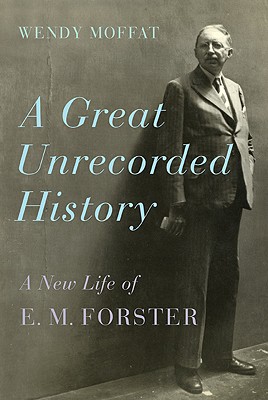
Wendy Moffat's wonderful biography of E. M. Forster which I wrote about last week reminded me of a hole in my knowledge of poetry - Greek poet C. P. Cavafy. I decided to patch this hole with Daniel Mendelsohn's recent translation of his collected works, something to savor over time.

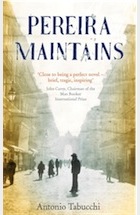
Finally, John Self spoke highly of Italian novelist Antonio Tabucchi's 1994 book Pereira Maintains. A brief work about an insular widowed journalist's political awakening.


This spate of voracious greed probably erupted because classes are beginning again on Tuesday and I forsee the end of freedom to read as I know it. A last hurrah, you know? Indulge me a little.

Thursday, January 27, 2011

Human stories told for nothing: The utter waste of war. (Books - A Long Long Way - Barry)

I had only ever heard of Irish novelist and playwright Sebastian Barry's The Secret Scripture, which I assumed (wrongly) to be some sort of commercialized quasi religious tripe, given the American cover which had a picture of an angel, and the fact that everyone was reading it. It put me right off. So last week, when my research advisor (an Irishman) put of copy of Barry's A Long Long Way into my hands, calling it one of his favorite books, I was forced to acquire an informed opinion of Sebastian Barry. That, and I was able to find out what my advisor liked in a book. That long preamble out of the way, I have to say that A Long Long Way was passionately written and devastating in its depiction of the human waste of war, in this case World War I.

It concerns Willie Dunne, a 5' 6" volunteer in the Royal Dublin Fusiliers. Irish participation in World War I aggravated an already fractious climate in the fight for home rule in Ireland, which came to a head in the Easter Rebellion in 1916. The rebellion led to a growth in popularity of the Irish republican movement. When the German front began to collapse, the British seriously needed soldiers and were forced to enact home rule. Willie Dunne was among the many Irish soldiers fighting a war on two fronts, one against the Germans, the other an internal battle among allegiances toward family and country. A Long Long Way is Willie's story.
He was a little baby and would be always a little boy. He was like the thin upper arm of a beggar with a few meagre bones shot through him, provisional and bare.
Barry has a poet's gift for grouping everyday words into elegiac sequences. He makes no bones about the fact that this is going to be a story of heartbreak.
And all those boys of Europe born in those times, and thereabouts those times, Russian, French, Belgian, Serbian, Irish, English, Scottish, Welsh, Italian, Prussian, German, Austrian, Turkish - and Canadian, Australian, American, Zulu, Burkha, Cossack, and all the rest - their fate was written in a ferocious chapter of the book of life, certainly. Those millions of mothers and their million gallons of mothers' milk, millions of instances of small-talk and baby-talk, beatings and kisses, ganseys and shoes, piled up in history in great ruined heaps, with a loud and broken music, human stories told for nothing, for ashes, for death's amusement, flung on the mighty scrapheap of souls, all those million boys in all their humours to be milled by the mill-stones of a coming war.
Human stories told for nothing. Words to choke a reader with sadness, and bitter words coming from a writer.

I found this cataclysmic story utterly enveloping. I could read it and be involved anywhere, on a crowded bus or in the quiet of my home. Barry has a sure hand in painting landscapes:
The field flowers were just appearing; light rains washed and washed again the pleasing fields. In those parts the farmers seemed to have decided that they might prepare to sow a harvest. The little villages seemed queerly optimistic; perhaps the human hearts were infected with whatever infects the very birds of Belgium. The sun lay along objects with indifferent and democratic grace, gun-barrel or ploughshare. The war was like a huge dream at the edge of this waking landscape, something far off and near that might ruin the lives of children and old alike, catastrophe to turn a soul to dry dust.
...and he people's them with incisive sentences:
He was mopping at his eyes with his sleeve like a bad actor. His big, doughy face was melting and as red as a red arse.
Usually I can't stand battle scenes. Whether in history or fiction, I find them impossible to envision, possibly because I can't see any people in them and find it impossible to see in my mind's eye the abstraction of a battalion. Not so with Barry's. His battle scenes, though virile and violent, are also populated. He is observant of the people in them:
The guns went on wailing and caterwauling. There were ferocious blows and bangs and thumps. The sergeant-major, for reasons of his own, was whistling 'The Minstrel Boy' now low under his breath, which was a curious fact, since he never whistled. Willie could see in his mind's eye the gunners work their guns, the way they were so used to it, and knew all the movements, like in a Saturday dance. Like they were waltzing or something with those metal guns.
And he writes damn good dialogue too. You can tell that Barry wrote for the theatre. It would be so easy to speak this lines:
'All the fucking lads up there. You should see the place. It's just a flat fucking few acres with little spots of white dust on it where the fucking houses were. And those devious Ulster lads from the 36th milling about and calling us wonderful fucking Paddies, that's what they said, and shaking our hands, And Australians and all kinds of mad bastards. And hundreds and hundreds of fucking Boche surrendering and shouting out that fucking Kamerad thing they do, and you couldn't blame them. What a fucking to-do. You wouldn't see it in Dublin on a Saturday night in the fucking summer, Willie. We're after winning this one. Isn't that a fucking how-are-you for the books?'
What Barry makes most plain in this beautiful book is the confusion and the utter waste of war, even in the case of a noble cause. It ruins the men (and now women) who fight it, the earth under them, the families they left behind. It ruins lives not even totally formed yet. One of its great tragedies, this book tells us, is that it ruins boys before they ever grow up enough to know their own minds.
Now the battalion in reserve was supposed to appear behind them in a bit and surge on wonderfully to Langemarck. Not a soul living seemed to be near them, nor a soul behind. All was a blank, black sheet of murderous nothing. It was daylight and the war had fogged the world.

Tuesday, January 25, 2011

The value of personal narrative over formulaic thinking (Books - An Abundance of Katherines by John Green)

At the tail-end of 2008, our late book blogging friend, Dewey, introduced me to YA author John Green and his Paper Towns, which was delightfully smart and funny. An Abundance of Katherines written by Green in 2006 is very much cut from the same cloth. An anagram-obsessed child prodigy who feels his best days are behind him, having just broken up with the nineteenth girl he has dated named Katherine, and having somewhat smotheringly sympathetic parents, goes on a road trip with his Arab-American friend Hassan to escape their sympathy and to figure out why he keeps getting dumped. They end in Gutshot, Tennessee, where the Archduke Ferdinand is claimed to be buried. Whether or not he figures out the mystery of relationships with other people, especially those named Katherine, is the substance of the book, so I'm not about to spoil it here.

"Do you think the people of Gutshot, Tennessee, have ever seen an actual, living Arab?"

"Oh, don't be so paranoid."

"Or for that matter do you think they've ever seen a Jew-fro?"

Colin thought that over for a moment, and then said, "Well, the woman at Hardee's was nice to us."

"Right, but the woman at Hardees called Gutshot 'the sticks,'" Hassan said, imitating the woman's accent. "I mean, if Hardee's is urban, I'm not sure I want to see rural." Hassan rolled on with his diatribe, and Colin laughed and smiled at all the right places, but he just kept driving, calculating the odds that the Archduke, who dies in Sarajevo more than ninety years before, and who'd randomly popped into Colin's brain the previous night, would end up between Colin and wherever he was heading. It was irrational, and Colin hated thinking irrationally, but he couldn't help but wonder whether perhaps being in the presence of the Archduke might reveal something to Colin about his missing piece. But of course the universe does not conspire to put you in one place rather than another, Colin knew. He thought of Democritus: "Everywhere man blames nature and fate, yet his fate is mostly but the echo of his character and passions, his mistakes and weaknesses."
Green has masculine adolescent nerd banter down to a science. Much of the dialogue in An Abundance of Katherines , as was true in Paper Towns, is quite funny, although sometimes it just skirts cute. I was a little surprised to see a road trip come up in this book, as that had been one of the strongest parts of Paper Towns. Seeing the device used again left me fearing that the book might end up fitting some sort of John Green template, but the characters and settings were original enough so that it didn't seem that way. Adult readers will probably find much of the plotting obvious, but one could say the same about most commercial feature films and that doesn't stop them from being an enjoyable confection. Green creates believable contemporary teenage characters whose banter is a joy to read. He tells a swift-moving yarn with some good growing-up messages for that aged reader about how we can know each other through personal narrative - that is, the value of a good story over formulaic thinking - a good message for the sensitive and clever reader for whom Green seems to write.

Saturday, January 22, 2011

Focused biography of E. M. Forster & sociopolitical history of gay life in 20th Century Britain (A Great Unrecorded History by Wendy Moffat)

In the opening chapter of Wendy Moffat's A Great Unrecorded History, her new biography of writer E. M. Forster, John Lehmann influential promoter of some of the 20th century's great writers, and novelist Christopher Isherwood, both expat Britains living in California, receive the typescript of Forster's long suppressed gay-themed writings. Included were the novel Maurice (probably known to many people through the beautifully adapted film by Merchant and Ivory) and many other stories, unusual for their open depiction of homosexuality and, in the case of Maurice, their hopeful ending. Forster had a highly successful career as a novelist, but this was built on 5 novels - The Longest Journey, Where Angels Fear to Tread, A Room with a View, Howard's End, and A Passage to India - all completed by the time he was 32.
Looking down at the jumble of pages, Lehmann was "stunned" to see that the revised Maurice typescript was just the beginning. There were masses of new stories "on a homosexual theme, of quite extraordinary power and depth." One - a terrifying love affair between a colonial master and his subaltern lover - could be read as a darker, sexier iteration of the unrealized friendship between Dr. Aziz and Mr. Fielding in A Passage to India. So Morgan had not stopped writing fiction. Indeed, he had composed stories into extreme old age. Christopher was gleeful; John "overwhelmed." Morgan had kept his promise. Christopher felt the future of fiction, and the true meaning of Morgan's life, was in his hands.
Indeed, it is the thrust of Moffat's energetically focused look at Forster's life, that the well-spring of E. M. Forster's humane, observant, and beloved writing, was the fact that this rather shy and ordinary man was born homosexual at a time in history when one's livelihood, if not one's life, depended upon keeping that fact hidden. (There are many places where that is still true and, be assured, there are people who still work in my own country to make homosexuality a reason to be the specific recipient of unequal treatment under the law).
On that spring morning, as always, Morgan looked impeccably ordinary, like "the man who comes to clean the clocks." It was a canny disguise. In the 1920s, his college friend Lytton Strachey had nicknamed him the "Taupe," the French word for "mole." Though he was one of the great living men of letters, in a loose-fitting tweed suit and a cloth cap he slipped unnoticed into the crowd or sat quietly at the edge of the conversational circle. This mousy self-presentation was no accident. Forster came of age sexually in the shadow of the 1895 Wilde trials, and he learned their lesson well.
One of Moffat's talents is her ability to subtly integrate researched facts (she wasn't personally acquainted with most of these people) into sharply written characters who seem to breathe on the page. Forster was a fearful man, we learn in Moffat's biography. He was in his late thirties before he ever had a sexual experience. He lived with his mother until her death and one of his chief reasons for avoiding publication of any of his openly gay writing was that, despite several significant relationships, he was not 'out' to her.
"I am ashamed at shirking publication but the objections are formidable." He was chiefly concerned that the news of his homosexuality would hurt those he loved. As time passed, Morgan's younger friends joined Christopher in making the case to publish. One friend pointed to the example of Andre Gide, whom Forster admired, and who had published explicitly homosexual memoirs. Forster retorted: "But Gide hasn't got a a mother!"
What Moffat admirably accomplishes with this book amounts to more than a biography of an important writer figure. This book succeeds on that front, to be sure, but it is as much a socio-political history of growing up and growing old as a gay man in 20th century England. It is in that context that she examines the content of Forster's best-known writing, how his talents emerged, what he chose to publish and what to save for a readership that would be more disposed to appreciate his work, and how he matured as both a writer and a man to become an outspoken advocate of tolerance, a conscious chronicler of gay life (the unrecorded history referred to in this book's title), and a model for other gay people to live their lives and make their work with greater courage. These included not only the many artists he knew, but bus drivers, policemen, and "respectable upper-middle-class professional men" leading "normal" lives.

Among the pleasures of reading Moffat's well-constructed and swift-moving narrative are the many well-known creators and thinkers Forster met, e.g., Leonard and Virginia Woolf, Isherwood, Benjamin Britten and Peter Pears, Maynard Keynes, Lytton Stratchey, Lincoln Kirstein, as well as some lesser-known artists of whom I enjoyed being reminded and whose work I am now going to seek out like poet Paul Cavafy, painters Paul Cadmus, Jared French, and George Tooker. As well as her frank and non-judgmental depictions of Forsters' chief relationships, particularly the unconventional long-term relationship he sustained with Bob Buckingham. One could, I suppose, fault Moffat for not examining his literary works from any other angle, but other books do that, and her whole thesis is that an understanding of Forster's work is not complete nor is it honest without the inclusion of Forster's sexuality. This influence was the driving-force of his work precisely because it was repressed and it has, until this book, been at best politely referred to, but never so thoroughly and respectfully studied as the formative influence it was to his work as it is here by Moffat.

Tuesday, January 11, 2011

The pain of not-knowing and of knowing (Books - Reading in the Dark by Seamus Deane)

Friend Sheila enthusiastically recommended Seamus Deane's 1996 novel of growing up in Northern Ireland in the 1940s and 50s, Reading in the Dark, and I echo her enthusiasm. Deane renders the indignation of a child who knows he is excluded from the mysteries of adulthood with great conviction. In the case of this novel, these are not just the work-a-day mysteries of sexual relations or violence considered too great for a child's understanding. Our first-person narrator is aware of deep secrets that rule the internecine feuds within his family, secrets of informing and murder that haunt his parents' every waking action. They flavor his life like a strong spice one can taste in every bit of a stew and yet not know what it is. He learns the full story in dribs and drabs, sometimes from unknowing truth-tellers. Deane's talent, is withholding it from his reader as well in such a fashion that the not unfamiliar story of an Irish childhood becomes riddled with suspense, and his coming of age filled with the regret that accompanies the realization that being excluded from this knowledge is no less tormenting than possessing it.

The great pleasures of Deane's many short chapters are his sense of humor, the wisdom his narrator grows into about people and their burdens, and absolutely crack writing.
...But our celebrations were not official, like the Protestant ones. The police would sometimes make us put out the fires or try to stop us collecting old car tyres or chopping down trees in preparation. Fire was what I loved to hear of and to see. It transformed the grey air and streets, excited and exciting. When, in mid-August, to commemorate the Feast of the Assumption of Our Lady into heaven, the bonfires were lit at the foot of the sloping, parallel streets, against the stone wall above the Park, the night sky reddened around the rising furls of black tyre-smoke that exploded every so often in high soprano bursts of paraffined flame. Their acrid odour would gradually give way to the more fragrant aroma of soft-burning trees that drifted across the little houses in their serried slopes, gravelled streets falling down from the asphalted Lone Moor Road that for us marked the limit between the city proper and the beginning of the countryside that spread out into Donegal four miles away. In the small hours of the morning, people sitting on benches and kitchen chairs around the fire were still singing; sometimes a window in one of the nearby houses cracked in a spasm of heat; the police car, that had been sitting in the outer darkness of two hundred yards away, switched on its lights and glided away; the shadows on the gable wall shrivelled as the fires burnt down to their red intestines. The Feast of the Assumption dwindled into the sixteenth of August, and solo singers began to dominate the sing-along chorusing. It marked the end of summer. The faint bronze tints of the dawn implied autumn, and the stars fainted into the increasing light as people trailed their chairs reluctantly home.
Some of his paragraphs could be sung, so beautiful are the processions of simple words that accomplish his rich and deeply-felt descriptions. This memoir-like novel is tinged with deep sadness, but the way Deane renders his story is shear pleasure.

Friday, January 7, 2011

Case study of a prodigious memory (Books - The Mind of a Mnemonist by A. R. Luria)

Russian neuropsychologist A. R. Luria's books might be considered the prototype for Oliver Sacks's. Sacks is a neurologist rather than a neuropsychologist, but both saw patients with atypical brains (whether the person was born that way or injured) and both sought to understand the consequences of those differences not only upon their cognitive processes - reasoning, perception, memory - but upon the whole make up of the human being. Luria is the author of several classic books in the field, the most notable of which are two slim case studies of men with unusual minds - The Man with a Shattered World and The Mind of a Mnemonist. The former is a portrait of a man with a gun shot wound to the brain sustained in 1943 and who can, as a result, only experience the world in fragments (click the title to link to my write-up of it). The latter, concerns S., a man whose synesthesia provides such stark and indelible experiences of objects and events that he appeared to remember a limitless amount of information.

Synesthesia is a condition experienced by approximately 1 in 200 people, in which one sensory experience (say, seeing the letters of the alphabet) consistently evokes another sensory experience whose source is not in the external environment, but in the person's mind. For example, a person may see each letter of the alphabet in a distinct color, even though the ink on the page is black, or each musical note heard on the scale might be accompanied by a particular taste. Generally these relationships are consistent, that is, 'a' will always appear light blue and 'b' brick red. For a long time, scientists doubted the veracity of these reports, thinking that the synesthetes simply had strong imaginations and only felt as though they saw blue, or perhaps they were people with a psychological makeup such that they wanted attention for having an unusual skill, but it has since been shown that this experience has all the verisimilitude of a perception of an external stimulus, despite the fact that the synesthete's brain is producing the accompanying experience. V. S. Ramachandran explains how this was tested in his book A Brief Tour of Human Consciousness

The Mnemonist's memory was prodigious.
Experiments indicated that he had no difficulty reproducing any lengthy series of words whatever, even though these had originally been presented to him a week, a month, a year, or even many years earlier. In fact, some of these experiments designed to test his retention were performed (without his being given any warning) fifteen or sixteen years after the session in which he had originally recalled the words.
Not only that, he could produced them backwards.
I recognize a words not only by the images it evokes but by a while complex of feelings that image arouses.
However, what S. failed to encode was the associations among the elements of his memory traces  - the glue that gives what we remember its meaning. So the very techniques that gave S. his prodigious memory compromised his ability to capture the gist of of what he was remembering. In fact, S. often struck those he met as disorganized and not terribly bright, as impressive as were his memory talents. Indeed, the multiple sensations called up by his synesthesia were an impediment to his everyday functioning.
When I ride in a trolley I can feel the clanging it makes in my teeth. So one time I went to buy some ice cream, thinking I'd sit there and eat it and not have this clanging. I walked over to the vendor and asked her what kind of ice cream she had. "Fruit ice cream," she said. But she answered in such a tone that a whole pile of coals, of black cinders, came bursting out of her mouth, and I couldn't bring myself to buy any ice cream after she'd answered that way...
People in my field, particularly in its inception, often learned about normal brain function from atypical brains. Although the writing is a bit repetitive, Luria's portrait is a brief, vivid, and humane introduction to neuropsychological case studies for anyone interested in an introduction.

Thursday, January 6, 2011

Relentless narrative of uncovering (Books - The Story of the Night by Colm Toibin)

Com Toibin's 1996 The Story of the Night is a multi-strand coming-of-age novel. In it, Richard, a young gay man in 1980s Buenos Aires comes into himself, learning to love and shedding his naivete so as to operate successfully in the changing political landscape of his country. Argentina tries to grows up to become a playing partner in the international political and economic community. Gay life in Western culture comes out of the closet - in some ways by dint of political determination and to some degree it is forced out by illness. Toibin's three stories meet in the person of Richard. The Story of the Night is compulsively readable, not because the political story is an entertaining thriller, as the blurbs claim. I find Toibin's skill more subtle (or his talent more blatant) in that he takes a rich intellectual understanding of the politic landscape and writes plot of political complexity, keeping its events clear as well as tension-filled. At the same time, he writes a gay love story straight from the heart, that is uncliched, full of character-driven details. For example, the wooing of Richard by the character who ultimate becomes his love (I won't spoil the plot by telling you who) is not a pick-up in a bar, or a furtive cruising in a public bath, the more common available options during this period, it happens instead during a car ride, not with a clever line or a quick grope, instead the character reaches over and unties Richards shoe laces. The ensuing love story is deeply sad, but also triumphant.

Toibin's writing is clear-eyed and smart, but not fussy.
During he last year my mother grew obsessive about the emblems of empire: the Union Jack, the Tower of London, the Queen, and Mrs. Thatcher. As the light in her eyes began to fade, she plastered the apartment with tourist posters of Buckingham Palace and the changing of the guard and magazine photographs of the royal family; her accent became posher and her face took on the guise of an elderly duchess who had suffered a long exile. She was lonely and sad and distant as the end came close.
As I revisit the novel's opening paragraph, I can see how Toibin established a novel about resisting death - the death of Richard's mother, of Richard's innocence, the death throes of the British Empire in the struggle with Argentina over Las Malvinas, the end of the average Argentinian's being able to sweep under the rug the knowledge of the thousands of political murders carried out, which is not unlike what society tried to do with AIDS in the 1980s. If it didn't touch them personally, one could pretend it didn't exist. But while symbols may help us hang on to what has already passed, life marches forward. If we live longer and we don't shut our eyes, increased knowledge is inevitable. One may either be its victim or live with the truth and act out of its consequences. Toibin's narrative mirrors this relentless current of uncovering. The writing seems powered by an engine, I couldn't stop reading it, and yet the story is also deeply beautiful. The idyll doesn't last, but the resulting love is deep, the result of open eyes and passion-driven hearts, looking forward.

Tuesday, January 4, 2011

Forces of nature observed (Books - Your Presence is Requested at Suvanto by Maile Chapman)

I'm really glad that I won a copy of Maile Chapman's Your Presence is Requested at Suvanto from Michelle because, if it had been a book I had found on my own, I'm not sure if I would have finished it. That is not to say that, after having done so, I didn't think it a worthwhile read - I did. But this is a singular book, its territory unfamiliar and a little uncomfortable for me: feminine and somewhat medically graphic. It was set in Finland in a convalescent hospital in the early twentieth century - almost a feminine counterpart to that monument of convalescent of hospital novels, The Magic Mountain. This one chronicles the lives of its staff, particularly Sunny, a recently arrived American nurse who leaves behind her a shadowy past, and residents, particularly Julia, a cantankerous retired tango dancer from Denmark. Patients from two distinct classes occupy the hospital. Those on the lower floors are poorer, while those on the upper floor are wealthy and the legitimacy of their diagnosis is doubtful to some observers.

The writing suited the setting, stark, angular, the narrative alternating between third-person and first-person-plural, for reasons that don't reveal themselves until late in the novel:
Propped and reading in the bed, pages moving behind the windows of the high private rooms, sometimes we're the ones doing that, but mostly we're happy downstairs, turning, moody in the black dress, hairpins in firelight, a winter tango, staring over one another's shoulders for a slow display of emotion in the cold, quiet country. Just for fun, just among these friends. And in retrospect we love the other creatures too, the dark birds and small siili, our little hedgehog, and that bowl of fish near the heating panel in the Solarium. The hedgehog we think we caught in photos. The fish are floating, pulsing like blood cells in the eye, pulsing like piano and especially violin, like a record turning unattended, fires lit and flaring against the windows, bright against the shadows of the blackening birch, the cedars, and the ever-present pines, the backdrop, the audience, it is so hard to catch attention from the pines. And they are thicker now. But we love the pines outside the windows of that room where we pushed back the couches and practiced, harmlessly. We love everything that we did. Including even the burden of hot water in the bowels, the squeeze in the viscera and trace of metal in the mouth, damp hear at the hairline, and the hidden unpleasantness that returns along with blood. We love these memories because pain is a haunting beyond the muscles and repetition serves a purpose. We are happy that we're happy now, and happy that we're safe now, and so we'll repeat this for you: we are safe and happy now, and that is what we wanted.
The narrative imposed upon this reader a deliberate pace. This novel resisted quick, cursory reading in a way that, ultimately, suited the long winter months during which its events unfolded. In some ways, one could say that the petty personal politics of the patients and staff were the substance of the novel's action, but really, this novel was a chronicle of change - the deliberate kind that comes as a result of some decision, as well as the more gradual kind that inevitably occurs as a function of nature's larger forces. The petty politics that comprise this novel's plot then, arise as a result of how well the characters' lives prepared them to react to change. What I most admired about Chapman's book was her delicately detailed observations of this subtle process. What I enjoyed least is the number of times I became aware that this novel was written on a Fulbright Scholarship in Finland. There were times that the content of her research or the process of learning the Finnish language transferred itself a bit baldly to the page. But all-in-all, Your Presence is Requested at Suvanto steeped me in a novel setting and introduced me to touching and memorable characters. It facilitated a change in my pace, that let me observe a shift among a group of characters that was both subtle and immense.

Friday, December 31, 2010

2010 in review

Now a tradition (although I had to be reminded by Pete), the first lines of the first post of each month in 2010...

January
Typically, the new year is rung in here with friends and fondue but The Ragazzo has been so sick that he was in bed and I celebrated by doing the laundry, watching a video, and going to bed at 10:30. Woo- hoo. Hope you brought in 2010 with more appropriate pomp.

February
Raise High the Roofbeams Carpenter & Seymour and Franny & Zooey are some of my favorite writing ever (J.D. Salinger, those italics were for you). By now, most inveterate readers have heard that J. D. Salinger died last week at the age of 91.

March
Rodolfo Llinas's 2001 book, i of the vortex attempts to bridge our knowledge about the concepts of mind and self and our knowledge about brain cells.

April


I do not remember a time when I couldn't read. My earliest reading memories are the books I loved as a child - The Snowy Day, Little Blue and Little Yellow, I am a Bunny, The Little Bear. Even though in some of those memories I was read to and in some I held the book, they all seem to my current memory to be memories of reading the books myself.

May
In anticipation of writing about Anita Brookner's precisely observed, and sardonic The Debut in the coming days, here is a Paris Review interview with her from 1987. Very exacting in her moral outlook and somewhat rigid in her thinking, she started writing novels in her 50s and has produced one per year.

June
Hmmm, so much for checking in... Returned today from points both Mid Atlantic and Midwest. A little road trip starting in Wisconsin, through Illinois and Indiana, Kentucky, West Virginia, ending up in Pennsylvania at a great little log cabin/b&b. Much seeing of friends and family, (and one fellow book blogger!), and a little bit of post-semester relaxation on our own as well.

July
It was probably a good year-and-a-half ago that Dovegreyreader conducted a wonderful interview with author Charles Lambert where I learned of his collection of stories The Scent of Cinnamon and his novel Little Monsters. I bought the second and for some reason it then festered on my TBR pile unread. Then a few weeks ago I heard described a new novel that Lambert had written set in Italy. I immediately ordered Any Human Face, it arrived this week and I glanced at the first page Thursday evening, becoming instantly hooked.

August
A bunch of us did a quintessential summer in New York thing Saturday. We waited on line in Central Park for free tickets for Shakespeare in the Park. There are two shows to see. One of them is the line. The cast: New Yorkers - interested in what's going on in their city, always the expert on it, not too nosy, generally respectful of the rules (you have to be in a city of 8 million people). There were Risk players, people playing guitar quietly to themselves, nappers, those studying up for the play, those who brought their New York Times (half of it is printed Saturday), their laptops, library book readers, bookstore book readers, kindle readers, those who brought their picnic (us - whole wheat french bread with nutella, and fruit), and those who called the local deli which actually delivers to the line. They sat on benches, lay on blankets, reclined in beach chairs, and snoozed on inflatable mattresses. There were the line monitors employed by the theatre, the tourists capturing the line on their video cameras, the saxophonist playing Mozart and Cole Porter, and the conspiracy theorist parading up and down the line playing for our sympathy. Then, of course, there was also The Winters Tale by William Shakespeare.

September
English-born historian and travel writer William Dalrymple has spent 25 years writing about Asia, particularly India. His Nine Lives bemoans the erosion of the many idiosyncratic and little-known practices of faith, some ascetic, some hedonistic, some bloody, some obsessively non-violent, some monotheistic, others pantheistic, that have co-existed in the region comprising India, Pakistan, and Tibet. One price of the region's modernization is the homogenization of these traditions.

October
As far as I am concerned, a vacation is an opportunity to read away from the typical pressures of life, acquire new books at bookstores I've never been to, take a look at the books in the libraries of the b&bs we stay at, and get through my stack of old New Yorker and New York Times Book Reviews to get new ideas for reading I want to do. In fact, a vacation is not a vacation for me if I can't read.

November
The folks at Edify Media were kind enough to send me an copy of Frank Cottrell Boyce's novel for young readers (8 - 12 says the marketing) - Cosmic.
Mom, Dad - if you're listening - you know I said I was going to the South Lakeland Outdoor Activity Center with the school?

To be completely honest, I'm not exactly in the Lake District.

To be completely honest, I'm more sort of in space.

I'm on this rocket, the Infinite Possibility. I'm about two hundred thousand miles above the surface of the Earth. I'm all right . . . ish.

December
Usually the word bestseller sends me running for cover (I'm such a snob), and I no longer remember what lead me to Nicole Krauss's The History of Love, but it is smashing.