I remember, too, something that Vendler wrote, years later, in a piece about a volume of Merrill’s work that was published after the poet’s death, at the relatively early age of sixty-eight—about how, now that Merrill was gone, he wouldn’t be around to show her how to grow old. I read this with astonishment. So this was what poetry was for: to show you how to live. As for Kael, the sheer extremity of her enthusiasms, the ornery stylistic over-seasoning, the grandiose swooping pronouncements, made it clear that there was something enormous at stake when you went to the local movie theatre.A thoughtful, instructive, and balanced essay.
Friday, August 31, 2012
Knowledge + taste = meaningful judgment
The excellent Daniel Mendelsohn, sings his creed at Page-Turner on the job of a critic. (The title for this post is his formula, not mine.)

Sunday, August 26, 2012
A Winter's Tale for the End of Summer (Books - Winter's Tale by Mark Helprin)
In the waning days of summer, I have been energetically immersed in reading, but not so inclined to write. I can probably blame it on all the writing I'm doing at the lab. That's as good an excuse as any. You should be able to read some sort of mention of The Rational Optimist, Consciousness, and Winter's Tale one of these weeks, if that's what you're pining for. And I should be done with Eric Kandel's The Age of Insight soon. The last one is a book after my own heart on the subject of neuroscience and Viennese art, no really. I intend to finish it soon, even if only to have read it prior to visiting Vienna in a few weeks. Now that I have started my fingers going, maybe I'll share less of a coherent review than some disjointed thoughts about my re-read of Mark Helprin's Winter's Tale now, prior to my book club showing up here to eat fruit and cheese and discuss it.
 What a passionately lyrical saga Mark Helprin has fashioned in Winter's Tale (Harcourt Brace & Co., 1983) . It is a moralistic tale, a love story, a fantasy, and an absolute love song to a fictionalized late 19th century New York City. I was aware as I read of how highly literate the narrative voice is, even while being thoroughly submerged in the lightening-fast 700 pages which are romantic, imaginative, and often thrilling.

Saturday, August 4, 2012
An antidote to summer - the useless poems of Gennady Aygi
Some snowy poems as an antidote to the dog days of summer. Jamie Olson writes informatively on the dissident form and ordinary content in his review of a new translation of Russian poems Into the Snow: Selected Poems of Gennady Aygi. Sounds enticing.
The difference between Aygi’s ars poetica and Mandelstam’s lies in the way the two poets represent poetry itself. Both of them believe that other aspects of experience lack something essential, but while Mandelstam implies that the aesthetic power of poetry can fill that gap, Aygi dismisses even his own art as powerless. If a dissident is one who rejects the dominant ideology, then for Aygi that rejection applies in some sense to poetry as well.On Berfrois.
Thursday, August 2, 2012
Tracing the moral decay of politics (Books - Echo House by Ward Just)

Thursday, July 26, 2012
The passage of time and the creative art of biography (Books - The Stranger's Child by Alan Hollinghurst)

Tuesday, July 24, 2012
One great talent appreciates another
The great rhapsodist of the American theatre, Tennessee Williams, on the fragile yet directed talents of actress Sandy Dennis.
Hat tip: Sheila.
Check out the whole web site - it has one wonderful clip after another on the personalities and processes of great actors.There is a belief among some--primarily critics--that an actress willfully commits to the commission of a particular set of mannerisms and attitudes...
Hat tip: Sheila.
Sunday, July 22, 2012
What to do when the cake doesn't turn out the way you expect
A truly lovely tribute to Nora Ephron by Nathan Englander at Page-Turner with excellent thoughts on creative process.
And that to me is a good way to sum up what being a working artist is all about. It’s about being a person who makes real things in a real world.
Saturday, July 21, 2012
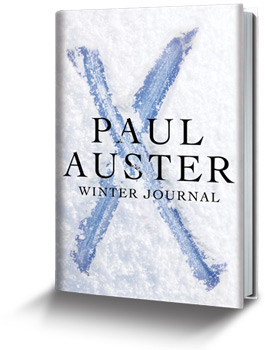
Writing in and of the body (Books - Winter Journal by Paul Auster)
Wednesday, July 18, 2012
Two maverick souls struggle for closeness (Books - Three Weeks in December by Audrey Schulman)

Sunday, July 15, 2012
Allowing the reader the unfamiliar feeling of having time (Books - A Time of Gifts by Patrick Leigh Fermor)

One of the early chapters of this book touches at some retrospective length on the way things began to change; how I moved from the fairly predictable company of fellow army-candidates into older circles which were simultaneously more worldly, more bohemian and more raffish: the remainder, more or less, of the Bright Young People, but ten years and twenty thousand double whiskies after their heyday, and looking extremely well on the regime. This new and captivating world seemed brilliant and rather wicked; I enjoyed being the youngest present, especially during the dissipated nocturnal ramblings in which every evening finished: ("Where's that rather noisy boy got to? We may as well take him too"). I had reached a stage when one changes very fast: a single year contains a hundred avatars; and while these were flashing kaleidoscopically by, the idea of my unsuitability for peacetime soldiering had began to impinge. More serious still, the acceptance of two poems and the publication of one of them - admittedly, only on foxhunting - had fired me with the idea of authorship.But Patrick Leigh Fermor's self-study period as a writer fails to solidify as he had hoped.
Saturday, July 14, 2012
Compelling biography of a monster (Books - The Emperor of all Maladies by Siddhartha Mukherjee)

Wednesday, July 4, 2012
Positive Deviant Alert
Two positive deviants attracted my attention lately:
Natalie Angier profiled physicist Dr. Mildred Spiewak Dresselhaus, a New Yorker who defied the odds for women in science thanks to the encouragement of the Nobel laureate and medical physicist Dr. Rosalyn Yalow. She studied with Enrico Fermi at University of Chicago and then began her own research on carbon at MIT half a century ago.
Our favorite design magazine The World of Interiors, an English publication, featured an essay in the latest issue by the blogger and author of the book Spitalfields Life. Check this excellent blog out. It offers affectionate and energic appreciations of the history and contemporary culture of the hip and energetic Spitalfields neighborhood of London. The author's mission:
Natalie Angier profiled physicist Dr. Mildred Spiewak Dresselhaus, a New Yorker who defied the odds for women in science thanks to the encouragement of the Nobel laureate and medical physicist Dr. Rosalyn Yalow. She studied with Enrico Fermi at University of Chicago and then began her own research on carbon at MIT half a century ago.
Dr. Dresselhaus has also been a prominent advocate for women in physics and engineering, disciplines that are still short on high-ranking female faces and that were outright hostile to women when she began her career in the late 1950s. Even before entering science, she was well accustomed to hostility and hard times, having grown up impoverished in a rough part of the Bronx.
Our favorite design magazine The World of Interiors, an English publication, featured an essay in the latest issue by the blogger and author of the book Spitalfields Life. Check this excellent blog out. It offers affectionate and energic appreciations of the history and contemporary culture of the hip and energetic Spitalfields neighborhood of London. The author's mission:
Over the coming days, weeks, months and years, I am going to write every single day and tell you about life here in Spitalfields at the heart of London. How can I ever describe the exuberant richness and multiplicity of culture in this place to you? This is both my task and my delight.
Let me disclose to you the hare-brained ambition I am pursuing, which is to write at least ten thousand stories about Spitalfields life. At the rate of one a day, this will take approximately twenty-seven years and four months. Who knows what kind of life we shall be living in 2037 when I write my ten thousandth post?
Sunday, July 1, 2012
An imagined Henry James - portrait of a master by a master (Books - The Master by Colm Toibin)

Saturday, June 30, 2012
Eating to be free...

I don’t know what “foodie” means, but it seems to me to mean something unbalanced. There is a difference, and should be, between being in the know about “in” restaurants, chefs, food trends and liking and feeling able to eat well. One thing that really matters is feeling as though one, and often only oneself, is able to completely freely satisfy one’s own appetite. That is a good reason to know how to cook.
Thursday, June 28, 2012
Frisky collage maker
One of my favorite poets, Dan Chiasson, posts a beautiful appreciation of The Collective Writings of Joe Brainard, recently published by the Library of America, at Page-Turner.
Brainard is one of those figures—in his art, his writing, and, one gathers, his person—whose primary genius was to give long-sought relief from overbearing works of art, pieces of writing, and people. For their friendliness, their air of openness, their distaste for guile and pretense, Brainard’s productions have a soothing quality; the other “New York School” writers and artists seem almost reverent and self-serious next to him.Now who could possibly make Frank O'Hara seem reverent?! I am going to have to find a copy of I Remember today.
He is better known as an artist: a maker of frisky collages, a painter of exquisite male nudes, an assembler of miniatures. But he wrote beautifully, especially in his iconic connect-the-dots memoir, “I Remember.”
Thursday, June 21, 2012

Check out the story on All Things Considered.
Saturday, June 16, 2012
Sanity: a key to the good life? (Books - Going Sane by Adam Phillips) The Tyranny of Positive Thinking II

Sunday, June 10, 2012
Meeting the stranger in oneself (Books - Be Near Me by Andrew O'Hagan)
 The subject matter of a book is often what determines whether or not I read it. Who and what it is about leads us to anticipate our interest in its events or identification with its protagonist. The more we read, the more experienced we imagine we become at such predictions, but then every so often we get a surprise. I picked Andrew O'Hagan's Be Near Me off the recommended books table at a favorite bookstore a week back only to find out it is about an Oxford educated Catholic priest engaged to lead a parish in an economically depressed village in Scotland. That was not at all what I was interested in for my next read and yet this novel about encountering strangers - particularly the stranger in oneself - turned out to be the most involving, probing, and beautifully written novel I have read this year.
Saturday, June 9, 2012
Collect data, test, revise theory, repeat....
Carlo Rovelli, theoretical physicist and author (The First Scientist) is excellent on how science works at Edge.
Collect data, test, organize results in a theory, collect more data, test, revise theory, repeat.
Science is not about certainty. Science is about finding the most reliable way of thinking, at the present level of knowledge. Science is extremely reliable; it's not certain. In fact, not only it's not certain, but it's the lack of certainty that grounds it. Scientific ideas are credible not because they are sure, but because they are the ones that have survived all the possible past critiques, and they are the most credible because they were put on the table for everybody's criticism.
Collect data, test, organize results in a theory, collect more data, test, revise theory, repeat.
Tuesday, June 5, 2012
Unlive a little.
Psychoanalyst and writer Adam Phillips (On Kissing, Tickling and Being Bored, Going Sane) a sensible and erudite thinker about the human mind its products has a new book out: Missing Out: In Praise of the Unlived Life and so is profiled in the Guardian.
Hat tip: Bookslut
"I'm not on the side of frustration exactly, so much as the idea that one has to be able to bear frustration in order for satisfaction to be realistic. I'm interested in how the culture of consumer capitalism depends on the idea that we can't bear frustration, so that every time we feel a bit restless or bored or irritable, we eat, say, or we shop."He's great at where culture meets feelings. And there is a picture of his bookshelves.
Hat tip: Bookslut
Subscribe to:
Posts (Atom)