Showing posts with label creative process. Show all posts

Saturday, July 16, 2016

The Birth of a Narrative (Books - The Sky Over Lima by Juan Gómez Bárcena)

The debut novel of Spaniard Juan Gómez Bárcena - The Sky Over Lima (Houghton Mifflin Harcourt, 2016) - is a mischievous, Escher-like paean to the power of the written word.  His protagonists are 20-year-old Carlos and José, the first the scion of an aristocratic family, the second of a nouveau-riche manufacturer.  Both are rich enough to rent a Parisian-like garret in their home city of Lima, and, although they live with their parents, go there to live out a fantasy of being great writers. They have a passionate crush on literature, playing a game in which every person they encounter is turned into a character in a great novel. Their law professor become's Tolsoy's Ivan Ilyich.  A woman of their acquaintance, Madam Bovary having lived into old age.  When they learn that Ramón Jiminéz, the Nobel-winning Spanish bard that they idolize, has published a volume not available in Peru, they struggle to write a letter that will convince him to send them a copy, unsatisfied with draft upon draft, until they realize:
They must embellish reality, because in the end that is what poets do, and they are poets, or at least they've dreamed of being poets on many late nights like this one.  And that is exactly what they are about to do now: write the most difficult poem of all, one that has no verses but can touch the heart of a true artist. 

It starts out as a joke, but then it turns out it's not a joke.  One of the two say, almost idly, It would be easier if we were a beautiful woman, then Don Juan Ramón would put his entire soul into answering us, that violet soul of his - and then suddenly he stops, the two young men look at each other a moment, and almost unintentionally the mischief has already been made. 

Sunday, May 1, 2016

People are more than objects in space (Books - A Doubter's Almanac by Ethan Canin)

Ethan Canin was already one of my favorite authors for having written For Kings and Planets, and I have frequently recommended his The Palace Thief and Emperor of the Air.  With A Doubter's Almanac (Random House, 2016) Canin has written a "great" book, in the sense of giving expression to profound experiences, and also, I believe, in creating something whose meaning extends beyond its exemplars - the concerns of these specific characters, the obsessions of the period in which it was written - and has the potential to be enduring. Time will tell on that second point.

In some ways, Canin is writing about the same things he has always written - fathers and sons, success and failure, gut-smarts and brains - all within the scopes of the grandest of considerations: time and space.  Time as it is experienced on a human scale, through one generation of a family experiencing another.  Three generations of the Andret family are the focus of this novel.  Space as it is described by a branch of mathematics called topology, which studies the interrelation of things, though not on the level they are visible in nature, on a hypothetical level of multiple dimensions. This is the focus of the work of Canin's protagonist, Milo Andret, who may be a genius in using math to describe such relationships but is profoundly disabled in forming a typical human bonds and severely limited even in insight into himself.  In one scene, Canin describes Milo as having to touch his own face to understand that he was smiling.

Tuesday, June 16, 2015

David Grossman on his Writing Process

If you have loved David Grossman's fiction, as I have (see here on To the End of the Land), then you will appreciate this 2007 Paris Review interview with him on Arabs and Israelis, his writing process, and his life.
 In recent years, I feel I’m less and less influenced by writers. I do not see this as a good sign, by the way. I want to be influenced by writers. I think it is a sign of being open...
...the books that really matter, the books that I cannot imagine my life without having written, are the more demanding ones, like The Book of Intimate Grammar, Be My Knife, See Under: Love, and the book I’m writing now. I may occasionally like to write an entertaining book, but I take literature seriously. You’re dealing with explosives. You can change a reader’s life, and you can change—you should change, I think—your own life.

Usually a lighter book will serve as a kind of recovery for me. I devastate myself when I write a certain kind of book—there is a process of dismantling my personality. All my defense mechanisms, everything settled and functioning, all the things concealed in life break into pieces, because I need to go to the place within me that is cracked, that is fragile, that is not taken for granted. I come out of these books devastated. I don’t complain, of course. This is how books should be written. But my way to recover from this sense of total solitude is to write books that will bring me into close contact with other people. I wrote The Zigzag Kid because I had to recover from The Book of Intimate Grammar and Sleeping on a Wire.

Saturday, May 16, 2015

Two formative men of the American Theatre (Books - A Life by Elia Kazan & Tennessee Williams: Mad Pilgrimage of the Flesh by John Lahr)

The life stories of two American Theatre makers monopolized my reading back in January: Elia Kazan: A Life, film and theatre director Kazan's hefty, probing memoir (Alfred A. Knopf, 1988) and Tennessee Williams: Mad Pilgrimage of the Flesh (W.W. Norton & Co. 2014), John Lahr's deftly paced, thoroughly researched, deeply perceptive biography of the great playwright. Two men could not have had a greater influence on the structure and build of action, the feeling of innocence and epiphany, the rhapsodic music of text, the themes of individuality and of sex that were the coming-of-age of the American theatre and film in the 1930s - 1970s, than Williams and Kazan.  Two men could not have been more superficially different - Kazan was the son of Greek immigrants, born in Turkey, a scrappy fighter, and relentless womanizer, Williams a grandson of an American preacher, delicate, gay, a virgin until twenty-six years of age - but fundamentally they were remarkably similar. Aside from their obvious love of theatre, both seemed dissatisfied with the restrictions of their world, were driven to create theatre to give veiled expression to a deep sense of personal failure, both felt outsiders and compulsively pursued relief in work or, failing that, one from drink and the other from sex. John Lahr's quotes a letter from Williams to Kazan:

Tuesday, October 21, 2014

Giving beauty and form to the inexplicable (Books - The Narrow Road to the Deep North by Richard Flanagan)

Richard Flanagan's The Narrow Road to the Deep North (Alfred A. Knopf, 2014) is a stunner of a novel.  The Man Booker committee seems to have thought so too, having awarded it this year's prize.  It concerns a man, a doctor, a prisoner in a Japanese POW camp, a father, a husband, an adulterer - all the same man - one Dorrigo Evans.  Although he is all of these things, Dorrigo Evans is irrevocably shaped by his time as a prisoner of war, suffering abuse and deprivation at the hands of his Japanese captors as he and his fellow prisoners were brutally driven to build the Thai-Burma Railway.  As an officer, he is expected to assume leadership of the prisoners. In this role and as a physician, he feels compelled to save as many men as he can from illness and violent punishment.  His humanity is tested as the circumstances offer only choices among cruelties, warping any possibility of compassion.

Saturday, March 8, 2014

Are we poorer for the death of the letter? (Books - The Leonard Bernstein Letters ed. Nigel Simeone)

I used to write 2, 3, and 4 page letters in complete and descriptive sentences to friends, family, and at least a couple of paragraphs to colleagues.  Now I dash off 40 2-line emails a day, and sometimes just 2- or 3-word text messages to friends.  As I read The Leonard Bernstein Letters, a collection of correspondence to and from the maverick conductor, composer, and music proselytizer from 1932 to 1990 edited by Nigel Simeone (Yale University Press, 2013), I wondered if the world had become a poorer place for the death of the letter, or, and perhaps this is even more import, will it be poorer when we try to reassemble the details of the working life, the creative process, or the origin of relationships of our great creators, thinkers, or leaders?  It's not the platform that I see as impoverished, goodness knows that I am an enthusiastic used of digital media.  The loss I fear stems more from the way we use those platforms for correspondence.  It is a loss of the depth with which the writer engaged in the scene, the effort taken to convey ideas, the level of intimacy expressed and sought, that were part of the tradition of letter writing.  Perhaps it's the art of letter writing that I mourn.  Even the physical acts performed: handwriting or typing, the folding of the paper, the addressing of the envelope - communicated intention.  Digital correspondence is stripped of the collateral communicative contents of those acts.  As I enjoyed the richness of Bernstein's working and personal relationships, I saw my understanding of the man, his process, and his collaborations grew.  Sure email saves time, but in not taking that time something is also lost.

Sunday, September 22, 2013

The bookish musings of Dr. bookeywookey

It has been a while, I know.  I had a small matter to attend to - the completion and defense of my dissertation.  Now that I am Dr. Bookeywookey, don't feel intimidated (smile) or obliged to take my posts too seriously.

Despite the preparations, I somehow managed to squeeze a few books in, but I didn't have it in me to write another word or visit many of my fellow bloggers. I don't imagine that I'm going to remember what I've read in any great detail, but let's see what emerges...

 Stephen King's Joyland (Hard Case Crime, 2013) - his take on pulp crime fiction set in the carny scene is firmly planted in time and place.
1973 was the year of the OPEC oil embargo, the year Richard Nixon announced he was not a crook, the year Edward G. Robinson and Noel Coward died.  It was Devin Jones's lost year.  I was a twenty-one year old virgin with literary aspirations.  I possessed three pairs of bluejeans, four pairs of Jockey shorts, a clunker Ford (with a good radio), occasional suicidal ideations, and a broken heart.

Sweet, huh?

The Heartbreaker was Wendy Keegan, and she didn't deserve me.
This quick piece of entertainment explicitly doesn't aspire to high literary art, but that doesn't mean it is not deftly, assuredly crafted.  The writing is clean, atmospheric, and nostalgic, but the time is less the 1970s that it is the narrator's youth.  Although the mystery plot yanks you through the pages with purpose, this is an excavation of innocence and its loss.  Why, the writer wants to know with a backward look from his 60s, wasn't he good enough for old Wendy?  Despite the vintage pulp book cover, the artistry here is the layering of the younger character's insecurity mixed with the narrator's mature persepctive - one that is both knowledgeable and yet still smarts with the legacy of that old wound.

I have not read Dr. Hosseini's other blockbusters.  I read And the Mountains Echoed (Riverhead, 2013) for book club and it really made me want to know what the fuss was all about. I found two strengths in this novel - the creation of memorable characters and a mission-driven impulse to present Afghani culture as hetererogeneous, humanizing it for the "Western" reader.  I respect that.  But I found the story telling, except for a few flashes of true inspiration, undisciplined, and the writing lazy.  There were anachronisms, confusing use of pronouns, and repetitiveness in descriptive phrasing that made me wonder how carefully the book had been edited.  More than  ten principle characters' were introduced in this novel, but in 300-odd pages, they could hardly be developed.  That left some to be summed up with cliche and others feeling like props that had been picked up by an actor, but never used.  Paragraphs describing one character's illness employed medical jargon and details about medication that seemed ripped directly from a clinical patient report.  Knowing absolutely nothing of Hosseini's bio, I stopped reading and thought - he must be a doctor.  I checked his bio out on Google and, sure enough, he is.  Despite the more richly drawn characters, whom I came to know deeply enough so that I can visualize them, I finished this book feeling the author should have taken more care.  Perhaps the publisher knew they could get a movie deal based on his previous sales and just didn't give a hoot. 

 I read Christopher Priest's The Adjacent (Gollancz, 2013) based on John Self's recommendation, and found it involving and clever. He mixes a dystopian future rendering of our world devastated by extreme weather and attacks using a weapon that scarily changes the physical structure of the world (the adjacency), a wonderful yarn set during World War II in England, and the story of an illusionist (well actually two illusionists), one living during World War I and the other in an imagined archipelago in some hard-to-be-determined, perhaps adjacent, time.
Another kind of misdirection is in the use of adjacency.  The magician places two objects close together, or connects them in some way, but one is made to be more interesting (or intriguing, or amusing) to the audience. It might have an odd or suggestive shape, or it appears to have something inside it, or it suddenly starts doing something the magician seems not to have noticed.  The actual set-up is unimportant - what matters is that the audience, however briefly, should become interested and look away in the wrong direction.

An adept conjuror knows exactly how to create an adjacet distraction, and also knows when to make use of the invisibility it temporarily creates.  
This engaging book is unselfconsciously written.  It mixes wartime romance and adventure, a scary imagining of our future, and a recognizable story of loss in the context of attack.  Its originality is that, by incorporating an idea that straddles modern physics and magic, it makes what could just be a clever sci-fi idea, a touching story.

Regrettably, I am not going to remember where I read in the last two months that Jo Ann Beard's autobiographical essay The Fourth State of Matter is a model of non fiction writing.  I'm thinking it might have been in a piece by Phillip Lopate. Anyway, the essay is in the collection The Boys of my Youth (Back Bay Books, 1999), but the book is full of one marvelous essay after another - about her poor father's drinking, about her mother and aunt fishing, about a terrible event Beard experienced while working at the University of Iowa.  Why should I care about this stranger's life, you may ask?  But her sentences lend the boredome, deep pleasures, longings, and misgivings of ordinary life true grace.  She fashions sentences so deft you want to live in them.
It is five A.M.  A duck stands up, shakes out its feathers, and peers above the still grass at the edge of the water.  The skin of the lake twitches suddenly and a fish springs loose into the air, drops back down with a flat splash.  Ripples move across the surface like radio waves.  The sun hoists itself up and gets busy, laying a sparkling rug across the water, burning the beads of dew off the reeds, baking the tops of our mothers' heads.  One puts on sunglasses and the other a plaid fishing cap with a wide brim.  
This is the kind of writing I envy.  It makes the reader feel that this person has lived these real moments in her life and is writing from them, and at the same time she is an artist working in a medium called language, and another medium called story, and she has created something with her will, and with experience of her tools, that has its own integrity.  She has made something more real and more true than just what happened. Something loving, unsentimental, whose resonance is eternal.  And you can watch her doing it, and, aware of the craft, you can believe the events all the more.  Damn, she's good.  If you love what good writing can do - read this.  I plan to come back to it several times.

Saturday, August 3, 2013

Stephen King on First Lines in The Atlantic (Creative Process)

It's the six-week count-down to my dissertation defense so, in case you haven't noticed, I haven't been doing much writing.  Not here.  But I recommend that you head over to The Atlantic where Joe Fassler primed the pump for Stephen King's musings on the opening sentences of novels: Why Stephen King Spends 'Months and Even Years' Writing Opening Sentences.  King is beautiful and insightful on writing.  
You've been here before.
All there by itself on one page, inviting the reader to keep reading. It suggests a familiar story; at the same time, the unusual presentation brings us outside the realm of the ordinary. And this, in a way, is a promise of the book that's going to come. The story of neighbor against neighbor is the oldest story in the world, and yet this telling is (I hope) strange and somehow different...

Sunday, May 12, 2013

On self-limiting enzymes, playfullness in science, and mothers... (Books - The Statue Within by Francois Jacob)

Over the last ten days, I attended the annual conference of the International Society for Autism Research, in San Sebastian Spain, where I presented some of my research and heard about the work of many, many others.  It was impressive to see the huge amount and diversity of efforts focused on autism spectrum disorders.  On my travels there and to nearby Barcelona, I also managed to get a little reading done.

I had started The Statue Within, the memoir of French biologist Francois Jacob a while ago, but never really got going.  The conference put me in the mood to pick it up off the pile again and just as I began, I learned that Dr. Jacob had died at 92 years of age.  Dr. Jacob's contribution to our understanding of how living organisms work was to be the first to observe and describe how the level of an enzyme produced in a bacterium can be responsive to its environment, eventually earning him, Jacques Monod and and Andre Lwoff the Nobel Prize in Physiology or Medicine in 1965.  He saw that e. coli, for example, could digest the sugar lactose for energy instead of glucose, but it produced the necessary digestive enzyme (lactase) only when lactose was present.  How was this possible?  It was learned around the same time that the production of any protein (such as an enzyme) was the product of certain sequences in our DNA (we call those sequences genes).  These sequences became a template for RNA which, in turn, became a template for the production of a protein. The e. coli's genes were always equipped to produce lactase but, typically, a repressor (also a protein) was bound to the portion of our DNA responsible for producing lactase.  In the presence of lactose, the repressor binds lactose instead of those genes.  This accomplishes two things: 1) the lifting of the repression which means that the genes facilitate the production of lactase which digests the lactose and 2) it creates a self-limiting loop such that, when the lactose is gone, the repressor then binds the DNA once again and the production of lactase is turned-off.  This was important to biology not just in understanding how e. coli are responsive to their environment, but because this model extends to any gene in any organism. Dr. Jacob and Jacques Monod realized for us that genes interact with their environment.  Genes being present in an organism are not sufficient to accomplishing their action, they must be turned on" by some signal or, to use the term biologists use, they must be "expressed."  Although, as is always true with biology, it is now understood that this is a general principle and this simple mechanism is, in fact, be varied upon and complicated infinitely.

Sunday, February 17, 2013

What we go to art for (Books - Artful by Ali Smith)

I fell over a review of Ali Smith's Artful (The Penguin Press, 2012) by happenstance this past week, thought it sounded interesting, and then walked into my favorite bookshop the next day looking for something else, and I thought - there's that book I read about.  I can never resist browsing the books stacked on the big tables at Three Lives Booksellers.  I read a page and thought - oh, I really do have to read this: its art criticism but it's also a dialogue between a woman and her dead lover, and it was originally delivered as a series of lectures, which really means she has written a dramatic dialogue.  So anyway, I bought Artful as well as the novel I had come in for and even though I was really looking forward to reading the novel, something made me start Artful on the way home in the subway that evening and I was stunned, hooked instantly.  I did not want to stop reading it.

Saturday, February 2, 2013

Film - Jean Michel Basquiat: The Radiant Child (2010)


Jean Michel Basquiat: The Radiant Child directed by Tamra Davis captures the feel of the early 1980s NYC downtown arts scene and the vibrant painter Jean Michel Basquiat.  He went from living on the streets of the Village to being a millionaire in a couple of years.  He was called some sort of savage innocent, but Basquiat thought that they wouldn't have used such language if he had been a white painter. 

Monday, September 3, 2012

A talent for wonder (Books - My Name Escapes Me by Alec Guinness)

In preparation for watching the recent film version of John Le Carre's  Tinker, Tailor, Soldier, Spy, I got the 1979, 6-episode, made-for-BBC version to watch first.  I know that I had seen some part of it before, but never the whole thing, and never with the amount of attention required to follow the amount of story telling conveyed through behavioral detail.  It is wonderfully slow paced, unlike anything one can see on television now - without the cutting back and forth every five seconds, between seventeen different cameras - lest we linger, lest we see the lie before us, get bored, and change the channel.  The music for it was very good too.  Ian Richardson's performance is wonderfully animated, but the real pleasure of it was Alec Guinness's close-to-the-chest portrayal of George Smiley.  He is one of those actors whose performances always make me think, well he's not really acting, that's just who he is.

Sunday, July 22, 2012

What to do when the cake doesn't turn out the way you expect

A truly lovely tribute to Nora Ephron by Nathan Englander at Page-Turner with excellent thoughts on creative process.
And that to me is a good way to sum up what being a working artist is all about. It’s about being a person who makes real things in a real world. 

Saturday, July 21, 2012

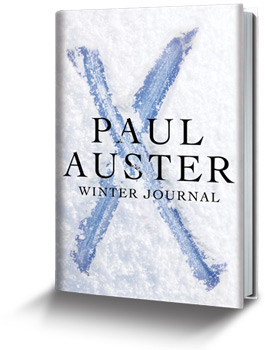
Writing in and of the body (Books - Winter Journal by Paul Auster)

In America, the public understanding of an artist's work generally occupies two opposing extremes: one can either be a star or a person who hasn't grown up yet.  This can make pursuing serious artistic work in the absence of the visible success that comes to few in any field a punishing choice.  One's profession is free of the satisfactions most lines of work confer - regular engagement and challenge in the field one was trained in, a respect for the value of what you do from others, and enough money to make a living and plan a future.  I admire American artists of any kind who are able to amass a body of work and Paul Auster is a writer who has done so.  At a level of high respect but maybe just shy of stardom, he has over his 64 years produced 16 novels, several volumes of poetry, nonfiction, screenplay, and memoir, and he has translated and edited French poetry, so I was excited to be offered an advance copy of his Winter Journal (Henry Holt and Company, to be released August 2012). As someone fascinated by artists' creative processes, I looked forward to searching for clues to how he produces his work from the record of his life that he shares with us in this journal.

Sunday, July 15, 2012

Allowing the reader the unfamiliar feeling of having time (Books - A Time of Gifts by Patrick Leigh Fermor)

One of the early chapters of this book touches at some retrospective length on the way things began to change; how I moved from the fairly predictable company of fellow army-candidates into older circles which were simultaneously more worldly, more bohemian and more raffish: the remainder, more or less, of the Bright Young People, but ten years and twenty thousand double whiskies after their heyday, and looking extremely well on the regime. This new and captivating world seemed brilliant and rather wicked; I enjoyed being the youngest present, especially during the dissipated nocturnal ramblings in which every evening finished: ("Where's that rather noisy boy got to?  We may as well take him too").  I had reached a stage when one changes very fast: a single year contains a hundred avatars; and while these were flashing kaleidoscopically by, the idea of my unsuitability for peacetime soldiering had began to impinge.  More serious still, the acceptance of two poems and the publication of one of them - admittedly, only on foxhunting - had fired me with the idea of authorship.
But Patrick Leigh Fermor's self-study period as a writer fails to solidify as he had hoped.

Sunday, April 15, 2012

Get out of the lab: scientists communicating with the world (Books - Am I Making Myself Clear, Don't be Such a Scientist, Escape from the Ivory Tower)

As I approach the home stretch of a PhD in neuroscience, I find that that the audience I most enjoy writing for about this cutting edge field is the general non-scientist reader. I read three books recently about scientists communicating with non-scientists. Am I Making Myself Clear by Cornelia Dean, Don't Be Such a Scientist by Randy Olson, and Escape from the Ivory Tower by Nancy Baron have in common a belief that most scientists do this poorly and, ironically, that they should do it more often. Too long winded, too technical, and too many qualifications are the main criticisms, and each volume offers advice on how to be more effective.

Tuesday, November 29, 2011

Finding the power underneath (Books - The Cat's Table by Michael Ondaatje)

Two qualities are evident in Michael Ondaatje's The Cat's Table right at the outset. The book involves the memory of a writer named Michael, originally from Sri Lanka, who at age 11 travels without a guardian on a ship across the Indian Ocean, Suez Canal, and the Mediterranean to reach his mother in England, where he will start a new life. On that ship he spends his time with two other boys - Ramadhin and Cassius. The first quality of the story is an instantly elegiac nostalgia, a wistful tone that says - I was never as innocent and happy as I was then.

Sunday, October 16, 2011

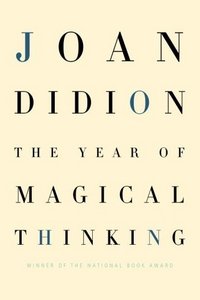
Writing one's way to the story (Books - Slouching Towards Bethlehem & The Year of Magical Thinking by Joan Didion)


I went on a quest a week or two ago to try to discover what it is about Joan Didion's The Year of Magical Thinking that makes it such a stunning book. That lead me to re-read a couple of Didion's essays from Slouching Towards Bethlehem prior to re-reading the memoir. Take this essay On Morality.
As it happens I am in Death Valley, in a room at the Enterprise Motel and Trailer Park, and it is July, and it is hot. In fact it is 119o. I cannot seem to make the air conditioner work, but

Sunday, June 5, 2011

Speaking aloud our secrets (Books - I Could Tell You Stories by Patricia Hampl)

Patricia Hampl has made art of contemplation through writing. Her collection of essays I Could Tell You Stories: Sojourns in the Land of Memory sift through the subjects of self and narrative, turning them over and over as one would a favorite stone. Two sorts of essays emerge from this act. One sort look at how ordinary life is lifted to the light, beheld as beautiful or horrible, in the act of writing about our own and others' lives, an act that is always irrevocable. Others observe poetry or prose in the act of encapsulating, of speaking for us of the revelations that we were sure were private and uniquely ours. She considers both sorts memoir - literary narrative creations of self, and yet works of non-fiction.

I haven't read really good pieces about the acts of reading, writing and how they are important to our lives in some time. Reading Hampl often evoked for me the experience of reading Virginia Woolf's essays, though her subject matter is more contemporary, she can be funnier, and she writes out of an era that has broken with the kind of formal literary cannon Woolf reckoned with and bucked against.
A writer is, first and last, a reader. Who do you write for? Gertrude Stein was asked, and famously replied, "Myself and strangers." That self, the reader-self who is allied with strangers, may be a writer's better half, more detached, more trustworthy, than the writing self who swaggers through a lifetimes of prose. It is difficult - and diminishing - to separate the self who writes from the one who reads. Both acts belong to the communion of the word, which is a writer's life.
Her opening invitation is to revel in this communion - which is the action of the essays that follow. They attempt to distinguish the act of making memoir from making fiction:
Memoirists, unlike fiction writers, do not really want to "tell a story." They want to tell it all...Memoirists wish to tell their mind, not their story.
and to separate the act of reading from writing. This may sound a trifle simplistic, but it is an important consideration if one's job becomes to write. Having taught art making process for years, it is an essential early act in the formation of that thing artists call technique. Future actors approach their profession from having first sat in the audience, just as future writers approached theirs through reading. It is usually difficult to abandon one's lifelong habit of admiration for one of the strange actions that embody the artist's daily routine.
I think of the reader as a cat, endlessly fastidious, capable by turns of mordant indifference and riveted attention, luxurious, recumbent, ever poised. whereas the writer is absolutely a dog, panting and moping, too eager for an affectionate scratch behind the ears, lunging frantically after any old stick thrown in the distance.
I think the term "alchemy" has been overused to exemplify an artistic synthesis of disparate influences into a new and surprising whole, yet I can think of no better metaphor for Hampl's accomplishment in her essay The Mayflower Moment. It combines the act of reading Walt Whitman's poems at lunch following the filling of her first birth control pill prescription, with the cauldron year of 1968 in which that took place, with the contemporary remembering of that act and a reconsideration of those poems.
I settled into the Reuben sandwich which, though big enough for two, was going to feed just one and no doubt about it now. I picked up the book (always bring a book to the doctor's office; they always make you wait: the wisdom of my mother - who didn't know about this doctor's appointment). I propped the book between the sugar dispenser and the plate, and I read and ate and was happy in my new high-tech body.
Holy cow, what a precise, relationship-filled, hilarious, and ultimate appropriate paragraph to usher in a serious reading of the premier poet of America's individualist creed! Her reading becomes a celebration of Whitman's powerful interaction with his reader. It begins with his direct address to his reader, his specific instructions for where one should be when reading, and his ultimate act of transmogrification of self into book:
Camerado, this is no book,
Who touches this touches a man...
Self transformation, and the literary form that that transformation takes - autobiography, poetry, fiction that acts to either revel in or obviate the self - is the refrain of Hampl's compelling contemplation. She considers, for example, the transformation of of Edith Stein, German Jewish philosopher, whose controversial spiritual transformation to a nun of the Carmelite order does not exclude her from murder by the Nazis at Auschwitz.
"The self is the individual's way of structuring experience." Self was necessary - but not for itself. It was necessary as the experiencer of "phenomena," of reality as it is absorbed by a life. Self was meant, in a real sense, to be lost. A kind of blessed anonymity attended the most genuine life, the most realized self.
Hampl reads Sylvia Plath's Ariel as embodying the very act of spiritual transformation, in a passionate essay I found hard to fully enter, so relentlessly was it colored by Hampl's Catholic upbringing. Yet I admired its brilliance and the apropos trinity of writers which she considered - Plath, Simone Weil, and Franz Kafka (although Kafka gets much more air time in a later essay) - all of whose writing was born of devotion to their suffering, which is, I suppose, itself an act of contemplation.

Narrative born of anguish, whether spiritual suffering or the horrors of the Holocaust, is another motif in Hampl's collection as she considers the original autobiographer - St. Augustine, the poet Czeslaw Milosz, and diarist Anne Frank in three separate essays. I found her short Chinese-mirror of-a-piece about the difficulty of writing a review of Anne Frank's iconic book a revelation about writing process. In it, she considers Anne Frank in the context of writing her diary and her reading of poet John Berryman's essay about Anne Frank's diary which unblocks her stuck process of writing a review of a new edition of The Diary of Anne Frank. I love what she says about her enjoyment of writing book reviews:
Reviewing has never struck me as having much to do with assigning scores or handing out demerits. The reviewer's job - and pleasure - is akin to any reader's. It is the pleasure of talk. If nobody talks about books, if they are not discussed or somehow contended with, literature ceases to be a conversation, ceases to be dynamic. Most of all, it ceases to be intimate. It degenerates into a monologue or a mutter. An unreviewed book is a struck bell that gives no resonance.
Indeed, that conversation is what draws me here to write this and, I hope, you to read it. Hampl's final essay considers the consequences of writing memoirs about real people, rather than fiction.
What memory "sees," it must regard through the image-making faculty of the mind. The parallel lines of memory and imagination cross finally and collide in narrative. The casualty is the dead body of privacy lying smashed on the track.
She considers the twin practices of privacy and expression in narrative as dueling "religions," an apt metaphor for the partisan passions they arouse and the devotional discipline required to practice them. This deeply thoughtful,vibrant, and generative collection of essays might be considered a meditation on narrative as a practice. One, Hampl tells us, that is not without costs, but whose benefits are worthwhile in giving voice to what are inherently the most private contents of our selves - love, spiritual creed, or suffering.

Thursday, March 31, 2011

The narratives that make us (Books - Rodin's Debutante by Ward Just)

I am a fan of Ward Just's writing - reflective, masculine fiction that often spans the lives of its central figures, exploring how the larger motivating forces that comprise their characters intersect with the contexts of politics, art, and the private realm to make up their lives. Exiles in the Garden, Just's last book concerned a photo journalist who turns his professional eye to art photography - does one find more meaning in life living inside the fray or out of it, this book asked. The Translator is about adapting to change both in the historical and the personal contexts. I found Forgetfulness a particularly masterful novel about living post-loss - do we best remember by seeking violent justice or through love?

Just's latest, Rodin's Debutante, has a four-part structure and a subtlety similar to that of The Translator, but like Exiles in the Garden it looks at the life of a creative artist in the context of the personal as well as the political spheres. Lee Goodell's family leave their small Illinois town in the wake of its first violent crime, a rape, and move to the Chicago suburbs. Lee attends Ogden Hall, a private all-boys school, coming of age by leading their failing football team to victory. These events are charted in an old-world, third-person narrative voice. There are two strongly formative life events that propel Lee into his adulthood, one is a meeting with Ogden's Hall's reclusive founder who attempts to share some life lessons with Lee. Chiefly he imparts that one's successes are more valuable than one's mistakes. The second is a Rodin bust, putatively of Tommy's Ogden's wife, Marie, in the school's study hall, which influences his decision to become a sculptor.
The day before Christmas robin's-egg-blue boxes arrived by special messenger at the homes of the twenty-two members of the Ogden Hall football team. They were from Tiffany's, New York. Each box contained a three-ounce silver cup with the boy's name and jersey number and the year engraved on the inside rim. The mothers noticed the stamp on the bottom that indicated sterling silver and said in astonishment, Well! My goodness! There was no notes with the box or any indication of who sent it, befuddling the mothers who insisted that their sons write a thank-you note at once; but there was no one to send it to. Lee Goodell knew, but he believed that Tommy Ogden was owed his anonymity, if that was what he wanted. He certainly did not want the old man to be inconvenienced, forced to read twenty-two notes of appreciation, all composed by hand in schoolboy script. The benefactor thus remained unknown. Lee was delighted by the gesture and wherever he went thereafter he took the silver cup with him in his shaving kit, wrapped in its yellow chamois sleeve. When ever he had something to celebrate he filled the cup with whiskey or cognac and gave the old man a salute before he drank it off; the vessel was identical to Tommy Ogden's. At such time he remembered the final game, Hopkins's two touchdowns and his one, the missed point-after, the cheering all afternoon, long-haired Willa jumping, Mr. Svenson's tears, and Tommy Ogden's open Cadillac idling beyond the far goalpost. A beautiful day, a beautiful season, and a secret to wrap things up. Yet it was also true that the day was never anything more than itself. If there was a metaphor present Lee never discovered what it was.
We then experience the birth of Lee into his adulthood, this related in the first-person. A violent crime also occurs around this time, but to whom and in what way I won't reveal to you. I wasn't always convinced of Ward's rendering of Lee's dialogue as a young man, so self-possessed did it sound. I also found it striking that, while the text could conjure up physical pictures of what female characters looked like, I could never envision the males. Although Lee is a memorable central character, I have no idea what he physically looks like. But Just writes beautifully solid prose that is compact while covering swathes of time. He tells stories about the ideas that form us - our taste, our morals, our politics - and reveals them through plot and structure.

The events that form us are clearly this book's refrain. Or more precisely, it's not the events themselves, but the narratives we develop of them. There is a handsome and pleasing neatness to the structure of Just's novel. Two beautiful events, and two violent events, each of which find eternal life as narratives. These narratives are, on the one hand, the psychological scaffolding of Lee's character and, on the other, creative works - like those Lee (and Just) make. It is not so much the veracity of the events that are vital to their power, rather that they capture what is of essence. Actually, the truth of the narratives' surface details are not the matter at all. Lee goes on to value learning from his mistakes much more than his victories, and the bust is not of Marie. The violent acts are, in fact, failed completely by narrative. They conceal more than they reveal and yet, their force is irrefutable, strengthening in the case of Lee and crippling in the case of the young women who is raped.

There is another notable theme in Rodin's Debutante, namely how mens' successes in our society are so often built on a foundation of cruelty toward women. Rodin's bust was, initially to have been of Ogden's wife Marie. But in an impotent gesture of revenge, Ogden denies his wife the money, building a private school instead. A young woman of lower class is raped, the precise events of the crime are not covered in the newspaper - as the illusion of stability and safety its middle-class residents survive on is more important to the men in power than the well-being of the crime's victim. Just writes of a world governed by men who careen between what they see as irresolvable choices: intellectuality and violence, brawn and kindness, pragmatic wheeling-dealing and reclusiveness, and remembering victories or losses. Lee learns the value of confronting both sides of his nature and tries to make something both honest and lasting out of that knowledge. His medium, as it is free of words, sometimes lies less, but as marble has less explanatory power it reveals less too and Lee seems content with that.