Showing posts with label neuroscience and imagination. Show all posts

Sunday, October 25, 2015

Two memoirists of passion (Books - Love is Where it Falls by Simon Callow & On the Move by Oliver Sacks)

In the last several months I read the memoirs of two fascinating, beloved, gay, British-born public figures.  One was published recently, the other 15 years ago.  One works in one of my areas of expertise - the arts - and the other in the other - the science of the brain.  The authors were actor Simon Callow and Dr. Oliver Sacks.  Their books are Love is Where it Falls (Penguin Books, 2000) and On the Move: A Life (Knopf, 2015).  Their books are forthright and generous, the authors deeply giving of themselves, and they are crack writers.  Knowing them now, as I do, it is fitting that these copies are signed.

She had, she said, been walking down Piccadilly, musing on the fact that it was Moliere's birthday and that not a single actor in England would know, much less care.  Musing on this sad reality, it had suddenly struck her that, yes, there was an actor in England who would know and care: me.  And so she had gone into Fortnum's and ordered the wine and had it sent to me, to celebrate, with my actor friends, the great playwright's birthday.  
So begins an unlikely romance between a fierce, 70-year old theatrical literary agent, Peggy Ramsay, and 30-year-old actor Simon Callow.  I find myself wanting less to write about the merits of this book than to quote from it.  These two live passionately and are attracted to each other so relentlessly, because their taste in art is not so much an aesthetic about life's decor as a deeply held principle about the way to live it.
We must feel, that is everything. We must feel as a brute beast, filled with nerves, feels, and knows that it has felt, and knows that each feeling shakes it like an earthquake. 
or
I do so passionately believe that the only meaning of life is life, that to live is the deepest obligation we have, and that to help other people live is the greatest achievement. It's in that light that I see acting, and that alone.


Oliver Sacks has written so humanely and observantly of his patients' lives (for instance here and here), and so openly of his peculiar fascinations, that this memoir, and this is the third of his books that might be classified as such, was a welcome departure.  Here, finally, Sacks scrutinized as deeply and wrote as openly about his own life - particularly his inner life. This was welcome not only in knowing more about so great a man and storyteller, but also because one read it in the context of his impending death (about which he wrote so beautifully here and here) and because one could feel in the narrative drive this desire to share it all before it was too late.

Early in Sacks's writing career, the great poet W. H. Auden said to Sacks
You're going to have to go beyond the clinical... Be metaphorical, be mystical, be whatever you need.
This is really where Sacks's writing succeeds so magnificently in combining what is true with what feels true in a story. I cherish his writing and hope to celebrate his life in a live program in the coming year.


Friday, March 20, 2015

3-D tour through brain space for Brain Awareness Week


I talked to curious students about the Brain at BiobBase yesterday and took a really amazing tour through a 3-D brain in a planetarium...no, really.  Check out my Brain Awareness Week blog by clicking here and scrolling down.

Thursday, March 12, 2015

Improvisation in the Sciences - improvisations on a panel discussion for Brain Awareness Week 2015)


This originally appeared here but I now post it below.

When I heard that the opening event of Brain Awareness Week this year was on the theme of improvisation and involved arts and science, I knew that I wanted to be the one to report on it.  I decided to do this blog as an improvisation; that is what follows.

Improvisation 1

I am riding the subway on my way to Improvisation in the Sciences at Columbia. It’s the first event of Brain Awareness Week and involves musicians and scientists. Given the theme, and since I am both an artist and neuroscientist, I decided to improvise this blog, a little experiment. I’m feeling a bit nervous, like I’m performing myself. Before I left my apartment, I sat down to play a sonata on the piano, I thought it would get me in the mood but I was interrupted by a phone call letting me know that the subways were delayed. I ran out of the house. Having stopped the sonata in the middle, the strains are repeating unresolved in my mind’s ear. I am anticipating music on the program, but it probably won’t be this kind of music.

Tuesday, December 23, 2014

Brief flashes of memory creating the beauty of what has passed anew (Books - With a Zero at its Heart by Charles Lambert)

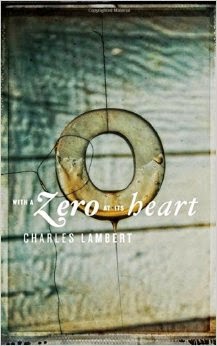
I have written enthusiastically of Charles Lambert's novels Little Monsters, Any Human Face,  and  The View from the Tower.  His new creation With a Zero at Its Heart (The Friday Project, 2014) is excitingly fresh.  Although it reflects qualities I have observed in his other work - the driving energy, the concentration on sensory experience in everyday life, and the cleanliness of prose - it refines them into something uniquely and lovingly felt.  Lambert divides his narrator's life experiences into iconic categories like money, travel, language, danger, correspondence, work, waiting, death, books - 24 in all - dipping into 10 episodes per category.  The episodes span early childhood to late-middle-age.  Each is a 120-word prose snapshot, bracingly terse but warm with remembering.  They evoke the prose poems of Frank O'Hara in their colloquialism, but with less smart-assed whimsy, and this seems not entirely without intention, as O'Hara is referred to in the section on waiting.

Monday, November 17, 2014

Thursday, April 18, 2013

Keeper of the cabinet of human curiosities (Books - Hallucinations by Oliver Sacks)

Now nearly 80, neurologist, writer, and keeper of the cabinet of human curiosities - Oliver Sacks - has written his 12th book.  This one is on activations of the perceptual systems that are produced by internal rather than external stimulation or Hallucinations (Knopf, 2012).  They run the gamut.  You can smell them, hear them, see them, and feel them.  They can have their origin in disease processes, chemicals, injury to the nervous system, or sensory deprivation.  They can take the form of geometric patterns, religious conviction, snatches of music, or little people (Lilliputian hallucinations).  I too have seen a patient with this last form of hallucination.  Her's were holding their heads in their hands (detached from their necks), but it didn't seem to cramp their style any.  I think that the term is probably my favorite in neurology.

I have always admired Sacks's writing about his patients because I feel that I am reading about people rather than cases.  I am a great admirer of Sacks's early books like An Anthropologist on Mars and The Man Who Mistook His Wife for a Hat, both are less continuous narratives than Hallucinations or Sacks's recent Musicophilia and The Mind's Eye.  Rather than thematic in nature, these earlier books are simply collections of essays on human beings whose strange neurologic cases make them fascinating, but who otherwise have little or no relation to each other.  I found some of the material included in Hallucinations had to stretch to be subsumed under the book's theme.  While I found most of the material interesting, an episodically constructed book might have been a more natural and satisfying form.

On more than one occasion in this book (and his last, The Mind's Eye) Sacks becomes his own subject. In this case, he writes frankly of his experimentation with hallucinogenic drugs, a piece that appeared in The New Yorker last year, and of a serious hiking accident during which Sacks says that a voice commanded him to keep going. 

I am always impressed by the historical sources Sacks cites.  They immediately make me want to visit the library.  Jackson's original papers on epilepsy and aphasias, are cited in Hallucinations.  Perhaps this is not as enticing to the average lay-reader, but for a neuroscientist, these are the golden oldies. Jacksonian seizures were named for John Hughlings Jackson.

Hallucinations makes colorfully clear that the mechanisms in the brain that eventuate patients' perceptions in the absence of external stimulation can be diverse.  The light patterns that are experienced in the aura prior to migraine might be thought of as electrical disturbances like a wave passing across the visual parts of the brain.  Whereas the hallucinations reported around near death experiences such as a floating above one's own body may occur due to stimulation of the right angular gyrus, one of several brain regions implicated in a circuit that according to Sacks mediates body image and vestibular sensations.  The vision of a dark tunnel with light at the end may be the result of decreased circulation to the retina, which narrows the visual fields.

The most remarkable of the cases Sacks writes of in Hallucinations was that of an 86-year-old English man who already had glaucoma and macular generation, but when a stroke compromises his right occipital lobe he loses vision completely in his left visual field.  What is most interesting is that he is not aware of his loss
...his brain appears to fill in the missing parts.  Interestingly, though, his visual hallucination/filling in always seem to be context-sensitive or consistent.  In other words, if he is walking in a rural setting, he can be aware of bushes and trees or distant building in his left visual field, which when he turns to engage his right side, he discovers are not really there.  The hallucination do, however, seem to be filled in seamlessly with his ordinary vision.  If he is at his kitchen bench, he "sees" the entire bench, even to the extent of perceiving a certain bowl or plate within the left side of his vision - but which on turning disappear, because they were never really there.  Yet he definitely sees a whole bench, with no clear separation between parts composed of hallucination and true perception.
The human brain is a remarkable country and it is always enjoyable to travel there with Oliver Sacks as your guide.

Monday, September 3, 2012

Aesthetics transforms vision and the mind, which transforms aesthetics... (Books - The Age of Insight By Eric Kandel)

There has been a bevy of books examining wider aspects of culture as they intersect with brain science written by scientists in the past year:  Consciousness: Confessions of a Romantic Reductionist by Christof Koch, The Age of Insight by Eric R. Kandel, Who's In Charge?: Free Will and the Science of the Brain by Michael S. Gazzaniga, and Thinking, Fast and Slow by Daniel Kahneman.  They are written by senior neuroscientists and written for the general public I wrote about the Gazzaniga here, I will write on Koch in the coming weeks, and I have yet to finish the Kahneman, but I just completed Eric Kandel's The Age of Insight (Random House, 2012). 

The eminent Nobel-Prize winning neuroscientist satisfyingly brings together modernist art, the Viennese Secession to be precise, the study of the unconscious mind emerging during the same period, and what the development of neurobiology and cognitive psychology can contribute to our understanding of human-ness.  His self proclaimed aim is to bring together science and art, his mechanism is to address what we know about how the brain accomplishes visual perception, creativity, and feeling.  The result is a fluidly written account, fueled by a lifetime in neuroscience and a passion for painting, particularly portraiture.    

Friday, March 4, 2011

Probing the experience of seeing (Books - The Mind's Eye by Oliver Sacks)

I have always enjoyed Oliver Sacks's vivid, humane portraits. He is a doctor/author who has always managed to write about people instead of cases and in none of his books is that better exemplified than in The Mind's Eye, in which Sacks's experience of his own eye tumor is the subject of one of the pieces.

Each chapter in this latest collection focuses on a person whose visual system is somehow compromised or enhanced. I say visual system rather than eye because most of what we experience as 'seeing' is accomplished by the central nervous system. The retina, which is the curved screen upon which our lens focuses the light entering our eye, and that forms the back wall of our eye, is actually part of the CNS. It's like a little piece of brain that hangs by a stalk (the optic nerve). The characters of The Mind's Eye include a pianist who loses the ability to read music, a mystery writer who looses the ability to read words (but not to write them), and several people who are selectively blind for faces but not necessarily for other classes of objects. There is a chapter devoted to stereoscopy, or how the brain combines the images from our two two-dimensional retinas to create an illusion of three-dimensional space. In this case, a woman with life-long strabismus, who could not see in three dimensions because she viewed the world through one eye at a time, gains the ability to see in 3-D. I found this section particularly charming, not so much for the case study but because of the fact that Dr. Sacks, having developed an interest in stereoscopes in his childhood, built himself several:
So when, at the age of ten, I developed a passion for photography, I wanted, of course, to make my own pairs of stereo photos. This was easy to do, by moving the camera horizontally about two-and-a-half inches between exposures, mimicking the distance between the two eyes. (I did not yet have a double-lens stereo camera, which would take simultaneous stereo pairs).

After reading how Wheatstone explored stereoscopic effects by exaggerating or reversing the disparity between the two images, I began experimenting with this, too. I started taking pictures with greater and greater separations between them, and then I made a hyperstereoscope, using a cardboard tube about a yard long with four little mirrors. With this, I could turn myself, in effect, into a creature with eyes a yard apart. I could look through the hyperstereoscope at a very distant object, like the dome of St. Paul's Cathedral, which normally appeared as a flat semicircle on the horizon, and see it in its full rotundity, projecting towards me.
We were able to have fun before television and the internet! Sacks's memoir, Uncle Tungsten, is full of such examples of himself or members of his family pursuing their curiosity about the world's flora, fauna, and physical phenomena, through active research. I delight in the fact that Sacks was a member of the New York Stereoscopic Society prior to his own eye troubles (not to mention the American Fern Society and the New York Mineralogical Club, both mentioned in his bio). The fact that Sacks pursues his curiosities so avidly, whether about people or phenomena, is reflected in the way he listens to and relates the stories of his patients.

Through his case histories, Sacks also writes on how the brain evolved the skill of reading if it wasn't "designed to" do so, how our eyes take in surfaces and the boundaries between them but the brain constructs"objects" from them, the von Helmholz and Young theories of color vision, and how the brain is able to fill in holes in the visual field - both those naturally occurring in our blind spot (the place where the optic nerve exits from the retina) - and those created by injury or illness. Sacks's description of his own loss of vision is particularly evocative. He communicates through it not only how the brain constructs what we perceive from the cues the eyes collect, but also how the limits of the eye produce a different experience for the brain. When Sacks loses the peripheral visual field of one of his eyes to a tumor, he not only cannot see that portion of space, he seems to lose his awareness that it exists at all.
Kate and I finished our walk and headed back to my office. I walked ahead and got inot the elevator - but Kate had vanished. I presumed she was talking to the doorman or checking the mail, and waited for her to catch up. Then a voice to my right - her voice - said, " What are we waiting for?" I was dumbfounded - not just that I had failed to see her to my right, but that I had even failed to imagine her being there, because "there" did not exist for me.
The last chapter, which lends its title to the book, was most interesting to me. Mental imagery is a particular interest of mine. Sacks writes of neural plasticity (the reassignment of new functions to neural real estate). For example the reallocation of parts of the visual cortex to either hearing or touch for those who are blind. Or the science-fiction like work of neuroscientist Paul Bach-y-Rita , who takes advantage of such flexibility by connecting the output of a video camera, point-by-point to a grid on one of the most sensitive part of the human body - the tongue. Such a device enables blind people to walk across a room avoiding obstacles, to catch a ball rolled toward them, and make other such perceptual judgments not previously afforded them. Are these people "seeing," Sacks asks? Whether exploring case studies, the evolution of neuroscience, or more recent avances, Sacks's writing is probing, accessible, and humane in The Mind's Eye.

Thursday, May 13, 2010

Dolphins are shallow

You may have heard that dolphins are the most intelligent species in the animal kingdom (aside from us brilliant creatures). They may be cute when balancing balls on their noses, but that theory has been seriously debunked. I am so disillusioned!

Via The Loom, thanks Carl.

Wednesday, May 12, 2010

Reading with recycled neurons (Books - Reading in the Brain by Stanislas Dehaene)


Reading in the Brain by Stanislas Dehaene is a readable account of how the reading brain works, as well as how it doesn't.  Given the fact that printed text is a relatively recent human invention and, given the time scale of evolution, the brain could not have evolved specialized structures for reading per se but rather has adapted structures that evolved for more general visual purposes and applied them to this specialized task which combines seeing and recognizing objects and the reception of the abstract thoughts of another person. The form of letters have little to do with the meaning they ultimately communicate. As a result it has become the work of seven to ten of our earlier years to learn rote the relationship between our culture's symbols representing the units of sound (phonemes).  These are combined into (words) from which we generate continuous phrases and sentences which accomplish the transfer of information and point of view. This is done at a minimum with some coherence, if not also some beauty, and the composer of those same units of meaning doesn't even have to be around to explain himself. It might seem roundabout that printed text has to take a two step journey from sound to meaning rather than going straight to meaning, but this is what allows language to communicate abstract thought:
I suspect that any radical reform whose aim would be to ensure a clear, one-to-one transcription of English speech would be bound to fail, because the role of spelling is not just to provide a faithful transcription of speech sounds. Voltaire was mistaken when he stated, elegantly but erroneously, that "writing is the painting of the voice: the more it bears a resemblance, the better." A written text is not a high-fidelity recording. Its goal is not to reproduce speech as we pronounce it, but rather to code it at a level abstract enough to allow the reader to quickly retrieve its meaning.
The brain accomplishes this remarkable feat, Dehaene tells us (without even being there), via two pathways that operate simultaneously when reading is fluent. One path transfers the letter-string to it sound content (and the motor requirements of our making that sound with our vocal apparatus) prior to its meaning, and the other that goes for the identity of the word first and then the sound. A great number of pages in the book is spent on discussing the fruits of Dehaene and his colleague Laurent Cohen's labors identifying the left hemisphere's visual word-form area, a region of the brain whose purpose seems to be to be the visual analysis of the symbols that make up letters and words irrespective of their superficial differences. That is to say we can read word, WORD, or even WoRd equally easily and can tell the difference between ANGER and RANGE. You can see the visual word-form area in the picture representing the relative activity of regions of Dehaene's reading brain below, its the area right above his ear. There are other areas that accomplish the conversion of printed text into units of sound, still others that agree on the meaning of the assembly given not only its form but its context.
The typical right-handed person's brain has developed most of its key language processing areas in the left hemisphere (left handers are less reliable in this regard). This is true whether the personn reads from left to right or right to left and whether they read an alphabet whose symbols map to units of sound (as in these roman letters you are reading right now) or comprise pictures of whole words (as in logographic alphabets like Chinese). Dehaene, in fact, explores the evolution of different writing systems from pictoral markers in depth as he builds his case for how the human brain evolved the skill of reading, a section of the book I very much enjoyed.

Much of this case centers on the brain's ability to adapt cortex to multiple functions, something he calls neuronal recycling.
We would not be able to read if our visual system did not spontaneously implement operations close to those indispensable for word recognition, and if it were not endowed with a small dose of plasticity that allows it to learn new shapes. During schooling, a part of this system rewires itself into a reasonably good device for invariant letter and word recognition.

According to this view, our cortex is not a blank slate or a wax tablet that faithfully records any cultural invention, however arbitrary. Neither is it an inflexible organ that has somehow, over the course of evolution, dedicated a "module" to reading. A better metaphor would be to liken our visual cortex to a Lego construction set, with which a child can build the standard model shown on the box, but also tinker with a variety of other inventions.

My hypothesis disagrees with the "no constraints" approach so common in the social sciences, according to which the human brain is capable of absorbing any form of culture. The truth is that nature and culture entertain much more intricate relations. Our genome, which is the product of millions of years of evolutionary history, specifies a constrained, if partially modifiable cerebral architecture that imposes severe limits on what we can learn. New cultural inventions can only be acquired insofar as they fit the constraints of our brain architecture.
In the book's final chapter, Dehaene discusses cortical plasticity - a neuroscientific idea that is relatively recent and much in vogue.  It is the ability of brain's neuron's to adapt their function from one purpose to another - for example, when a blind person's visual cortex cells become able to decode sensation of the fingertips to braille letters.  Dehaene makes a case for the necessity of cortical plasticity in inventing cultural forms like number systems and the arts. It's one of those fun bits of reaching for the stars that a researcher has to save for when they write a book rather than a journal article. His voice comes off a little stuffy at times, but his theory is intricate - composed of many interleaving units - so his writing must be systematic in driving home each concept and then attaching is to its predecessor. His model for how the brain accomplishes reading, I must emphasize, is one of several, but he does acknowledge alternate viewpoints along the way. The lay reader may not find this book as accessible as Maryanne Wolf's Proust and the Squid, but it goes into more depth and synthesizes a lot of information into a coherent narrative arc. His diction is clear and the reading experience fluid and even entertaining. Dehaene's work is at the cutting edge of our understanding about the relationship between language and the brain so I found it a pleasure to get the story from one of its sources.

If you in or around NYC on Thursday March 13 at 6pm, join me for a film about dyslexia called THE BIG PICTURE: RETHINKING DYSLEXIA.  Click here for information.

Sunday, March 21, 2010

Consciousness as the ultimate baseline (Books - i of the vortex - Llinas)

When I last wrote of Rodolfo Llinas's 2001 i of the vortex - a grand plan to explain the concept of self as a product of the brain cells that create it - he had made a case for describing 'self' as the centralizer of the brain states out of which predictions about the world emerge and 'mind' as the internalization of potential movement. If the first half of the book proposes what these two constructs are in the language of the brain, the second half of the book fleshes out how they are accomplished given the evolution of the nervous system from single-celled creatures.

The binding together of events in the external world and internally generated representations of them is accomplished when brain cells are able to fire together. This requires some sort of device that creates a common metric, but not in the sense that a conductor leads the members of the orchestra. This metric is self-generated - like Orpheus Chamber Orchestra - who play without a conductor. Llinas offers his candidate for such a brain process and structure.

Llinas's persuasive argument is a trajectory from a description of fixed action patterns (FAPs) - fixed repertoires of muscle movement that always occur together - to emotions, qualia (the subjective experience of something), to consciousness. Rather than the brain executing separate steps that coordinate millions of neurons and 100s of tendons and muscles to run or lift food to the mouth, they are grouped as a single unit, an FAP, to help the brain economize its efforts - think of macros on your computer. This is an adaptive mechanism because it is not practical to have to plan out how to run from an oncoming car. Llinas proposes that emotions too are a kind communicative FAP - a given state, say fear - elicits emotions and with it, dozens of facial muscles conform in such a way to communicate to any member of our species that a given plan of action is necessary. As Llinas puts it:
The reduction of all possible choices to a useful set of the most probable solutions for the particular situation is a necessary prerequisite to effective behavior. The strategy of reducing choice by picking any solution, regardless of its potential feasibility just to save time, is counterproductive, so natural selection has weeded it out. Another example: what if the control panel of a modern fighter jet had, instead of all those complicated instruments, a little face that tells you how everything is, at that moment, by its expression? You are in heated battle; there is no way that you would be able to look at every instrument and gauge under such conditions. So you have a face - if the face is smiling it means "Do what you must! Don't worry about the condition of the plane, you don't have time!" You need an apparatus that can direct one to focus and choose - and that is consciousness. The face is transforming all the incoming information into one coherent event. Because operating from a single event is always easier, it is far more powerful than continuously having to take into consideration an ever changing set of variables within an ever changing point of governance. That is why there is but one seat of prediction.
Llinas then extends this argument with a leap that describes qualia (subjective experience) as internalized FAPs. If I understand him correctly, he posits consciousness as an experiential baseline against which other qualia can be measured, which makes sense to me since perception is accomplished by the nervous system measuring change and change must always be measured against something.

Llinas then offers two more chapters about the evolution of language and the notion of collective states of mind which, in my opinion, he would have been better off leaving on the cutting-room floor. These chapters are far less well reasoned than the rest of the book. They rely on solipsism and a little too much hand waving and leave the end of an otherwise tight and learned book feeling a little amateurish. He never distinguishes languages from other forms of communication, and the book devolves from a well reasoned thesis to loose musings that make it seem as if Llinas will only be happy if he can write a book that offers a grand theory of absolutely everything instead of a clear argument about the evolution of the nervous system in accomplishing those constructs we call 'self' and 'consciousness.' Minus the final two chapters, Llinas offers a clearly drawn argument, much of which should be accessible to the ambitious lay reader (except for the chapter on neurophysiology). He does so in an almost chattily friendly tone that keeps his narrative moving and offers vivid and pleasurable examples that range from Schumann etudes to Dante's Inferno and the art of Kiki Smith.

Monday, February 22, 2010

Layer upon layer.... (Books - Magic Mountain by Thomas Mann, The Interpretation of Dreams by Sigmund Freud, & Film - Tarnation)

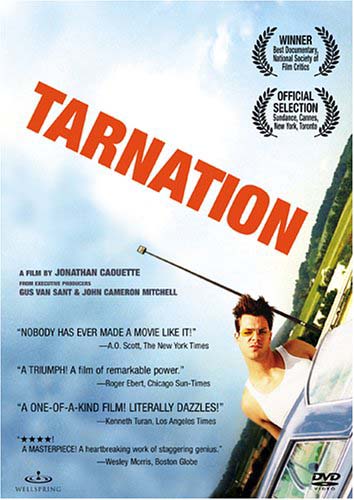
Jonathan Caouette's film Tarnation, a recommendation of friend Sheila, is a disturbing and ultimately redemptive blend of autobiography, docu-drama, and performance art. Passionate, personal, and breathlessly edited, the film is a long scream of pain for his mother, who was mistakenly given multiple shock treatments which have left her an unstable mess but who is nonetheless deeply loved by her son. Caouette was raised first in foster care and then by his delusional grandparents. From a very early age, Caouette has documented his life using video. He was also aware that he was gay and taped himself performing monologues as female characters starting around age 11. These disturbingly observant, maturely ironic pieces seem to serve as psychological stand-ins both for Caouette's pain at the abuse he experienced and that of his mother. I watched this artfully edited collage of pain both wanting to hide from the bald confessional nature of it and fascinated by the way Caouette used film and characters that are at once him and his family, but also artistic creations, as a sort of therapeutic diary to grow into the evidently responsible, self-aware, and loving adult he has become.

This was an interesting counterpoint to Freud's The Interpretation of Dreams, which I read in large part yesterday. Think what you will of the man, but his ideas of the influence of unconscious drives on our behavior, the literary structures he provided to understand the mind (id, ego, superego), and his techniques for unlocking those buried parts of us that are troublingly influential via associative talk and understanding how to read the symbols they use to hide behind have indelibly influenced the way we think and talk about thought, mind, personality, and culture. It was an apt to companion piece to Caouette's film/diary in which the forces of drive in the context of a repressive culture, have their devastating influence on personality, and are ultimately released through multi-layered symbols - the actually personalities of Jonathan and his mother on the deepest level, the level of the characters he played in his life to survive them, and the most visible layer of the work of art he fashioned to depict them.

The third work I experienced this weekend (although I barely had 20 minutes to touch it) was Thomas Mann's Magic Mountain. Nearly a contemporary of Freud, Mann's work famously evokes the political and cultural forces impinging on the European continent through the characters inhabiting a sanitorium high on a Swiss Alp. All three of these pieces struck me for their use of symbol - letting one thing stand for another, a feature not only of art and psychology but of spoken language, which represents concepts symbolically and written language represents the sounds of spoken language symbolically. These are all fashioned the sum of electrical bursts and the forces that inhibit them in our brain - acts that are decidedly not symbolic but literal and whose computational sum result in our cognitive and motor activities, the states from which they emerge, and whose experience we describe as behaviors and the forces that motivate them.

Friday, January 1, 2010

The music of our brain (Film - The Music Instinct & Book - Rhythms of the Brain by Gyorgy Buzsaki)

Typically, the new year is rung in here with friends and fondue but The Ragazzo has been so sick that he was in bed and I celebrated by doing the laundry, watching a video, and going to bed at 10:30. Woo- hoo. Hope you brought in 2010 with more appropriate pomp.

The Music Instinct: Science and Song
is the video I watched. It is a film by Elena Mannes first aired on PBS. I received it from The Ragazzo's brother and sister-in-law this christmas and it is about the latest research on music and neuroscience - one of my pet topics. It features all the usual PBS-type folks - musicians Bobby McFerrin and Yo-yo Ma, Oliver Sacks, and physicist Brian Greene - but it had pretty decent coverage of the major researchers in the relatively small field of music and cognition. It begins with a discussion between scientist Daniel Levitin and musician Bobby McFerrin asking - "Why music?" Levitin was the most well known researcher in the film because of his book This is Your Brain on Music, but they also had John Sloboda, Robert Zatorre, Isabelle Peretz, Sandra Trehub, and Aniruddh Patel (among others) - all respected researchers in the field. It was better than some pop-science I've seen in presenting more than one side of an argument, but it did not offer a narrative that clearly told the inexperienced viewer that that is what it was doing. It wanted, like most television fare, to make grand claims that could not be supported by the research presented. They ended with the Audra McDonald's voice-over saying - "Why music? It is written into our very being. Science is showing us that song is at the core of life." The film is straining to tell us that music is tied in some essential way to our DNA, although in actuality the film ended with a few differing opinions about why humans make music and it would have been more honest to have told that story. However it makes for an engaging primer on the subject for the lay-person and I found the inclusion of Brian Greene useful in that the program discussed not just the esoteric musings of a small group of specialized researchers about why music might have evolved in human culture whether as an adaptive feature or as a useless adornment, Greene discussed music as a physical phenomenon - a patterned disturbance of air - or a wave - and Levitin stressed music's ability to coordinate the firing of neurons and that reminded me of a book I have been meaning to pick up for the last six months - Rhythms of the Brain by Gyorgy Buzsaki - so I unearthed it and began reading last night (we really know how to party here at Bookeywookey central).

Buzsaki book does not address music per se, it focuses on rhythm, particular oscillatory patterns or periodic disturbances to a system or state as they occur across time. This phenomenon is found throughout nature and Buzsaki is particularly interested in groups of neurons that fire in patterns, establishing a temporal metric which could then organize larger patterns of activity among cells in the brain. This is seen as a self-organizing action that subsequently impacts the brain's cognitive and motor functions and whose temporal nature is essential to what may be the brain's primary reason for existing - predicting what will occur next in the environment.
Predictions and relationships are constructed by ordering the succession of events according to elapsed subjective time. We are usually able to say which of two events happened before the other...the cause precedes the effect in time.
If one observes how reactive systems evolved from single-cell creatures to nerve nets in hydra to complex mammalian brains over millenia, the substantial adaptation offered by a brain like ours is that of predicting events before they occur and the ability to more sophisticatedly collect data from our environment and use it to intercede in what would otherwise be an automatic repertoire of responses.

Buzsaki's range of knoweldge is broad - bringing in chaos theory, electrophysiology, mathematics and biology. His language is the language of science - when he day dreams he tells you so and when the information he presents has been measured via experimental means and expressed as a probability (as all study conclusions are) he tells you that. His writing is down-to-earth and very engaging and since he writes about the phenomenon of rhythm, I find his thinking stimulating for relating one of the features of music (which evolved along with the rest of the natural cultural word) with brain function. A superb book so far.

Buzsaki and my continued exploration of the superb Irish novelist Deirdre Madden with her The Birds of the Innocent Wood make up my reading as 2010 begins. And yourself?

Tuesday, November 10, 2009

Such stuff as dreams are made on...

Benedict Carry reports today in the Science Times on recent research into the role of dreams by Dr. J. Allan Hobson of Harvard.
Drawing on work of his own and others, Dr. Hobson argues that dreaming is a parallel state of consciousness that is continually running but normally suppressed during waking.
Hobson sees this state tuning the brain for what it will encounter while awake. Dr. Mark Mahowald, another sleep researcher, praises Hobson's work for not letting psychological or literary notions of dreams drive his hypotheses.
Most people who have studied dreams start out with some predetermined psychological ideas and try to make dreaming fit those. What I like about this new paper is that he doesn’t make any assumptions about what dreaming is doing.
I appreciated the reporting which restrained itself from making fantastic claims and instead offered competing interpretations and some of the current sleep and dream research of other labs. The article made a point worth emphasizing - this neuroscientific research on the nature of dreams does not empty a dream of its narrative content nor obviate its psychological interpretation. It makes a hypothesis built on neuropsychological bases and tested with the tools of that trade, and offers an interpretation of its results about what function dreams might fulfill in the brain.

Tuesday, October 6, 2009

The uses of poppycock.

In today's Science Times Benedict Carey reports on a series of studies about total nonsense.
The brain evolved to predict, and it does so by identifying patterns. When those patterns break down - as when a hiker stumbles across an easy chair sitting deep in the woods, as if dropped from the sky - the brain gropes for something, anything that makes sense...The urge to find a coherent pattern makes it more likely that the brain will find one.
Experimentally this was investigated by Drs. Travis Proulx at University of California and Steven J. Heine at University of British Columbia by exposing subjects to either an absurd short story or to a more conventional one. Following this exposure, the students studied strings of letters with no apparent relationship to one another. Those students exposed to the absurd story remembered the letter strings far more accurately than the group that read the other story. The experimenters attribute that accuracy to their ability to create new patterns. Here's a link to the study.

Artists have used this technique for years. Courting a sense of disorientation can often be better fuel for creative explosion than a technique or rehearsal process that proceeds logically through steps of increasing knowledge and order. I'd love to do a variation on the reported study. It might be meaningful to find two varying situations for the same story rather than test two different stories, that is, create or identify one group for whom the story or some other stimulus is absurd and another for whom it is not and test their memory accuracy. A religious stimulus could be interesting - there are people for whom certain patterns of information or iconography possess serious meaning but which non-believers find to be absurd nonsense. How would these groups perform on the memory test if exposed to the exact same stimuli? This makes me want to run out and read Jabberwocky rather than an article on sub-cortical brain systems involved in visual perception in order to prepare for this morning's test.

Wednesday, April 1, 2009

Computers vs. Brains, round 3

An excellent essay from the New York Times about why computers might never outperform the human brain.

... a brain’s success is not measured by its ability to process information in precisely repeatable ways. Instead, it has evolved to guide behaviors that allow us to survive and reproduce, which often requires fast responses to complex situations. As a result, we constantly make approximations and find “good-enough” solutions. This leads to mistakes and biases. We think that when two events occur at the same time, one must have caused the other. We make inaccurate snap judgments such as racial prejudice. We fail to plan rationally for the future, as explored in the field of neuroeconomics.

Still, engineers could learn a thing or two from brain strategies. For example, even the most advanced computers have difficulty telling a dog from a cat, something that can be done at a glance by a toddler — or a cat.

Check out the whole piece - linked above.

Tuesday, March 10, 2009

To sleep - perchance to dream...

A study carried out in three cultures - India, S. Korea and the U.S. - examined college students' dreams and their ideas about what they mean, reports John Tierney in today's Science Times. Dreamer's biases greatly impacted their interpretations of their dream's meaning:
...they attached more significance to a negative dream if it was about someone they disliked, and they gave correspondingly more weight to a positive dream if it was about a friend...People who believed in god were more likely than agnostics to be swayed by divine apparitions.
There are those who treat dreams as literal portents, others who think they reveal unconscious experience, still others who think them the byproduct of the brain figuring out what goes in the discard bin of the day's mental activities, and those who think that it is the brain making sense of, as Tierney writes, 'random impulses,' and the study calls 'the byproduct of unrelated brain activity.' Those beliefs impact the dreamer's interpretation of their dreams. In thinking about the categories, one thing that they all have in common is that the dreams seem to have a structure, a sense of...well, sense. Most dreams as far as I know are narrative, although some can be somewhat abstracted or episodic (I'd love to read some research on the structure of people's dreams). Narrative is one of the brain's ways of giving organization to a bunch of occurrences via context. So whether someone chose a mystical or a literal theory, all experienced the dream as organized. The categories are interesting to me: dreams as portents or revealers of our unconscious mind are describing people's belief about how their dreams might be used after they have had them. Those categories are not mutually exclusive either of each other, or of the other two categories, one an explanation of what they might be psychologically (the brain dumping information into its garbage bin) the other what they might be neurally (random impulses). I don't know how this impacted the statistical analysis of their subjects and whether subjects were forced to choose only one of the four categories. I find it interesting too that people speak of the "random firing" explanation for phenomena like dreams or visions prior to death as a means of demystifying the experience. They speak as though firing neurons obviate any possible meaning these experiences could have. If we are to have an experience, whether the source of that experience is inside or outside the body, neurons must fire. In fact, in the studies that permitted us to trace how sensory systems work - mapping a path from, say, the skin surface, to a particular spot in the somatosensory cortex, scientists could confirm the function of a neuron by electrically stimulating it and found that it produced the sensation of a touch on that spot on the skin when none actually occurred. Very real experiences are created by the firing of neurons whether the cause of that firing was from an external or an internal source. For those who would call these impulses 'random' I would ask - by what criteria? Do they fit a certain mathematical distribution? Or is the word chosen to indicate that no pattern could be measured? If so it does not indicate that one does not exist.

In fact, one sees a great deal of organization in the firing of neurons in the brain during sleep that is thought to contribute to the consolidation of memories. One can observe the brain patterns of activation elicited in the hippocampus (a brain area associated with memory) during training on some motor task replayed during REM sleep (Maquette et al, 2000) and can observe a correlation between the extent of improvement on that task and the amount of replaying of that pattern (Peigneux et al, 2003). One can also see similar patterns of activation, but on a different time scale, during slow-wave sleep (Ribero et al, 2004). Finally, one can also see evidence of the structural changes that must occur for memory to become long-lasting occurring during REM sleep. I make these points simply to say that a good deal of purposeful activity not under conscious control is going on during sleep and that some activities in the brain are far from random. Something in the brain's activity produces experiences that for most people appear to have a certain amount of organization, if not the logic typical of our waking hours. This study is not examining the meaning of dreams per se, but rather our beliefs about the meaning of our dreams. When we dream we seem to have a certain experience, however if we remember the dream upon waking we are already re-constructing it and if we relate this dream to a friend, therapist or researcher we are re-constructing it yet again. Each time adding more structure and more layers of associations. The brain is drawn to patterns and the mind to building structure. The patterns of firing neurons is how the brain encodes all the diverse types of information we encounter in our experience and any feeling, memory, or plan for action that results from it. I wonder how "unrelated" the neuronal firing is to the dreams we experience and the meanings we make of them.

Tuesday, February 3, 2009

A good cry? Not so fast

Today's Science Times reports on research challenging the notion that crying is always cathartic. Jonathan Rottenberg, psychologist, and his colleagues, observed that the well researched notion that most of us remember more of the good and less of the bad over time holds true for crying. The anger or shame experienced with the crying maybe forgotten, leaving only a memory of relief. Therapist Judith Kay Nelson contends that a pattern concerning the relationship to crying is laid down in childhood.
"Crying, for a child, is a way to beckon the caregiver, to maintain proximity and use the caregiver to regulate mood or negative arousal...Those who grow up unsure of when or whether that soothing is available can, as adults, get stuck in what she calls protest crying - the child's helpless squall for someone to fix the problem, undo the loss."
Both the details of the cry and the individual crier influence the effect. Poor Oedipus. It was all for nought. Forget the Greeks, next time you're feeling down, go for the Marx Brothers.

Monday, February 2, 2009

The Superbowl bringing out the sophisticated in us, and what that tells us about the economy

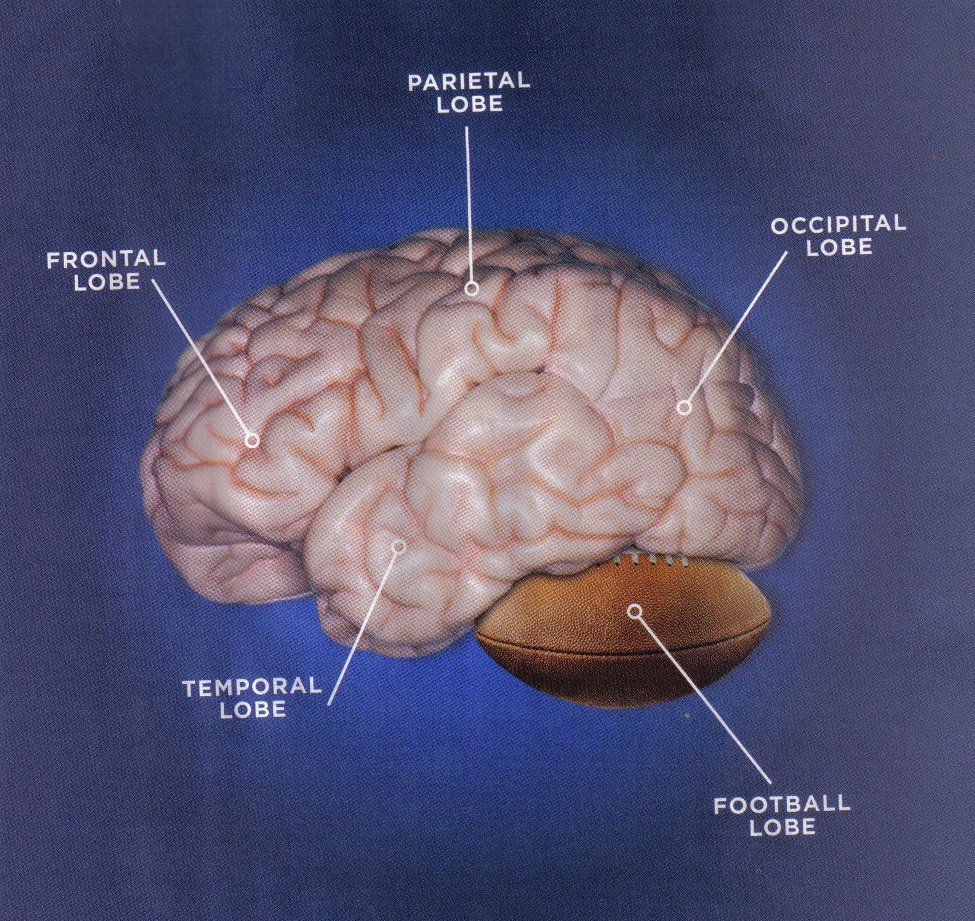
The Superbowl mystifies me. This year particularly, when the sound of adults screaming their heads off both in pleasure and in agony, made me think that the same phenomenon that causes this reaction is going to be what eventually turns the economy around. Typically it is thought that football is a manifestation of our more brute natures, but what I am seeing here are higher processes at work. Let me explain. There are two (actually there are at least three) directions in which information flows in the brain to create the representations of the world that we perceive. One is an assembly of data from the world around us. We can perceive the form of a tree because, as you probably learned in school, light bounces off it and our retinas have receptors that can take that light and make it into a signal understandable to our nervous system. Once in the brain, that information arrives in its most basic units - horizontal lines, diagonal lines, curves, colors, motion in this direction or that - and those pieces march up the hierarchy of regions that assembles them in ever-complex ways until - voila - we perceive the tree as a whole. Here the information makes a progression from more basic to most complex. We call that 'bottom-up.' But it is not the whole story. Once we have seen a tree before, we can speed the process up with reference to our knowledge of trees. In fact, we gain the ability to perceive that tree even if it is partially blocked by a building in our line of vision. We information that arrive at our eye from nature - the contours of that tree - are incomplete - but our brain can complete the picture of that tree because the knowledge we possess about that form travels from the higher-order areas of our brains down to the areas devoted to assembling the basic units. We have aptly named that process 'top-down.' What is most interesting to me as a student of neuroscience is these top down processes because what you see is emphatically not what you get. What we perceive in a game of football (I should say what you perceive, I don't have a television and wouldn't watch sports if I had one, this is a personal preference not a snobbish thing) is a bunch of guys dressed in plastic, throwing a little pig-skin pouch around and jumping on each other. Hooray. What the fan perceives, however, is a contest of strength or strategy that clearly rivals in importance the murder of a close family member or the sudden discovery of a cure for multiple sclerosis. Do I mock? Yes, slightly, but my point is that we possess the capability to motivate our strongest feelings with the same information from nature that, under other circumstances wouldn't matter much at all. In fact, the advertising industry perceiving this fact, helped businesses take advantage of it, and has turned the Superbowl into the biggest grossing event on their calendar - by associating this passion with products that, equally, have far less meaning in ordinary circumstances.

Our relationship to "the economy" amounts to the same thing. For a while it seemed to be one long Superbowl, - our perception of the market was driven only by our knowledge of gain, but that could not continue. The game does not last for ten consecutive seasons. The risks were always there. Likewise our country is still earning trillions of dollars for its goods and services, just as it did a few years ago, but now we perceive only the risk. In our relation to the economy we are driven by our most primal motivators - hunger and fear. We have traditionally associated football with the most primitive in us and the economy with sophistication but maybe its really the other way around. Ultimately, it is not just the economy that has to turn around, it is us. We are going to have to re-learn our sense of possibility for investors to perceive secure structures when they see markets and banks to perceive earners where they now perceive only risks for foreclosure. However, acquiring knowledge takes time and the brain has to perceive actual changes in its environment to learn new things. That means that substantive changes in how markets run and how, buyers, lenders, and sellers are regulated will have to occur if the economy is to turn around. The government can't simply pour our money into corrupt institutions without requiring any changes, while buying our silence with tax cuts, we're not that stupid. Individuals and businesses were already pouring money into the same markets for years - that's what produced this mess. Now we see bottom-up the rampant greed that has been the result of deregulation where before our top-down processes had led us to perceive only the gains. The solution is not simply spending money, but a process of filling us with new knowledge so that what we perceive has fresh meaning for us.

Tuesday, January 13, 2009

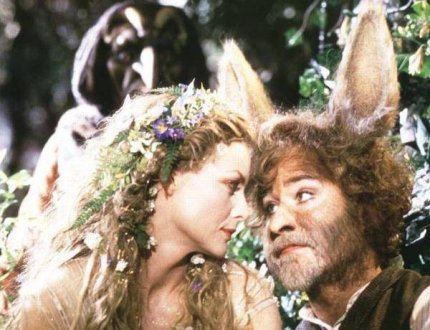
What fools these mortals be...

Captain of our fairy band,
Helena is here at hand,
And the youth, mistook by me,
Pleading for a lover's fee.
Shall we their fond pageant see?
Lord, what fools these mortals be!
- William Shakespeare - A Midsummer Night's Dream
Whatever your brilliant idea is, Shakespeare thought of it first. John Tierney writes in today's Science Times about the neuroscientist Larry Young and his theory of love. Prairie voles tend, unlike most mammals to mate monogomously.
When a female prairie vole’s brain is artificially infused with oxytocin, a hormone that produces some of the same neural rewards as nicotine and cocaine, she’ll quickly become attached to the nearest male. A related hormone, vasopressin, creates urges for bonding and nesting when it is injected in male voles (or naturally activated by sex).
Oxytocin, produced during childbirth and nursing, is the same chemical that stimulates bonding between mother and child. So motherly love is, neurochemically, the prototype of adult love. I am sure Dr. Freud, wherever he is, has just lit up a celebratory cigar and the attachment theorists are throwing a champagne party!

Researchers are now playing around with manipulating oxytocin levels in humans and discussing its use in everything from encouraging more typical social relations in people with autism to marriage counseling. But researchers are noticing, as Shakespeare did, that problems might arise if the wrong partner is targeted. They are also playing around with the idea of a vaccine that inhibits mating and nesting impulses. So the first drug could make you fall in love with an ass and the second might keep you from acting like one yourself. And Shakespeare thought of that one too.