Showing posts with label Summer Poetry Challenge. Show all posts

Friday, August 10, 2007

New York as muse. Poet Frank O'Hara - immortalizer of fun


Frank O'Hara was a contemporary of poets John Ashberry, Kenneth Koch and James Schuyler and painters Willem de Kooning, Franz Kline, Joan Mitchell, Helen Frankenthaler, and Jackson Pollock who were all the denizens of the Cedar tavern, the 1950s equivalent of the Algonquin round table. A lover of modern art, O' Hara worked at the Museum of Modern Art, first as a clerk at the sales counter just so he could be near the Matisse retrospective of 1951, later as a curator of important shows of Robert Motherwell, David Smith and Franz Kline.

Thin, brilliant, and fast-paced, O'Hara always wore clean sneakers, had a broken nose and a characteristic strut - walking on his toes. He was hit by a car and killed in 1966, at 40 years old. His approachable, colloquial poetry, immortalized 1950s New York. Here is a link to books of his poems. They were described by David Lehman in The Last Avant-Garde as two parts melancholy, three parts joy, and were often written at the Cedar or on his lunch breaks. His poems are more like being in love than any I know. If I had to pick a favorite poet -it would probably be O'Hara.
POEM

Lana Turner has collapsed!
I was trotting along and suddenly
it started raining and snowing
and you said it was hailing
but hailing hits you on the head
hard so it was really snowing and
raining and I was in such a hurry
to meet you but the traffic
was acting exactly like the sky
and suddenly I see a headline
LANA TURNER HAS COLLAPSED!
there is no snow in Hollywood
there is no rain in California
I have been to lots of parties
and acted perfectly disgraceful
but I never actually collapsed
oh Lana Turner we love you get up

WHY I AM NOT A PAINTER

I am not a painter, I am a poet.
why? I think I would rather be
a painter, but I am not. Well,

for instance, Mike Goldberg
is starting a painting. I drop in.
"Sit down and have a drink" he
says. I drink; we drink. I look
up. "You have SARDINES in it."
"Yes, it needed something there."
"Oh." I go and the days go by
and I drop in again. The painting
is going on, and I go, and the days
go by. I drop in. The painting is
finished. "Where's SARDINES?"
All that's left is just
letters, "It was too much," Mike says.

But me? One day I am thinking of
a color: orange. I write a line
about orange. Pretty soon it is a
whole page of words, not lines.
Then another page. There should be
so much more, not of orange, of
words, of how terrible orange is
and life. Days go by. It is even in
prose, I am a real poet. My poem
is finished and I haven't mentioned
orange yet. It's twelve poems, I call
it ORANGES. And one day in a gallery
I see Mikes' painting, called SARDINES.

Don't forget - participants in the Summer Poetry Challenge are still likely to be posting over the next week or two. Check out my sidebar for links to their blogs and their poems.

Sunday, August 5, 2007

SUMMER POETRY CHALLENGE WRAP-UP - Thank you participants!

It's been a week of poetry at the sites of our eight participants:
Imani, Dewey, Siew, Sheila, Loose Baggy Monster, Eva, Nyssaneala, and me, featuring Milton, Prevert, Plath, Yevtushenko, Whitman, Sexton, and many others. Thank you for participating and sharing such great poems with us. If you have any feedback for me on the challenge please let me know. Some of the participants are still posting, so I'll keep the directory on my side bar up for the next few weeks so you can continue to check in with them through my site, if you haven't bookmarked them already.

Friday, August 3, 2007

SUMMER POETRY CHALLENGE - The Man with the Blue Guitar - Wallace Stevens

Here's my final poem in the Summer Poetry Challenge, Wallace Stevens The Man with the Blue Guitar. I found it a tough one so I'd love to hear your insights. Many of the other challengees are still posting, so don't forget to pay them a visit. The directory of participants and poems is on my side bar.


Wallace Stevens - successful insurance executive by day, great modernist poet by night. This poem was inspired by Picasso's painting, above. It poses questions about

The nature of art: "a tune beyond us yet ourselves."

Its function in the modern world: "poetry/Exceeding music must take the place/Of empty heaven and its hymns,"

It addresses the conversation that Eva and I were having about Whitman and the possibility of transformation through art: "Things as they are/are changed upon the blue guitar," it says - agreeing with me; but later he agrees with Eva: "Yet nothing changed by the blue guitar;/Ourselves in the tune as if in space,/Yet nothing changed, except the place." Well, to be fair Eva was talking about the transformation of people - but it sounded good to couch it in those terms.

This is a long and complex poem so I'll let it speak for itself and hear your comments. I find it very difficult to follow at times and while I know it is highly respected, as I read it I keep thinking it sounds like a metaphysical Dr. Seuss on drugs.

THE MAN WITH THE BLUE GUITAR

I
The man bent over his guitar,
A shearsman of sorts. The day was green.

They said, "You have a blue guitar,
You do not play things as they are."

The man replied, "Things as they are
Are changed upon the blue guitar."

And they said then, "But play, you must,
A tune beyond us, yet ourselves,

A tune upon the blue guitar
Of things exactly as they are."

II
I cannot bring a world quite round,
Although I patch it as I can.

I sing a hero'd head, large eye
And bearded bronze, but not a man,

Although I patch him as I can
And reach through him almost to man.

If to serenade almost to man
Is to miss, by that, things as they are,

Say that it is the serenade
Of a man that plays a blue guitar.

III
Ah, but to play man number one,
To drive the dagger in his heart,

To lay his brain upon the board
And pick the acrid colors out,

To nail his thought across the door,
Its wings spread wide to rain and snow,

To strike his living hi and ho,
To tick it, tock it, turn it true,

To bang it from a savage blue,
Jangling the metal of the strings...

IV
So that's life, then: things are they are?
It picks its way on the blue guitar.

A million people on one string?
And all their manner in the thing,

And all their manner, right and wrong,
And all their manner, weak and strong?

And that's life, then" things as they are,
This buzzing of the blue guitar.

V
Do not speak to us of the greatness of poetry,
Of the torches wisping in the underground,

Of the structure of vaults upon a point of light.
There are no shadows in our sun,

Day is desire and night is sleep.
There are no shadows anywhere.

The earth, for us, is flat and bare.
There are no shadows. Poetry

Exceeding music must take the place
Of empty heaven and its hymns,

Ourselves in poetry must take their place,
Even in the chattering of your guitar.

VI
A tune beyond us as we are,
Yet nothing changed by the blue guitar;

Ourselves in the tune as if in space,
Yet nothing changed, except the place

Of things as they are and only the place
As you play them, on the blue guitar,

Placed so, beyond the compass of change,
Perceived in a final atmosphere;

For a moment final, in the way
The thinking of art seems final when

The thinking of god is smoky dew.
The tune is space. The blue guitar

Becomes the place of things as they are,
A composing of senses of the guitar.

VII
It is the sun that shares our works.
The moon shares nothing. It is a sea.

When shall I come to say of the sun,
It is a sea; it shares nothing;

The sun no longer shares our works
And the earth is alive with creeping men,

Mechanical beetles never quite warm?
And shall I then stand in the sun, as now

I stand in the moon, and call it good,
the immaculate, the merciful good,

Detached from us, from things as they are?
Not to be part of the sun? To stand

Remote and call it merciful?
The strings are cold on the blue guitar.

VIII
The vivid, florid, turgid sky,
The drenching thunder rolling by,

The morning deluged still by night,
The clouds tumultuously bright

And the feeling heavy in cold chords
Struggling toward impassioned choirs,

Crying among the clouds, enraged
By gold antagonists in air--

I know my lazy, leaden twang
Is like the reason in a storm;

And yet it brings the storm to bear.
I twang it out and leave it there.

IX
And the color, the overcast blue
Of the air, in which the blue guitar

Is a form, described but difficult,
And I am merely a shadow hunched

Above the arrowy, still string,
The maker of a thing yet to be made;

The color like a thought that grows
Out of a mood, the tragic robe

Of the actor, half his gesture, half
His speech, the dress of his meaning, silk

Sodden with his melancholy words,
The weather of his stage, himself.

X
Raise reddest columns. Toll a bell
And clap the hollows full of tin.

Throw papers in the streets, the wills
Of the dead, majestic in their seals.

And the beautiful trombones--behold
The approach of him whom none believes,

Whom all believe that all believe,
A pagan in a varnished car.

Roll a drum upon the blue guitar.
Lean from the steeple. Cry aloud,

"Here am I, my adversary, that
Confront you, hoo-ing the slick trombones,

Yet with a petty misery
At heart, a petty misery,

Ever the prelude to your end,
The touch that topples men and rock."

XI
Slowly the ivy on the stones
Becomes the stones. Women become

The cities, children become the fields
And men in waves become the sea.

It is the chord that falsifies.
The sea returns upon the men,

The fields entrap the children, brick
Is a weed and all the flies are caught,

Wingless and withered, but living alive.
The discord merely magnified.

Deeper within the belly's dark
Of time, time grows upon the rock.

XII
Tom-tom, c'est moi. the blue guitar
And I are one. The orchestra

Fills the high hall with shuffling men
High as the hall. The whirling noise

Of a multitude dwindles, all said,
To his breath that lies awake at night.

I know that timid breathing. Where
Do I begin and end? And where,

As I strum the thing, do I pick up
That which momentously declares

Itself not to be I and yet
Must be. It could be nothing else.

XIII
The pale intrusions into blue
Are corrupting pallors...ay di mi,

Blue buds of pitchy blooms. Be content--
Expansions, diffusions--content to be

The unspotted imbecile revery,
The heraldic center of the world

Of blue, blue sleek with a hundred chins,
The amorist Adjective aflame...

XIV
First one beam, then another, then
A thousand are radiant in the sky.

Each is both star and orb; and day
Is the riches of their atmosphere.

The sea appends its tattery hues.
The shores are banks of muffling mist.

One says a German chandelier--
A candle is enough to light the world.

It makes it clear. Even at noon
It glistens in essential dark.

At night, it lights the fruit and wine,
The book and bread, things as they are,

In a chiaroscuro where
One sits and plays the blue guitar.

XV
Is this picture of Picasso's, this "hoard
Of destructions," a picture of ourselves,

Now, an image of our society?
Do I sit, deformed, a naked egg,

Catching at Good-bye, harvest moon,
Without seeing the harvest or the moon?

Things as they are have been destroyed.
Have I? Am I a man that is dead

At a table on which the food is cold?
Is my thought a memory, not alive?

Is the spot on the floor, there, wine or blood
And whichever it may be, is it mine?

XVI
The earth is not earth but a stone,
Not the mother that held men as they fell

But stone, but like a stone, no: not
The mother, but an oppressor, but like

An oppressor that grudges them their death,
As it grudges the living that they live.

To live in war, to live at war,
To chop the sullen psaltery,

To improve the sewers in Jerusalem,
To electrify the nimbuses--

Place honey on the altars and die,
You lovers that are bitter at heart.

XVII
The person has a mould. But not
Its animal. The angelic ones

Speak of the soul, the mind. It is
An animal The blue guitar--

On that its claws propound, its fangs
Articulate its desert days.

The blue guitar a mould? That shell?
Well, after all, the north wind blows

A horn, on which its victory
Is a worm composing on a straw.

XVIII
A dream (to call it a dream) in which
I can believe, in face of the object,

A dream no longer a dream, a thing,
Of things as they are, as the blue guitar

After long strumming on certain nights
Gives the touch of the senses, not of the hand,

But the very senses as they touch
The wind-gloss. Or as daylight comes,

Like light in a mirroring of cliffs,
Rising upward from a sea of ex.

XIX
That I may reduce the monster to
Myself, and then may be myself

In face of the monster, be more than part
Of it, more than the monstrous player of

One of its monstrous lutes, not be
Alone, but reduce the monster and be,

Two things, the two together as one,
And play of the monster and of myself,

Or better not of myself at all,
But of that as its intelligence,

Being the lion in the lute
Before the lion locked in stone.

XX
What is there in life except one's ideas.
Good air, good friend, what is there in life?

Is it ideas that I believe?
Good air, my only friend, believe,

Believe would be a brother full
Of love, believe would be a friend

Friendlier than my only friend,
Good air. Poor pale, poor pale guitar...

XXI
A substitute for all the gods:
This self, not that gold self aloft,

Alone, one's shadow magnified,
Lord of the body, looking down,

As now and called most high,
The shadow of Chocorua

In an immenser heaven, aloft,
Alone, lord of the land and lord

Of the men that live in the land, high lord.
One's self and the mountains of one's land,

Without shadows, without magnificence,
The flesh, the bone, the dirt, the stone.

XXII
Poetry is the subject of the poem,
From this the poem issues and

To this returns. Between the two,
Between issue and return, there is

An absence in reality,
Things as they are. Or so we say.

But are these separate? Is it
An absence for the poem, which acquires

Its true appearances there, sun's green,
Cloud's red, earth feeling, sky that thinks?

From these it takes. Perhaps it gives,
In the universal intercourse.

XXIII
A few final solutions, like a duet
With the undertaker: a voice in the clouds,

Another on earth, the one a voice
Of ether, the other smelling of drink.

The voice of ether prevailing, the swell
Of the undertaker's song in the snow

Apostrophizing wreaths, the voice
In the clouds serene and final, next

The grunted breath serene and final,
The imagined and the real, thought

And the truth, Dichtung und Wahrheit, all
Confusion solved, as in a refrain

One keeps on playing year by year,
Concerning the nature of things as they are.

XXIV
A poem like a missal found
In the mud, a missal for that young man,

That scholar hungriest for that book,
The very book, or, less, a page

Or, at the least, a phrase, that phrase,
A hawk of life, that latined phrase:

To know; a missal for brooding-sight.
To meet that hawk's eye and to flinch

Not a the eye but at the joy of it.
I play. But this is what I think.

XXV
He held the world upon his nose
And this-a-way he gave a fling.

His robes and symbols, ai-yi-yi--
And that-a-way he twirled the thing.

Sombre as fir-trees, liquid cats
Moved in the grass without a sound.

They did not know the grass went round.
The cats had cats and the grass turned gray

And the world had worlds, ai, this-a-way:
The grass turned green and the grass turned gray.

And the nose is eternal, that-a-way.
Things as they were, things as they are,

Things as they will be by and by...
A fat thumb beats out ai-yi-yi.

XXVI
The world washed in his imagination,
The world was a shore, whether sound or form

Or light, the relic of farewells,
Rock, of valedictory echoings,

To which his imagination returned,
From which it sped, a bar in space,

Sand heaped in the clouds, giant that fought
Against the murderous alphabet:

The swarm of thoughts, the swarm of dreams
Of inaccessible Utopia.

A mountainous music always seemed
To be falling and to be passing away.

XXVII
It is the sea that whitens the roof.
The sea drifts through the winter air.

It is the sea that the north wind makes.
The sea is in the falling snow.

This gloom is the darkness of the sea.
Geographers and philosophers,

Regard. But for that salty cup,
But for the icicles on the eaves--

The sea is a form of ridicule.
The iceberg settings satirize

The demon that cannot be himself,
That tours to shift the shifting scene.

XXVIII
I am a native in this world
And think in it as a native thinks,

Gesu, not native of a mind
Thinking the thoughts I call my own,

Native, a native in the world
And like a native think in it.

It could not be a mind, the wave
In which the watery grasses flow

And yet are fixed as a photograph,
The wind in which the dead leaves blow.

Here I inhale profounder strength
And as I am, I speak and move

And things are as I think they are
And say they are on the blue guitar.

XXIX
In the cathedral, I sat there, and read,
Alone, a lean Review and said,

"These degustations in the vaults
Oppose the past and the festival.

What is beyond the cathedral, outside,
Balances with nuptial song.

So it is to sit and to balance things
To and to and to the point of still,

To say of one mask it is like,
To say of another it is like,

To know that the balance does not quite rest,
That the mask is strange, however like."

The shapes are wrong and the sounds are false.
The bells are the bellowing of bulls.

Yet Franciscan don was never more
Himself than in this fertile glass.

XXX
From this I shall evolve a man.
This is his essence: the old fantoche

Hanging his shawl upon the wind,
Like something on the stage, puffed out,

His strutting studied through centuries.
At last, in spite of his manner, his eye

A-cock at the cross-piece on a pole
Supporting heavy cables, slung

Through Oxidia, banal suburb,
One-half of all its installments paid.

Dew-dapper clapper-traps, blazing
From crusty stacks above machines.

Ecce, Oxidia is the seed
Dropped out of this amber-ember pod,

Oxidia is the soot of fire,
Oxidia is Olympia.

XXXI
How long and late the pheasant sleeps...
The employer and employee contend,

Combat, compose their droll affair.
The bubbling sun will bubble up,

Spring sparkle and the cock-bird shriek.
The employer and employee will hear

And continue their affair. The shriek
Will rack the thickets. There is no place,

Here, for the lark fixed in the mind,
In the museum of the sky. The cock

Will claw sleep. Mourning is not sun,
It is this posture of the nerves,

As if a blunted player clutched
The nuances of the blue guitar.

It must be this rhapsody or none,
The rhapsody of things as they are.

XXXII
Throw away the lights, the definitions,
And say of what you see in the dark

That it is this or that it is that,
But do not use the rotted names.

How should you walk in that space and know
Nothing of the madness of space,

Nothing of its jocular procreations?
Throw the lights away. Nothing must stand

Between you and the shapes you take
When the crust of shape has been destroyed.

You as you are? You are yourself.
The blue guitar surprises you.

XXXIII
That generation's dream, aviled
In the mud, in Monday's dirty light,

That's it, the only dream they knew,
Time in its final block, not time

To come, a wrangling of two dreams.
Here is the bread of time to come,

Here is its actual stone. The bread
Will be our bread, the stone will be

Our bed and we shall sleep by night.
We shall forget by day, except

The moments when we choose to play
The imagined pine, the imagined jay.

Thursday, August 2, 2007

SUMMER POETRY CHALLENGE


"I am mute," as Dylan Thomas says over at Siew's place today. The force that through the green fuse drives the flower is not with me. Actually the plain old force is not with me either. Wallace Stevens The Man with the Blue Guitar is kicking my reader's ass around the block. I think I'll give it a few days to percolate and let some of the other poetry challenge folks pick up the slack.

Wednesday, August 1, 2007

SUMMER POETRY CHALLENGE - The Book of Questions - Pablo Neruda


Welcome to the third of my four poems on this, the first official day of the Summer Poetry Challenge. If this is your first visit - the other participants and their poems are listed and linked on my side bar - check 'em out!

The Book of Questions by Pablo Neruda, written in 1973 as he was dying. My volume is translated by William O'Daly and is has the texts in both Spanish and English.

Now I'm a big Neruda fan, as you may have noticed from previous posts, but these poems are a departure from his usual form. They are short and sparse - mostly 4 or 5 couplets. Each of the 74 little poems asks a question or questions with uncomplicated diction - the tone is almost childlike - and the questions he asks vary from irrational and unexplainable to incongruous and profound, to witty and silly. They resemble koans, which are short questions or phrases which seem irrational and yet are thought to be accessible with the non-rational mind . The most famous one by Hakuin Ekaku is usually paraphrased as:
Two hands clap and there is a sound. What is the sound of one hand?

They are often meditated on in Buddhist practise, while literally unanswerable and in a sense meaningless, they aim to shock the mind into spiritual enlightenment.

Here are some examples from this last book of Neruda's. This one has, I think, an amusing tone:
XIV.
And what did the rubies say
standing before the juice of pomegranates?

Why doesn't Thursday talk itself
into coming after Friday?

Who shouted with glee
when the color blue was born?

Why does the earth grieve
when the violets appear?

And I love how this one animates normally inanimate objects:
XV.
But is it true that the vests
are preparing to revolt?

why does spring once again
offer its green clothes?

Why does agriculture laugh
at the pale tears of the sky?

How did the abandoned bicycle
win its freedom?

The picture of the bicycle, at first destitute and abandoned, lying rusty against a fence, and later racing riderless and free is so potently clear to me, even in the absence of of those details.


And this one seems sad, especially the last line in which I hear the resentment of the dying man:
XVII.
Have you noticed that autumn
is like a yellow cow?

And how later the autumnal beast
is a dark skeleton?

And how winter collects
so many layers of blue?

And who asked springtime
for its kingdom of clear air?

In this one, I feel him asking real questions to which he wants the answers. He is less oblique:
XXXI.
Whom can I ask what I came
to make happen in this world?

Why do I move without wanting to,
why am I not able to sit still?

Why do I go rolling without wheels,
flying without wings or feathers,

and why did I decide to migrate
if my bones live in Chile?

And here is the poet's joy of the sounds of words:
LXVI.
Do the o's of the locomotive
cast smoke, fire and steam?

In which language does rain fall
over tormented cities?

At dawn, which smooth syllables
does the ocean air repeat?

Is there a star more wide open
the the word poppy?

Are there two fangs sharper
than the syllables of jackal?

And this one seems to contemplate the ending of things - wondering if dead love is irretrievable and whether the silenced voice is just, well, silent:

LXIX.
Do thought of love fall
into extinct volcanoes?

Is a crater an act of vengeance
or a punishment of the earth?

With which stars do they go on speaking,
the rivers that never reach the sea?


I included some of my favorites above. I had dipped into these poems one-at-a-time over the years, but I'd never read the volume all at once. The poems can be delightful, sad, mysterious, and at times I felt also vapid and frustrating. Some of the incongruities seem like naturally occurring explosions of his soul, others are playful, some seem to want to provoke but sound a false note for me :
XXXIX.
Do you not also sense danger
in the sea's laughter?

Do you not see a threat
in the bloody silk of the poppy?

Do you not see that the apple tree flowers
only to die in the apple?

Do you not weep surrounded by laughter
with bottles of oblivion.

"Bottles of oblivion" seems too obvious to me, and the "sea's laughter" and "bloody poppy" just felt forced as I read this one in the context of all the others. Although coming back to it today and reading it alone, I am appreciating it more.

I first felt as I read the volume that there was no added benefit to reading these poems all at once. If anything, they are better to contemplate 1 or 2 at a time. As I read them together there are themes repeated again and again: autumn, yellow, poppies, and they could seem trite with repetition whereas they are surprising and distinct on their own. However, as I read through poems 31 - 47 there was a sequence of real beauty and the later poems, say around 66 - 74 were charged with the mystery of what lies beyond this life. So ultimately, if you like these poems on their own, they can deliver new insights when read together.

I'll leave you with two of the last poems, which I found poignant but which also made me smile:
LXXII.
If all rivers are sweet
where does the sea get its salt?

How do the seasons know
they must change their shirt?

Why so slowly in winter
and later with such a rapid shudder?

And how do the roots know
they must climb toward the light?

And then greet the air
with so many flowers and colors?

Is it always the same spring
who revives her role?

LXXIV.

Why does it linger in the branches
until the leaves fall?

And where are its yellow trousers
left hanging?

Is it true that autumn seems to wait
for something to happen?

Perhaps the trembling of a leaf
or the movement of the universe?

Is there a magnet under the earth,
brother magnet of autumn?

When is the appointment of the rose
decreed under the earth?

Tuesday, July 31, 2007

SUMMER POETRY CHALLENGE - Song of Myself - Walt Whitman


Whether you are a returning fan to our Summer Poetry Challenge or you've stumbled over us by mistake - welcome. The full roster of poetry readers is on the side bar and you can click any of the participants' names to link directly to their site. Their posts will be labeled with the title of the poems if it is difficult to find them. And welcome to our latest participant - Nyssaneala at Book Haven.

The second of my four poems is Song of Myself from Leaves of Grass by American bard, Walt Whitman, first published in 1855. It's a declaration of the American individualist, comprised of 52 incantatory sections with long and forward moving lines - like great rivers:

Song of Myself
1.
I CELEBRATE myself, and sing myself,
And what I assume you shall assume,
For every atom belonging to me as good belongs to you.

I loafe and invite my soul,
I lean and loafe at my ease observing a spear of summer grass.

My tongue, every atom of my blood, form'd from this soil, this air,
Born here of parent born here from parents the same, and their parents the same,
I, now thirty-seven years old in perfect health begin,
Hoping to cease not till death.

Creeds and schools in abeyance,
Retiring back a while sufficed at what they are, but never forgotten,
I harbour for good or bad, I permit to speak at every hazard,
Nature without check with original energy.

(The poem is nearly 50 pages long - too long to include here, I will only post excerpts, but here is a link to the full text on-line).

I can read some of this poem and think - god, is this guy in love with himself:
I will go to the bank by the wood and become undisguised and naked,
I am mad for it to be in contact with me.
The smoke of my own breath,
Echoes, ripples, buzz'd whispers, love-root, silk-thread, crotch, and vine,
My respiration and insipiration, the beating of my heart, the passing of blood and air through my lungs...

Stop this day and night with me and you shall possess the origin of all poems,
You shall possess the good of the earth and sun (there are millions of suns left),
You shall no longer take things at second or third hand, nor look through the eyes of the dead, nor feed on the spectres in books,...

but he says:
I know perfectly well my own egotism,
Know my omnivorous lines and must not write any less,

And would fetch you, whoever you are, flush with myself.

To what end?
Not words of routine this song of mine,
but abruptly to question, to leap beyond yet nearer bring;
Whitman's 'self' is, I think, not so much a song of pure vanity, his self love is a means through which he is trying to possess himself because he sees freedom as a birth rite for all and self possession a necessity if we are each to be free. He wants us not to love him but to love ourselves:
You shall not look through my eyes either, nor take things from me,
You shall listen to all sides and filter them from yourself.

He invites us on a parallel journey to his, not his own journey:
Not I, not any one else can travel that road for you,
You must travel it for yourself...

You are also asking me questions and I hear you,
I answer that I cannot answer, you must find out for yourself.

Sit a while, dear son,
Here are biscuits to eat and here is milk to drink,
But as soon as you sleep and renew yourself in sweet clothes,
I kiss you with a good-bye kiss and open the gate for your egress hence.

Long enough have you dream'd contemptible dreams,
Now I wash the gum from your eyes,
You must habit yourself to the dazzle of the light and of every moment of your life.
Long have you timidly waded holding a plank by the shore,
Now I will you to be a bold swimmer,
To jump off in the midst of the sea, rise again, nod to me,
Shout, and laughingly dash with your hair.

He acknowledges the effect of his elders and teachers, his city and country, science and literature, history, and other precedents but:
These come to me days and nights and go from me again,
But they are not the Me myself...
Backward I see in my own days where I sweated through fog with linguists and contenders,
I have no mockings or arguments, I witness and wait.

Whitman invokes personal revolution in this poem not merely for its own sake but for the sake of the transformation of society. Whether we are male or female, old or young he sings:
Undrape! you are not guilty to me, nor stale nor discarded...

Shame, he declares, is social repression - it is the seat of bondage - it is unnatural and gives rise to bigotry and injustice. He relishes the natural world, the natural state because freedom is the natural state.

And diversity within that world is among nature's most prominent features. He sings the praises of diversity:
I am of old and young, of the foolish as much as the wise,
Regardless of others, ever regardful of others,
Maternal as well as paternal, a child as well as a man...

Of every hue and caste am I, of every rank and religion,
A farmer, mechanic artist, gentleman, sailor, quaker,
Prisoner, fancy-man, rowdy, lawyer, physician, priest.

I resist anything better than my own diversity...

If that isn't a song for today I don't know what is. His version is different though, he doesn't merely see diversity as a phenomenon outside oneself - he sees it as part of him. His vision is the self as the word:
I exist as I am, that is enough,
If no other in the world be aware I sit content,
And if each and all be aware I sit content.

One world is aware and by far the largest to me, and that is myself...

His equation of self = world isn't vanity exactly, it's more like the artist's duty - to imagine oneself as something. I suppose that is arrogance of a sort - imagining we can be everyone and everything. It is also humility of a sort - sort of saying - I am no better than anyone - I wish to experience all life - your pain, your pleasure - I strive to know everything. It's arrogance only when we do it pretending we know everything. But Whitman says:
Askers embody themselves in me and I am embodied in them,
I project my hat, sit shame-faced and beg.

He assumes this role - to embody everyone - and here he tells us why he assumes the first person:

Agonies are one of my changes of garments,
I do not ask the wounded person how he feels, I myself become the
wounded person,
My hurts turn livid upon me as I lean on a cane and observe.

He assumes their characters as part of the project he has set for himself to free himself and to free the world, soul by soul. He wishes freedom for all, but one cannot be free unless everyone is free:
Walt Whitman, a kosmos, of Manhattan the son,
Turbulent, fleshly, sensual, eating, drinking, and greeding,
No sentimentalist, no stander above men and women or aprt from them,
No more modest than immodest.

Unscrew the locks from the doors!
Unscrew the doors themselves from their jambs!

Whoever degrades another degrades me,
And whatever is done or said returns at last to me.

And - wow - that is really the point isn't it? He may declare himself a universe but that is because he recognizes that when others are beaten down then so is he. We could use some of that philosophy today. That is why he sets the task for himself of assuming the characters of others. I get really tired when I hear artists of today (usually when making arguments for funding in the U.S.) declare the use of art to be keeping children off the street or raising reading scores. Art does not have to be defended as a social service, it is useful in and of itself. It plays a role in the transformation of individuals and of societies. Without being able to imagine - to put oneself in the shoes of others - the only changes that will ever occur are those that make our own personal existence immediately easier. And without being able to envision the world as different from the way it is, nothing will ever change. Imagination is that kind of vision. It is a muscle that must be exercised through art. It is necessary to our future. End of rant.


But in addition to Whitman's credo, which can seem naive and romantic but is nonetheless a passionate call for personal and social revolution, I also enjoy much else in his writing.

Whitman was a revolutionary in content,writing frankly about sex, defying authority, personally defined religion, and as Camille Paglia says in her excellent chapter on Whitman in Break Blow Burn he declares the equality of everything outside the body - from dung beetle to philosopher - and inside - bowels, head and heart. He was also a revolutionary in form. The long rhapsodic lines remind me of one of my favorite songs of all time - Bob Dylan's A Hard Rain's Gonna Fall:
Oh, what did you see, my blue-eyed son?
Oh, what did you see, my darling young one?
I saw a newborn baby with wild wolves all around it
I saw a highway of diamonds with nobody on it,
I saw a black branch with blood that kept drippin',
I saw a room full of men with their hammers a-bleedin',
I saw a white ladder all covered with water,
I saw ten thousand talkers whose tongues were all broken,
I saw guns and sharp swords in the hands of young children...

Well, I suppose I should say that Dylan reminds me of Whitman, another self-made American vagabond. His breathless run-on lines and long lists break with the neat, rhythmic stanzas of the poets writing before him:

I understand the large hearts of heroes,
The courage of present times and all times,
How the skipper saw the crowded and rudderless wreck of the
steamship, and Death chasing it up and down the storm,
How he knuckled tight and gave not back an inch, and was faithful of
days and faithful of nights,
And chalk'd in large letters on a board, Be of good cheer, we will
not desert you;
How he follow'd with them and tack'd with them three days and
would not give it up,
How he saved the drifting company at last,
How the lank loose-gown'd women look'd when boated from the
side of their prepared graves,
How the silent old-faced infants and the lifted sick, and the
sharp-lipp'd unshaved men;
All this I swallow, it tastes good, I like it well, it becomes mine,
I am the man, I suffer'd, I was there.

The disdain and calmness of martyrs,
The mother of old, condemn'd for a witch, burnt with dry wood, her
children gazing on,
The hounded slave that flags in the race, leans by the fence,
blowing, cover'd with sweat,
The twinges that sting like needles his legs and neck, the murderous
buckshot and the bullets,
All these I feel or am.

I am the hounded slave, I wince at the bite of the dogs,
Hell and despair are upon me, crack and again crack the marksmen,
I clutch the rails of the fence, my gore dribs, thinn'd with the
ooze of my skin,
I fall on the weeds and stones,
The riders spur their unwilling horses, haul close,
Taunt my dizzy ears and beat me violently over the head with
whip-stocks.

Agonies are one of my changes of garments,
I do not ask the wounded person how he feels, I myself become the
wounded person,
My hurts turn livid upon me as I lean on a cane and observe.

I am the mash'd fireman with breast-bone broken,
Tumbling walls buried me in their debris,
Heat and smoke I inspired, I heard the yelling shouts of my
comrades,
I heard the distant click of their picks and shovels,
They have clear'd the beams away, they tenderly lift me forth.

I lie in the night air in my red shirt, the pervading hush is for my
sake,
Painless after all I lie exhausted but not so unhappy,
White and beautiful are the faces around me, the heads are bared
of their fire-caps,
The kneeling crowd fades with the light of the torches.

Distant and dead resuscitate,
They show as the dial or move as the hands of me, I am the clock
myself.


But out of those long passages, the images stand out sharply - the torturing of the slave, the shipwrecked.
The faces, the blood are palpable.

He sets amibitious goals for himself sometimes - like imagining what he was prior to his birth:
I am an acme of things accomplish'd, and I an encloser of things to be.

My feet strike an apex of the apices of the stairs,
On every step bunches of ages, and larger bunches between the steps,
All below duly travell'd, and still I mount and mount.

Rise after rise bow the phantoms behind me,
Afar down I see the huge first Nothing, I know I was even there,
I waited unseen and always, and slept through the lethargic mist,
And took my time, and took no hurt from the fetid carbon.

Long I was hugg'd close - long and long.

Immense have been the preparations for me,
Faithful and friendly the arms that have help'd me...

He writes also of the infinity of space in a way that seems strikingly modern:
I open my scuttle at night and see the far-sprinkled systems,
And all I see multiplied as high as I can cipher edge but the rim of the farther systems.

Wider and sider they spread, expanding, always expanding,
Outward and outward and for ever outward...

A few quadrillions of eras, a few octillions of cubic leagues,
do not hazard the span or make it impatient,
They are but parts, anything is but a part.

See ever so far, there is limitless space outside of that,
Count every so much, there is limitless time around that...

He sounds like a contemporary physicist!


In the final section he creates an image of how we as organisms return to the earth which combines with the image of the returning traveler and the poet finishing his work - these three key images he has developed over the poem's many pages - meet:
52.
The spotted hawk swoops by and accuses me, he complains of my gab
and my loitering.

I too am not a bit tamed, I too am untranslatable,
I sound my barbaric yaws over the roofs of the world.

The last scud of day holds back for me,
It flings my likeness after the rest and true as any on the shadow'd
wilds,
It coaxes me to the vapor and the dusk.

I depart as air, I shake my white locks at the runaway sun,
I effuse my flesh in eddies, and drift it in lacy jags.

I bequeath myself to the dirt to grow from the grass I love,
If you want me again look for me under your boot-soles.

You will hardly know who I am or what I mean,
But I shall be good health to you nevertheless,
And filter and fibre your blood.

Failing to fetch me at first keep encouraged,
Missing me one place search another,
I stop somewhere waiting for you.

Whitman gave voice to some of the things that are useful and good in the individualist creed that defines the American spirit. That story is now largely told (not only by critics from other lands but by many Americans critics too) only in terms of greed and crass opportunism - an "every man for himself because that's what everyone else is going to do"philosophy. Now this is not a political rant, I'm writing about poetry here: there is much to remember that is good in that individualist spirit and that is what Whitman celebrates. We can possess ourselves only when we have embodied others, he says. Perhaps when we've stepped inside others we will wish the same freedom for them we wish for ourselves. Perhaps with some imagination we can see that their wish may not look exactly like our's. The value in real self possession is that one doesn't need to force our personal world on others to be free oneself.

Sunday, July 29, 2007

SUMMER POETRY CHALLENGE - 27 Props for a Production of Eine Lebenszeit - Timothy Donnelly


Here it is, I'm so excited, my first entry in the Summer Poetry Challenge. Please make a point of checking out my fellow participants - Imani, Sheila, Dewey, Siew, Loose Baggy Monster, and Eva. There is a directory on my scrollbar - to the right. Click on their names to link to their sites. They might start posting as early as today, in fact, Imani has already been posting on Paradise Lost, or they may begin posting on August 1 - the official starting date.

Fellow participants, I've linked to each of your names in the directory in my side bar rather than trying to link to your individual posts, since some of you have already done multiple posts on a single poem. I would suggest labeling each entry with the title of the poem. I've indicated on the side bar that we would do that. Please link back to me so that interested readers can find the directory of the other participants and their poems! I can't wait to hear what you all have to say.


Here's my first entry, it's the title poem from Timothy Donnelly's Twenty-Seven Props for a Production of Eine Lebenszeit written in our current century.

Twenty-seven Props for a Production of Eine Lebenszeit

Let there be lamps of whatever variety
presents itself on the trash heaps. Let chance
determine how many, but take pains
to use only low-watt bulbs, and keep the lion's share
flickering throughout the performance.
In particular, one gooseneck should pulsate religiously
on the leeward corner of an escritoire,
which is a writing table, or an unhinged door

suspended on sawhorses. These will be spattered
in a clash of pigments, signifying history.
Dust is general over all the interior.
You are very tired. You are very weary.
On the floor, one carpet, its elaborate swirling
recalling the faces of wind on old maps.
And let there be maps, at least half reimagining
the world according to a scattered century:

a shambles, patched. Now for the wall-clock
which hangs prodigiously over every act. Let's rig it
so the hour revolves in a minute, the minute
in a blur. Grab hold of an enormous mirror
and mount it divinely - that is, too high to bear human relfection.
And what do you call it when you can't endure
the scraping of the blades of all creation?
There'll be a bucket of that, another for the suet,

a third marked SESAME but filled with sand.
Place this last a judicious distance
from the bamboo cage in which one ostrich, plucked,
stands Tantalus-style, its beak eternally
approaching the rim of the third of the buckets.
Does the bird want seed, or is it onto the trick
and terrified, frantic, to bury its head in the sand?
Will it never end? But look who I'm asking!

Take your worry to the sofa, lie there.
There's a pillar of books and a French periodical
on either side. Before you know it,
it's always midnight. Now the owl of Minerva
takes its flight down the nickel wire.
Now a dampness pumps from the tightened fist
of a cold contraption, a sort of inverse
radiator, and you can't control it, and it isn't pretty.

Tell me you love me. There's a severed hand,
or is it a fruit peel? Tell me you love me
and I make it mild. Take your panic to the sleigh-bed,
slump there. There's a snatch of heather
and a cracked decanter on the starboard side.
Before you know it, it's always never.
You know I hate it when you whimper, don't you?
Now shut them big ambiguous eyes.

Now shut that cavernous cartoon mouth -
and here's the sock to fill it, periwinkle!
You know I hate it when we don't coordinate.
Now what's that rapping at the shattered window?
It's only the egress, I neglected to mention.
But here's a rope with knots to help you shimmy down -
a dozen square knots, the last a hangman's.
Now take your heaving to the curtains, part.

They're dove gray, dolly, and fall like art.


I like starting with this poem because of its loopy, erudite, manic quality. The voice sounds to me like a crazy theatrical star designer that can demand anything he wants - and as he's dreaming aloud the props fall from his lips and, of course, other people have to run out and build them or find them in junk shops or school prop rooms or friends' attics. And he's ranting to the star, an experienced actress, who he can nevertheless reduce to tears if he wants to. Except, this designer's play is eine Lebenszeit - a lifetime.

There's a rhapsodic quality and many of the lines are long - like Whitman's (or maybe that's just because I'm reading Leaves of Grass too, they do both favor long rambling lines over compact ones). But Donnelly's rhythms are more formal, and in that playful contemporary way he breaks phrases up not only between two lines but also between two stanzas - adding to the number of ways you can read them. He's also playing lots of games - I loved that each prop is italicized - just begging you to count them (and to interrupt the flow of holy poetry) and that one of them is dust and another dampness! He is designing a lifetime after all, so there would have to be dust. And he is beginning a life so the first line is "Let there be lamps of whatever variety," in other words - let there be light! It took me a couple of readings to get that joke, but when I did I really thought it was funny.

So the lifetime "play" starts with light, which must be kept flickering throughout the "performance," a clock hangs over every "act" and it moves quickly, a mirror is mounted but too high for the performer to see a reflection of himself, there's suet and seeds for nourishment (but the seed isn't real), there's a sofa to lie on and books and a French periodical to pass the time. His set for life seems like an old Parisian apartment - dusty but also a bit damp, furnished with sleigh-beds, an escritoire, wall-clocks, and a decanter. I'm reminded of Eric Fenby visiting the aged composer Frederik Delius in his house in France (Delius As I Knew Him). I've always envisioned the old recluse composer, blind, sitting in a house like this one. It also makes me think of the city of Bruges in Belgium (have you read Bruges la Morte - it's the basis for the wonderful Korngold opera Die Tote Stadt - that's what made me go and visit. Big tangent, anyway...)- A dark sepia, medieval town, filled with lace, and canals, as I walked its old streets I had the feeling of eyes following me from behind the doors.

Finally this poem's long, breathless lines created for me the feeling that I have when in a nightmare, I am handed a script while standing in the wings of a theater, and I'm told that in a minute I'm going to go on stage and do the play.
"Now don't be a big baby about it," says the director. So here is this mad director who should be telling me something concrete about what to do, but instead he's just going on and on about the props and how lovely it will be. In this poem, the wings of the stage is the womb, and the play the life I'm about to enter. Notice that the window is the only exit, and that it ends with the hangman's noose. And the director or stage manager or whoever is screaming "oh it will be gorgeous! (Tell me you love me)."


Friday, July 27, 2007

Friday Odds and Ends including reflections on Harry Potter, a poem by James Wright and a silly meme

Come on guys, Christmas is less than six months away.


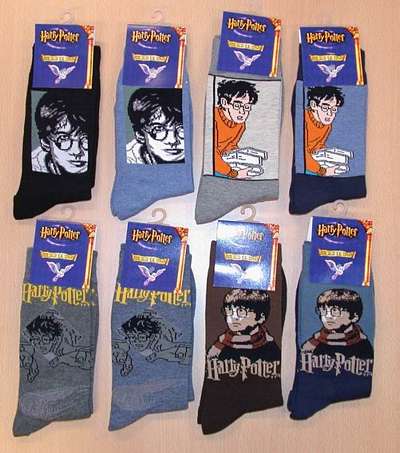
I'm less than 100 pages from the end of Harry P. I love books that inspire binge reading (and socks), Iris Murdoch has done that to me a couple of times. Do you have any favorite binge reads? Books you couldn't help bringing to the table, reading while walking down the street, or that kept you home from work until they were done? Anyway, HP is a fun adventure and Rowling draws a portrait of how a society becomes bigoted out of greed and fear, which I've thought is pretty good. It seems to me as though some of the books is tailored for the movie, which is a little annoying but mostly I'm enjoying it very much and I should be finished today, which is good since I promised the ragazzo he could have it on the weekend AND if I don't study more for the GRE soon I'm going to regret it.


Get ready for the posting of the poems of the Summer Poetry Challenge next week!! I'm looking forward to what our readers have chosen (see side bar for details).


Here's a poem not entered in the challenge by a poet I just love, Jame Wright:


A Note Left in Jimmy's Leonard's Shack
Near the dry river's water-mark we found
Your brother Minnegan,
Flopped like a fish against the muddy ground.
Beany, the kid whose yellow hair turns green,
Told me to find you, even in the rain,
And tell you he was drowned.

I hid behind the chassis on the bank
The wreck of someone's Ford:
I was afraid to come and wake you drunk:
You told me once the waking up was hard,
The daylight beating at you like a board.
Blood in my stomach sank.

Beside, you told him never to go out
Along the river-side
Drinking and singing, clattering about.
You might have thrown a rock at me and cried
I was to blame, I let him fall in the road
And pitch down on his side.

Well, I'll get hell enough when I get home
For coming up this far,
Leaving the notes, and running as I came.
I'll go and tell my father where you are.
You'd better go find Minnegan before
Policemen hear and come.

Beany went home, and I got sick and ran,
You old son of a bitch.
You better hurry down to Minnegan;
He's drunk or dying now, I don't know which,
Rolled in the roots and garbage like a fish,
The poor old man.


And finally, Eva over at her comfy A Striped Armchair tagged me for this meme which is probably more of interest to bloggers than it is to other readers, but here it is:

It’s very simple. When this is passed on to you, copy the whole thing, skim the list and put a * star beside those that you like. (Check out especially the * starred ones.)

Add the next number (1. 2. 3. 4. 5., etc.) and write your own blogging tip for other bloggers. Try to make your tip general.

After that, tag 10 other people. Link love some friends!


1. Look, read, and learn. **-http://www.neonscent.com/

2. Be, EXCELLENT to each other. **-http://www.bushmackel.com/

3. Don’t let money change ya! *-http://www.therandomforest.info/

4. Always reply to your comments. ******-http://chattiekat.com/

5. Link liberally — it keeps you and your friends afloat in the Sea of Technorati. ***-http://chipsquips.com/

6. Don’t give up - persistence is fertile. *-http://www.velcro-city.co.uk/

7. Give link credit where credit is due. ****-http://www.sfsignal.com/

8. Pictures say a thousand words and can usually add to any post.**-http://scifichick.com/

9. Visit all the bloggers that leave comments for you - it's nice to know who is reading! ***-http://stephaniesbooks.blogspot.com/

10. When commenting on others’ blogs, a few kind words go a long way. – ** http://shelflifeblog.blogspot.com/

11. When you're starting out, comment on all the blogs you like to read; that way the bloggers will know that you exist! ;)* http://astripedarmchair.blogspot.com

12. Vary your brew once in a while in form or content - if you're serious post a cartoon, if you do movie commentary give me a recipe, if you do books write on your foreign travels, if you're terse be excessive - it's fun for readers and you'll stretch yourself.
http://bookeywookey.blogspot.com/


And now I'm supposed to tag 10 people. Sorry if someone else already got to you and I didn't remember (blame Harry) and these are soft tags (no pressure if you'd rather not):
The Sheila Variations
Bookgirl's Nightstand
The Hidden Side of a Leaf
Pages Turned
The Frontal Cortex
A Work in Progress
Maitresse
The Mumpsimus
Dovegreyreader Scribbles
Writings Within the Margin


Good weekend.

Tuesday, July 24, 2007

SUMMER POETRY CHALLENGE


It seems that the myth of poetry only being to the taste of an elite few has held true. We had 11 people sign up for the Summer Poetry Challenge in all, and only seven have actually declared their poems - but it is a delightful and insightful seven (see my side bar to the right for the list of participants and their poems). So, starting this Sunday July 29 I'll check in at each of your sites. Some time between then and Wed Aug 1 please post your poems. If there is one dedicated post for your poems I'll link to that post directly from the directory posted on my site, otherwise, I'll just link to the home page of your site. If you can post full text versions of your poems - excellent. If not, excerpts or links to on-line versions would be fine. If you can link back to my posted directory so we can provoke a cross conversation, that would be great. Finally, if you were late or unsure about getting me your submissions, we're a small group, so just post a comment here with your list of poems and it will be no problem to include you.

Friday, July 13, 2007

SUMMER POETRY CHALLENGE - ARE YOU PLAYING?

We are fast closing in on the deadline for poem submission and we're still a small (but special) bunch. Come on friends - play along! And if you are playing but haven't yet declared your poems yet, please do, by July 20!

Here are the rules again:


The Challenge: Assign yourself 4 poems you have not really read:
  • 1 poem written before 1900
  • 1 poem written 1900-2000
  • 1 poem written in 2000-2007
  • 1 poem you're intimidated by, find mysterious, or simply don't understand, from any period.
These can be any length - really. They can be haiku, they can be book-length. They can be famous, they can be unknown - just don't use your own poetry, please. Otherwise, suit yourself.

What to do: Please formally enroll yourself here with your blog name in parentheses and blog URL (linking me directly to your posting of the poems will make the process more efficient for your visitors, but do as you wish). Also list your four poem titles and poets, please. If you change your mind or fill in one as you go, please mark your addendum as "your blog name" poetry submission #2 (etc...). Please label all posts "summer poetry challenge." One submission (of four poems) per person, please.

Sign-up deadline: No later than July 20, 2007.

I will post an index of all participants, listing your name, blog, four poems and poets. That index will link readers in our "reading week" to your poems directly.

Posting deadline: For one week, beginning August 1, post your poems (unless they're too long, in which case your thoughts on them, your questions about them, and any excerpts you choose can be posted instead). If they are long poems, post sooner so others can read them too if they choose!

Posting the poems on your own site will create readers for you and put your dialogue right at your fingertips, but with any luck we will get a cross-dialogue going.

Check in periodically for updates.

Most of all - read gorgeously good poems and spread the word(s)!

Who's playing so far: See side bar for the list

What are they reading:

Imani:
pre-1900: Paradise Lost by Milton

1900 - 2000: a pick from Adam Zagajewski's Without End

2000-2007: a pick from Talking Dirty to the Gods - Yusef Komunyakaa

From any period: Persephone the Wanderer by Louise Glück

Dewey:
Before 1900: “And did those feet in ancient time” by William Blake — 1804

1900-2000: “Les Feuilles Mortes” by Jacques Prévert

2000-2007: “We Gather” by Nikki Giovanni — 2007

A poem I find mysterious: “Jabberwocky” by Lewis Carroll — 1871


Siew:
Before 1900: The Rubaiyat of Omar Khayyam (translated by Edward Fitzgerald), written 11th or 12th century.

1900-2000: 'The Force That Through the Green Fuse Drives the Flower' by Dylan Thomas - 1933

2000-2007: 'Cactus' by Siobhan Harvey (one for Australia!) - 2007.

Lastly, 'Waiting for the Barbarians' by Constantine Cavafy, mysterious to me as it's captured the inspiration of some of my favourite writers, yet I have never read it - 1904.


Sheila:
Before 1900: Paradise Lost - by John Milton. I read it when I was a junior in high school, for English - and I can honestly say that that doesnt' count. I need to read it in its entirety again.

1900 - 2000: To Brooklyn Bridge - by Hart Crane

2000 - 2007: Anahorish 1944 - by Seamus Heaney

Poem I find mysterious: Sailing to Byzantium - WB Yeats


Ted:
Pre-1900: Song of Myself from Leaves of Grass by Walt Whitman - 1855

1900-2000: The Man with the Blue Guitar by Wallace Stevens - 1937

2000-2007: Twenty-Seven Props for a Production of Eine Lebenszeit
by Timothy Donnelly - 2001-2003

Mysterious: The Book of Questions by Pablo Neruda - 1973


Loose Baggy Monster:
Pre-1900: Dante's "Inferno"

1900-2000: Something by Osip Mandelstam (perhaps "To the German Language"-1932)

2000-2007: "Early Hour" by Wislawa Szymborska-2006.

Any period: "For My Enemies" by Boris Pasternak

Eva:
Before 1900: Blake's Songs of Innocence and Experience (I'll choose one poem from each part to post)

1900-2000: Yevgeny Yevtushenko, "Tomorrow's Wind" (1977)

2000-2007: "Reading the Entrails: a Rondel" by Neil Gaiman

Other: Sylvia Plath's "Daddy" (I chose it because 1) I've always had a problem w/ Plath for committing suicide and 2) the poem itself is quite disturbing, but also haunting and powerful)

Friday, June 22, 2007

Pablo Neruda's Love Sonnets - 3 poems for summer

Since a bunch of you were enthusiastic about my summer poetry challenge pick of Neruda, I thought I'd finish the week of with a few of his 100 Love Sonnets - one from each of the 3 sections - morning, afternoon, and night, translated by Stephen Tapscott.


XVI
I love the handful of the earth you are.
Because of its meadows, vast as a planet,
I have no other star. You are my replica
of the multiplying universe.

Your wide eyes are the only light I know
from extinguished constellations;
your skin throbs like the streak
of a meteor through rain.

Your hips were that much of the moon for me;
your deep mouth and its delights, that much sun;
your heart, fiery with its long red rays,

was that much ardent light, like honey in the shade.
So I pass across your burning form, kissing
you - compact and planetary, my dove, my globe.


LI
Your laugh: it reminds me of a tree
fissured by a lightning streak, by a silver bolt
that drops from the sky, splitting the poll,
slicing the tree with its sword.

A laugh like yours I love is born
only in the foliage and snow of the highlands,
the air's laugh that bursts loose in those altitudes,
dearest: the Araucanian tradition.

O my mountain woman, my clear Chillan volcano,
slash your laughter through the shadows,
the night, morning, honey of the noon:

birds of the foliage will leap in the air
when your laugh like an extravagant
light breaks through the tree of life.


so many of the third section are great I hardly know which to chose, but you can read them all, so I'll pick this one:


XCII
My love, if I die and you don't - ,
My love, if you die and I don't -,
let's not give grief an even greater field.
No expanse is greater than where we live.

Dust in the wheat, sand in the deserts,
time, wandering water, the vague wind
swept us on like sailing seeds.
We might not have found one another in time.

This meadow where we find ourselves,
O little infinity! we give it back.
But Love, this love has not ended:

just as it never had a birth, it has
no death: it is like a long river,
only changing lands, and changing lips.


Good summer weekend.

Wednesday, June 20, 2007

Summer Poetry Challenge - are you playing?

It is a dreary, oppressive day in NYC and I thought I'd brighten it with the prospect of poetry!! Don't forget about the poetry challenge - the rules are posted here. 10 players have signed up but so far only 4 have submitted poems see their submissions here. I thought I would encourage you all by announcing my own submissions:

Pre-1900: Song of Myself from Leaves of Grass by Walt Whitman - 1855

1900-2000: The Man with the Blue Guitar by Wallace Stevens - 1937

2000-2007: Twenty-Seven Props for a Production of Eine Lebenszeit by Timothy Donnelly - 2001-2003

Mysterious: The Book of Questions by Pablo Neruda - 1973
I was first going to choose a poem that frustrated me by its being inscrutable but I acutally love these, although their meanings are elusive. I'm going to try to read them all of a piece, instead of a few at a time and see what that does.

Wednesday, June 6, 2007

Summer Poetry Challenge Directory - Get Your Copy Here!

And here it is, as promised, the list of each participant and their four poems, (the ones I've received, at any rate). A full list of declared participants can be found on my side bar. Once we get to posting day - I will link each list to that blogger's posting of his or her poems.

Imani:
pre-1900: Paradise Lost by Milton

1900 - 2000: a pick from Adam Zagajewski's Without End

2000-2007: a pick from Talking Dirty to the Gods - Yusef Komunyakaa

From any period: Persephone the Wanderer by Louise Glück

Dewey:
Before 1900: “And did those feet in ancient time” by William Blake — 1804

1900-2000: “Les Feuilles Mortes” by Jacques Prévert

2000-2007: “We Gather” by Nikki Giovanni — 2007

A poem I find mysterious: “Jabberwocky” by Lewis Carroll — 1871


Siew:
Before 1900: The Rubaiyat of Omar Khayyam (translated by Edward Fitzgerald), written 11th or 12th century.

1900-2000: 'The Force That Through the Green Fuse Drives the Flower' by Dylan Thomas - 1933

2000-2007: 'Cactus' by Siobhan Harvey (one for Australia!) - 2007.

Lastly, 'Waiting for the Barbarians' by Constantine Cavafy, mysterious to me as it's captured the inspiration of some of my favourite writers, yet I have never read it - 1904.


Sheila:
Before 1900: Paradise Lost - by John Milton. I read it when I was a junior in high school, for English - and I can honestly say that that doesnt' count. I need to read it in its entirety again.

1900 - 2000: To Brooklyn Bridge - by Hart Crane

2000 - 2007: Anahorish 1944 - by Seamus Heaney

Poem I find mysterious: Sailing to Byzantium - WB Yeats


Ted:
Pre-1900: Song of Myself from Leaves of Grass by Walt Whitman - 1855

1900-2000: The Man with the Blue Guitar by Wallace Stevens - 1937

2000-2007: Twenty-Seven Props for a Production of Eine Lebenszeit
by Timothy Donnelly - 2001-2003

Mysterious: The Book of Questions by Pablo Neruda - 1973


Loose Baggy Monster:
Pre-1900: Dante's "Inferno"

1900-2000: Something by Osip Mandelstam (perhaps "To the German Language"-1932)

2000-2007: "Early Hour" by Wislawa Szymborska-2006.

Any period: "For My Enemies" by Boris Pasternak

Eva:
Before 1900: Blake's Songs of Innocence and Experience (I'm reading the whole collection, but I'll choose one poem from each part to post)

1900-2000: Yevgeny Yevtushenko, "Tomorrow's Wind" (1977) (I *love* Russian poetry, but I usually read the older stuff)

2000-2007: "Reading the Entrails: a Rondel" by Neil Gaiman (I'm awful about modern poetry, but I like this poem and it's short)

Other: Sylvia Plath's "Daddy" (I chose it because 1) I've always had a problem w/ Plath for committing suicide and 2) the poem itself is quite disturbing, but also haunting and powerful)

Saturday, June 2, 2007

Summer Poetry Challenge Update!! - The Details


The Challenge: Assign yourself 4 poems you have not really read:
  • 1 poem written before 1900
  • 1 poem written 1900-2000
  • 1 poem written in 2000-2007
  • 1 poem you're intimidated by, find mysterious, or simply don't understand, from any period.
These can be any length - really. They can be haiku, they can be book-length. They can be famous, they can be unknown - just don't use your own poetry, please. Otherwise, suit yourself.

What to do: Please formally enroll yourself here with your blog name in parentheses and blog URL (linking me directly to your posting of the poems will make the process more efficient for your visitors, but do as you wish). Also list your four poem titles and poets, please. If you change your mind or fill in one as you go, please mark your addendum as "your blog name" poetry submission #2 (etc...). Please label all posts "summer poetry challenge." One submission (of four poems) per person, please.

Sign-up deadline: No later than July 20, 2007.

I will post an index of all participants, listing your name, blog, four poems and poets. I will be on vacation from June 27 - July 9, so don't panic if you submit in that period and don't see yourself immediately. That index will link readers in our "reading week" to your poems directly.

Posting deadline: For one week, beginning August 1, post your poems (unless they're too long, in which case your thoughts on them, your questions about them, and any excerpts you choose can be posted instead). If they are long poems, post sooner so others can read them too if they choose!

Posting the poems on your own site will create readers for you and put your dialogue right at your fingertips, but with any luck we will get a cross-dialogue going.

If there is to be any sort of contest, details will follow but right now, I'm thinking the pleasure is in the reading.

Please inform me if I could be organizing things better - I haven't been blogging very long. Thanks for your guidance, Imani!

Check in periodically for updates.

Most of all - read gorgeously good poems and spread the word(s)!