Showing posts with label Joseph Cornell. Show all posts
Showing posts with label Joseph Cornell. Show all posts
Tuesday, December 23, 2014
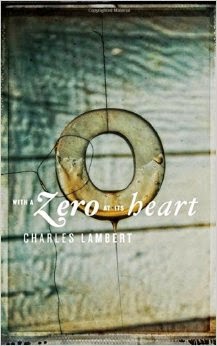
Brief flashes of memory creating the beauty of what has passed anew (Books - With a Zero at its Heart by Charles Lambert)

Sunday, February 15, 2009
A palace rises in the dark wood... (Le Grand Meaulnes by Alain-Fournier & Joseph Cornell)
 One of my favorite of Joseph Cornell's boxes today in honor of the Cornflower Book Group's discussion of Le Grande Meaulnes by Alain-Fournier.
Friday, May 16, 2008
Fanatatical Archivist (Books - Walter Benjamin by Esther Leslie)
 The Autumn of Central Paris (after Walter Benjamin) by R. B. Kitaj
Reader, literary critic, translator of Proust, Baudelaire, and Balzac, philosopher, radio broadcaster, and fanatical archivist - Walter Benjamin - kept notebooks as the home for his thoughts, Esther Leslie tells us in her fascinating critical biography Walter Benjamin:
When he was without a notebook his thoughts were 'homeless.' Seven of his notebooks and three notepads still remain. These are crammed with drafts of articles and letters, ideas, diagrams, quotations to be used as epigraphs, bibliographies and diary entries, and often every single centimeter of their pages is covered with tiny handwriting. These books were portable. With them he could indulge his inclination to write on the move, in cafes across Europe. He fostered a cult around his notebooks, relishing in particular those with thin and translucent leaves and supple vellum covers. They survive for, once complete, they were placed with friends, with the request 'please store the manuscript carefully,' and the proviso that they could be recalled at any time by the author.
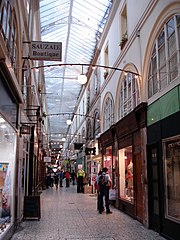
He is probably best known, if he is known at all, for his unfinished Arcades Project, a massive collection of writings that is an aesthetic appreciation of the street culture of Paris - named for the little glass-covered passages that continue the streets indoors and that were the haunts of Paris's famous flaneurs.
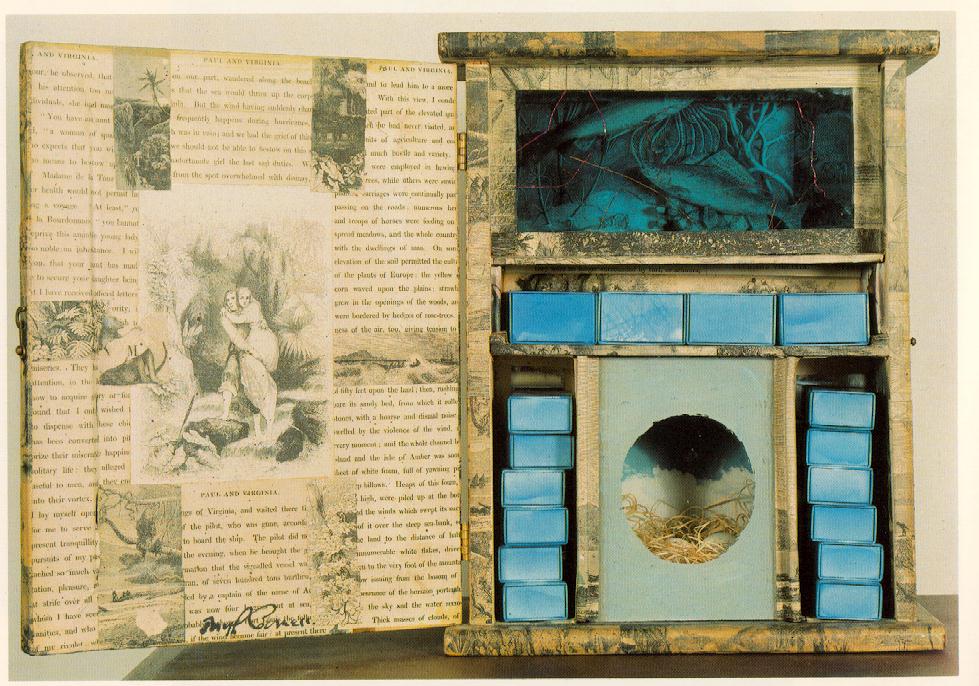
From what little I have known of him, I have always thought of Walter Benjamin as the literary equivalent of artist Joseph Cornell - another stroller through cities, observer of urban life, and fanatical archivist. They both preserved the unusual connections they observed between phenomena.
Benjamin organized his own archive of materials meticulously. Files, folders, envelopes, boxes, and cases harboured correspondence, manuscripts by acquaintances, private and business affairs, memoirs, diaries, photographs, postcards, drawings, and notes, index cards, inventories, a list of books read since his school days and a list of his publications, as well as copies of his writings, in various drafts and replete with further amendments or curious markings to indicate associations and cross references. He archived scraps of paper, sketches of essays jotted on the back of library book return reminders, diagrams in the form of compass roses and co-ordinate planes that plotted ideas in relation to each other. Even the most ephemeral objects found a place in his archive, evoking an idea from one of the poets who most fascinated him, Charles Baudelaire, who observed the twinning in modernity of the fugitive and eternal, the transitory and the immutable.
It makes one wonder what his life would have been like in the age of the internet.

Friday, July 13, 2007
Medicine Chest - in case you develop the vapours


In one of the B&Bs where we stayed in Ireland, this medicine chest sat on the dressing table, yes we had a dressing table in the room. We also had a chaise lounge on which we could collapse with the vapours before taking one of these powders.
Is this Joseph Cornell, or what? Here's his:

And now that I've started with Cornell, I just can't resist one more. Couldn't this be the castle where you would find this chest?

One day I'll do a post on the magician Joseph Cornell but I'll be here all day so right now, I'll refer you to Sheila's excellent post at The Sheila Variations instead. Somehow, she's referencing Cornell today too. Great minds...
Subscribe to:
Posts (Atom)