Saturday, December 6, 2008

Walking around in the mystery (Books - The Graveyard Book by Neil Gaiman)*updated*

Our dear reading friend Dewey, who blogged at The Hidden Side of a Leaf, sadly passed away just a few days ago. I will miss her energetic and inclusive spirit, her bright contribution to our collective conversation, and, probably most of all, her recommendations - especially when I was in the mood for anything in the YA fiction category. Oddly, The Graveyard Book by Neil Gaiman was her last recommendation to me. I would say that young people's fiction about death is a neglected category. People can get so uncomfortable trying to find answers for kids about the deeper mysteries of being alive - particularly the big two - love/sex and death. Neither are realms that benefit from the solutions so many people come up with - pat answers or "protecting" kids from any discussion about them at all. I think richly imagined fiction can play a role, not just for kids, but for adults too. It does that not so much by inventing answers as by letting the reader walk around in the mystery in a safe way. As I read Gaiman's new book, that came through as its strength.

In the book, a family is murdered, except for the youngest child, a toddler. He escapes, running into a graveyard, where he is dubbed Nobody - Bod for short - and raised by its denizens - which include everything from garden variety ghosts, to witches and warewolves. The book has a thankfully non-partisan take on religion, dancing around some basic idea of sacred ground and the like without ever falling in, although it does rather obviously fall on the side of life after death or there would be no story at all. Gaiman deals with ideas young people have to come to grips with if they are going to live life in the full knowledge of its transitory nature. The book deals with larger notions of loss, fear, and I say 'play' because Gaiman allows Bod to acquire some skills normally reserved for the dead - fading, haunting, and coming to life in other people's dreams - which serve as metaphors for the ways in which life and death intersect for us all. Gaiman creates the kind of beleagured child-hero through whom more bookish youth can have some very satisfying moments of vicarious revenge against whatever bully haunts them. I found myself smiling even with more than 30 years between me and my tormentors. But finally I had to experience all this at a distance. I never became fully engaged and I think that was because of the writing. I cannot say I was wowed. That was not my experience with Coraline. Here I found the plotting obvious, several inconsistencies in character bothered me, and I was jarred by what I saw as some careless moments. Usually these were little details, as when our narrator tells us that:
He wondered how he would ever be able to sleep when he was this worried and hopeless and then, almost to his surprise, for two or three hours, he slept.
It's a quibble, I know, but you cannot be surprised that you are going to sleep, because you cannot be aware of going to sleep. That surprise could only happen retrospectively, upon waking. And while I understand that Gaiman has employed an omniscient narrator, his narrator's voice tries hard to keep us close to Bod's own experience at most times. Moments like this pulled me out of the narrative flow of time. Mostly I found myself amused by this book, but never deeply engaged by the story, or warmed by the fires of nostalgia that can be stirred when reading evokes the excitement of a great childhood reading experience. But I was appreciative of its playfully imagined "other side," as a means by which a young hero could take on one of the great mysteries.

I would like to add that Neil Gaiman had a terrific exchange on the First Amendment (Freedom of Speech) in the U. S. this week on his blog. It is a subject on which he is obviously passionate. Check it out.

Thursday, December 4, 2008

Cultural riches, cultural poverty...

Philip Kennicott writes an excellent review in The Chronicle of Higher Education of two books about the life of the much admired and much maligned late founder and director of the Opera Company of Boston - Sarah Caldwell. The reach of Caldwell's work and the extremes of her personality would need at least two books. Kennicott quotes Daniel Kessler's The First Woman of Opera:

Is that why she grew so obese? It seems a ridiculous question, the sort that would never be asked of a male conductor...Caldwell's physical size very quickly became a kind of shorthand for her reputation. In her best years, during the 1960s and 70s, the artist with a charming indifference to her physical self was seen as a maverick and an eccentric. But when everything started to fall apart, the overweight impresario was seen as out of control and undisciplined.

The truth was, she was all of those, and as long as she could scrape together the money, the maverick could do her astonishing work. But when the money ran out, memories of the maverick were almost instantly effaced. Her cultural exchange with the Soviet Union was a critical triumph, but she never bothered to cover the bills. Personal pressure from no less than Secretary of State George P. Shultz was required to keep the thing from becoming a fiasco.

Indeed, her unkempt appearrance would have been given less emphasis if she had been a man, but opera has a pretty glitzy veneer. The first class of every year of teaching opera singers acting, I would have at least one student show up to class in a suit or evening gown until I posted notices that sweat pants were preferred. Anyhoo, what I like about this review is how it recognizes the contradictions that were embodied in this single person (as is true of most of us) and sees these two books as a more honest portrait than either one of them alone. I really enjoyed this one excerpt Kennicott quotes from Caldwell's own memoir Challenges: A Memoir of my Life in Opera, not so much for the discussion as to the degree of Caldwell's self knowledge but because it places in context the job she took on as an artistic director in the United States:
The closest that Caldwell comes to acknowledging her deeper flaws in Challenges: A Memoir of My Life in Opera is an observation she borrows from one of this country's most influential leaders in the arts: "McNeil Lowry, head of the Ford Foundation, once said that when he went into a room he could always spot the arts directors because they all appeared to be somewhat wounded," she writes. "They were too thin or too fat; they smoked too much, or were nervous, because their fund-raising responsibilities weighed so heavily on them."
Having both run and assisted the running of several small theatre companies in the U.S., and knowing many others who have and do run them, I got a big chuckle out of that. And as I write this with the radio giving reports of hysteria over that abstraction called "the economy," and wealthy industries desperate for bailouts, my thoughts turned to a different kind of poverty we experience here by virtue of how little emphasis is placed on culture, on experiences of beauty and richness in the course of educating our children and living our daily lives as adults. How much better the world can be for those who would sacrifice everything - their possessions, their health, their physical attractiveness - just to make something that looks or sounds exceptional, and how mistrustful and disrespectful we can be of that impulse. It may not seem on the same order as the drop in the Dow but that is a kind of poverty too.

Hat tip: Books, Inq.

Wednesday, December 3, 2008

What on a Wednesday...

Mark Thwaite runs a delightful feature at his Editor's Corner blog on The Book Depository website in which you can get to know a little more about a book blogger each Wednesday. This week I'm it. I guess if I'm to be outed, I'd rather have Mark do it than anyone else. And while you're there, check out the rest of the Book Depository website. They seem to have nearly everything and they ship worldwide (I believe for free!) Check out some of the past interviews too, you might recognize a few familiar faces.

Tuesday, December 2, 2008

Mirror mirror on the wall... changing our form to change ourselves?

Swedish researchers presented evidence that the brain, when tricked by optical and sensory illusions, can quickly adopt any other human form, no matter how different, as its own.

"You can see the possibilities, putting a male in a female body, young in old, white in black and vice versa."
In today's Science Times Benedict Carey reports on soon to be published research which suggests that people will not only be convinced that they have temporarily assumed a new physical form, but that this experience can alter behavior - making people "less anxious about racial differences," when they assume another skin color, convincing people to exercise more after seeing themselves as someone more fit, or giving people extra confidence when they felt they had become more good-looking. Many psychotherapies work with techniques that help people get outside their own perspective into another's - transforming marriages in some cases, or getting criminals to view the world from the point of view of their victims. I can see the temptation to create some great science fiction with this idea, but the leap to claims of lasting behavioral benefits seems far fetched to me if we are talking about a single instance of experiencing an optical illusion. This article does not specify the amount of time subjects spent either as realistic film versions of others in one study, or as more conventional computer avatars in another.

Very often, those of us who study the human mind and brain create studies imagining we are manipulating behavior in a certain way. But we have to be cautious about believing we are actually having that effect. I can imagine from reading this article that I might be able to change a man's experience of himself to believing he has the body of a woman. Perhaps I tried it on myself and it made me feel more tender. Does that immediately make another man more tender or more sympathetic toward women too? Toward all women or only the sweet young thing I turned him into? Perhaps instead of spending the session becoming more sympathetic, what he will really discover is what it is like to have breasts. Just because we can manipulate an avatar doesn't mean we can instantly leap to controlling behavior. Does this also mean that writers and actors - those who have practice assuming the character or psychology of others - are more healthy, have greater sympathy for others? Do they have better relationships or are they more easy to manipulate through certain kinds of therapy? Maybe we can change the image of the actor to those people in our society with the most stable family lives, or change all writers into instant teetotalers. I'm being facetious, of course. I have known many actors who exercise a lot of empathy in their decision making (perhaps even romantically so). I have also found some of them to exercise an extraordinary amount of self-centeredness. Finally, we do have to inhabit ourselves in a multitude of complex and changing contexts. So it makes me wonder about whether, if these illusions are as useful as the tone of this intriguing story suggests, we and our therapists would have any less work integrating our new behavior with the rest of our old selves or our families. Changing behavior is a tricky business and it sounds to me like this sort of research is in its infancy. The notion, however, is tantalizing - check out the article and see what you think.

Monday, December 1, 2008

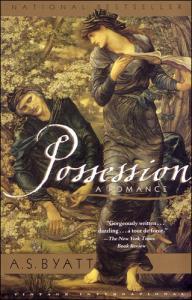
More like sweet than savory (Books - Possession by A. S. Byatt)

I am enjoying the multiple layers of A. S. Byatt's ventriloquism act in Possession. As author not only of a contemporary romance between two scholars, but also of a 19th century epistolary one between the two poets studied by those writers, Byatt then gives herself the additional burden (or fun) of having one of those poets write about a third poet - Samuel Taylor Coleridge. That would be a writer writing about a writer, writing about a writer.
I have not had occasion to tell you - though I tell all I meet, with the regularity with which dear Crabb tells his tale of retrieving Wieland's bust - I once met Coleridge, I was once taken to Highgate - when I was very young and green - and had the chance of hearing the Angelic - (and mildly self-important) voice speak on and on - of the existence of angels and the longevity of yew-trees, and the suspension of Life in Winter (the banal and truly profound thick and fast upon each other here) and premonitions of the Duties of Man (not Rights) and how Napoleon's Spies had been hot on his heels in Italy on his return from Malta - and on True Dreams and Lying Dreams. And more, I think. Nothing on Christabel.

I was so young and green, I worried inordinately that I had no chance, in all this spate of brilliant monologue, to interpose my own voice - to be heard to be able to think in that company - to be remarked. I do not know what I should have said if I could have spoken. Very likely something futile or silly - some erudite and pointless questioning of his doctrine of the Trinity, or some crude wish to be told the end of the poem Christabel.
I might describe this book as a layered confection of the imagination. It is more like eating sweet than savory (at least at the moment). This extended section of letters might be a bit of marzipan. Delicious but densely sweet and I find myself not wanting to gorge too much of it in one sitting. Imagination is also a subject of this novel, as the two poets correspond about their creative inspirations, frustrations, and habits.
What will you be thinking of me now? I told you - I cannot think of anything without imagining it, without giving it shape in my mind's eye and ear. So, as I said, I have the clearest mental vision of yr unseen Porch, overarched with Clematis - one of those delightful deep-blue violet ones - and little clambering roses. I have also the clearest vision of your parlour - with its two peaceful Human inhabitants employed - I will not say at netting, but perhaps at reading - aloud, some work of Shakespeare or Sir Thomas Malory - and Monsignor Dorato all lemony plumes in a filgree dome - and your little dog - now of what kind is he?
What a delightful game, both for the 19th century poet who employs it as a sort of flirtation and for Byatt, the 20th century writer, imagining what he would imagine. I recognize this skill instantly as the sign of the kind of artist I respect - a well-exercised and fertile imagination is not sufficient to artistry, one needs craft too, but it is necessary, as without it one would have nothing to exercise one's craft for. If you're a creative process lunatic like me, then you are constantly looking for clues about that process in every work by an artist and any biography of them. And if said artist has written letters, diaries, or - on rare occasion - a book on their creative journey, then what a treasure I have found (see list below)! As I read the letters between these two fictional writers, I find myself wondering how much of Byatt's own process is in each of them.

My Life in Art by Konstantin Stanislavski
The Creative Habit by Twyla Tharp
Growing Pains - The Autobiography of Emily Carr
Chaliapin - by Victor Borovsky
The World According to Mike Leigh by Michael Coveney

Saturday, November 29, 2008

Heaven, the graveyard, love and ambition in Thatcher's England (The Graveyard Book, A Matter of Life & Death, My Beautiful Laundrette)

I'm still emerging from a haze of butter fat and imagining that I am unlikely to eat any poultry again for the rest of 2008. Too much was had by all this thanksgiving, but everyone seemed to have a good time of it as the festivities went on for eight hours. It's probably my fear for the state of my arteries that has me reading Neil Gaiman's new young person's novel, The Graveyard Book. As usual, Gaiman has created a dark universe. In it a mysterious man in black, name of Jack, tries to murder an entire family for an as yet unknown reason. But the toddler escapes to the graveyard where the spirits decide to adopt and raise him. I have gotten barely a chapter in, but the characters are richly imagined and the book starts with the crack of a killer opening sentence.

There was a hand in the darkness, and it held a knife.
Hmmm, turn the page or no? It creates a fun contrast to A. S. Byatt's Possession on which I'm taking my time and have nothing new in particular to report.

We also watched a couple of movies this weekend. A Matter of Life and Death made in 1946, was written and directed by Michael Powell and Emeric Pressburger. It features David Niven, Raymond Massey and Kim Hunter, and tells a marvelous story about a fighter pilot who manages to escape death on jumping from his plane without a parachute. This turns out to be an "error," but he is granted a trial by jury in heaven in which he can fight for his life. It's a charming and well written piece and seems to unwittingly be the part of some theme for me this weekend!


My Beautiful Laundrette written by Hanif Kureshi and directed by Stephen Frears came out in 1985 and was then a startling film. It is in some ways an innocent mess - awkwardly edited, produced on a shoestring, stiffly written and delivered - but is ambitious in the range of societal themes it tackles and its intentions shine through nonetheless. It takes on the racial tension between lower class whites and Pakistani immigrants in Thatcher's England. Critical of all - the poor hoodlums on-the-dole who taunt and attack the ambitious immigrants, the ostentatious, equally bigotted Pakistanis slumlords. Kureshi and Frears also made Sammy and Rosie Get Laid and then Kureshi made London Kills Me with himself directing. This trio of movies are all scathingly observant critiques of racial and class-based tensions in England through the 1980s and 1990s and make an interesting trio to watch. But although My Beautiful Laundrette is the roughest, in some ways it is the most, well, beautiful. Omar, the clueless child of Pakistani immigrants, eschews university and wanders London with nothing to show but ambition and a lovely smile. His mother has died and his father, once a brilliant journalist, gives up on life, pickling himself in vodka and longing for the old country. The papa is played with love and intelligence by Roshan Seth. Omar's uncle is an avaricious businessman, who gives the boy a chance to run a delapidated laundrette and prove himself a worthy heir to the family business empire. Omar pairs up with his childhood friend, Johnny, played by a young Daniel Day Lewis, and the fun begins. The film has no plattitudes to offer. No one group or one character is the good guy and the other the bad guy. This film reaches to tell a complex story about greed, class, race, and love. I remember well the first time I saw the film because it was the first gay story I ever saw that was not about AIDS and not about sex, but instead about two boys who lived complicated lives in the context of family, community, and personal ambition, and also happened to love each other. Gordon Warnicke, who plays Omar, is not done any favors by the green filmmaking. I've never actually seen him do anything else to learn whether he is any good as an actor. But Daniel Day Lewis is quietly charismatic - acting on, in, and around the lines. Always alive. It is striking to see this film along with another film with the young Daniel Day Lewis that came out at exactly the same time - Merchant-Ivory's A Room With A View, the adaptation of the E. M. Forster novel, in which he played the priggish Cecil. Truly a brilliant film. I first saw the two films in the same week, and Day Lewis is so completely different in them I didn't even know it was the same actor. Watching the two back-to-back makes for a starkly contrasting pair of films.

Wednesday, November 26, 2008

Newbies!

I have some interesting new reads on the horizon:

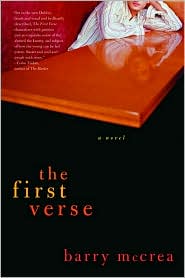
Irishman Barry McCrea has written a literary coming-of-age novel set at Trinity College in contemporary cosmopolitan Dublin called The First Verse. A gay student is lured into a cult like world of obsessive literary mysticism, as an escape from the workaday world "of strange games and secret systems," as he and his friends discover who they are and what kind of life they would like to create for themselves. The writing seems fluid and elegant and the plot very engaging. An enticing recommendation from Eve's Alexandria.

I have tended to be more a fan of Neil Gaiman's books for younger readers than his books for adults despite his prodigious imagination. I enjoyed Coraline way more than Neverwhere, which I couldn't even finish. So when Dewey went on enthusiastically about The Graveyard Book, I decided I'd give it a try. I always like to read at least one YA adventure over the winter break and a child raised by the spirits of a graveyard sounds just the thing.


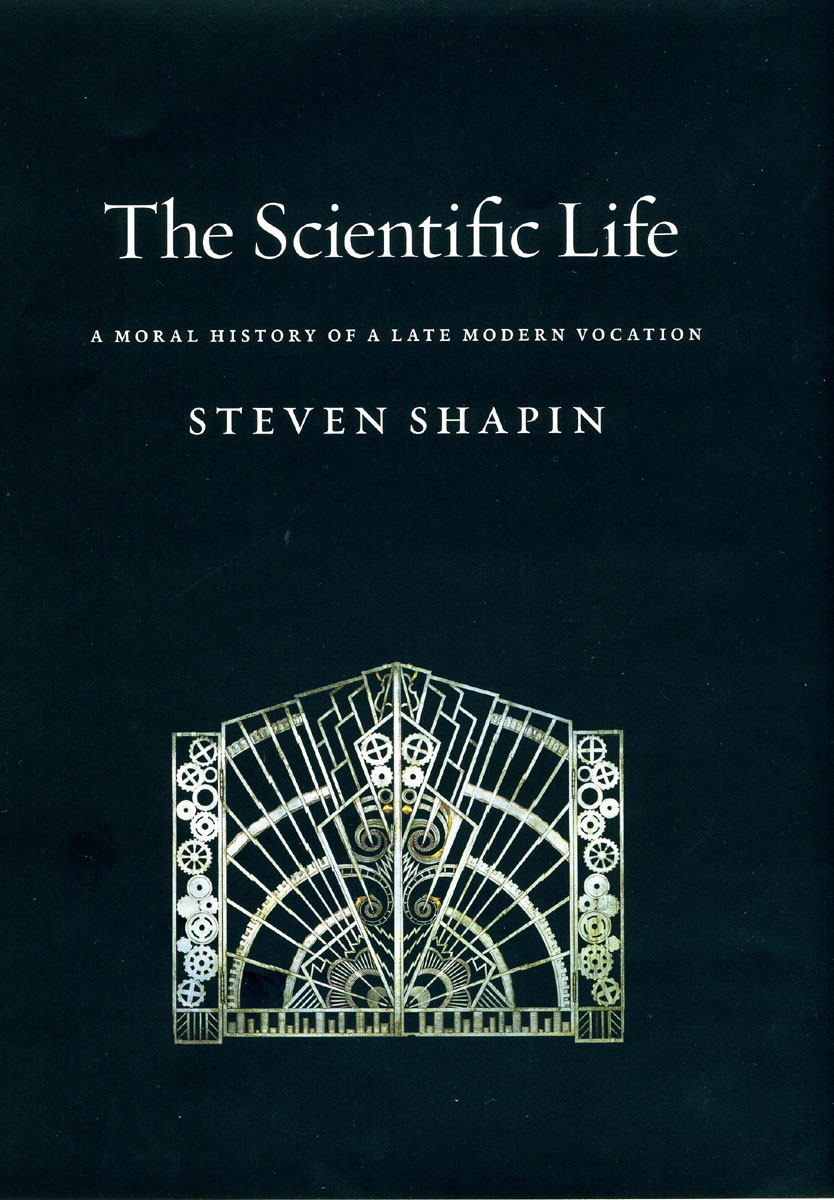
I heard about The Scientific Life - about the practice of contemporary science and from whence it came - at Books, Inq. Here is an in-depth interview with the author, Steven Shapin, from University of Chicago Press's website which will give you a much richer idea of this book's contents. Even the book jacket quotes are dense paragraphs in small print. No sound bites here. The journey from philosophy to research to entrepreneurship.


I don't remember where I read about it, but Travis Holland's The Archivists's Story is a fictionalized story about the last days of Isaac Babel, the author of Red Cavalry, which I am reading right now. Babel is in Stalin's Lubyanka prison, soon to have his final writing 'purged' by archivist Pavel Dubrov. I don't how much of this story is true. I do know that many of the stories in Red Cavalry were published in magazines when they were written in the 1920s, but there may be other writings, or perhaps this author imagines that there may have been but we will never get to read them. But this is historical fiction set in Stalin's Russia and I'm a Russian history geek, even though I have been neglecting that interest lately. So I thought I would give it a go.

Tuesday, November 25, 2008

Dream states (Books - Possession by A. S. Byatt)

A. S. Byatt is brilliant at creating dream states. Her novel Possession, is set in the halls of academia, Victorian literature to be specific. A scholar finds the draft of a letter between poet Randolph Ash, the subject of his graduate dissertation, and Christabel LaMotte, a poet and writer of fairy tales, which suggests that the two writers knew each other. A fact previously unknown. The poems and diaries are re-read looking for confirmation of this new fact. The feminist scholars who owned LaMotte as a recluse and lesbian become ruffled. The Ash men who envisioned their poet a stick-in-the-mud raise their scholarly eyebrows.

Here I am reading another novel where the author gets a chance for literary role play. I seem to have read two other's in succession. Tobias Woolf's Old School and The Meaning of Night by Michael Cox. The second even had the Victorian era as its setting! Perhaps this is not a coincidence. Any poems, letters, diaries or stories by either of the two poets in Possession are Byatt's creation. She is really a marvelous mimic while simultaneously being a good writer, and here she writes about good writing besides:
...But poets don't want homes - do they? - they are not creatures of hearths and firedogs, but of heaths and ranging hounds. Now tell me - do you supposed what I just wrote is the truth or a lie? You know, all poetry may be a cry of generalized love, for this, or that, or the universe - which must be loved in its particularity, not its generality, but for its universal life in every minute particular. I have always supposed it to be a cry of unsatisfied love - my dear - and so it may be indeed - for satisfaction may surfeit it and so it may die. I know many poets who write only when in an exalted state of mind which to compare to being in love, when they do not simply state, that they are in love, that they seek love - for this fresh damsel, or that lively young woman - in order to find a fresh metaphor, or a new bright vision of things in themselves. And to tell you the truth, I have always believed I cd diagnose this state of being in love, which they regard as most particular, as inspired by item, one pair of black eyes or indifferent blue, item, one graceful attitude of body or mind, item, one female history of some twenty-two years from, she we say 1821-1844 - I have always believed this in love to be something of the most abstract masking itself under the particular forms of both lover and beloved. And Poet, who assumes and informs both. I wd have told you - no, I do tell you - friendship is rarer, more idiosyncratic, more individual and in every way more durable than this Love.

Without this excitement they cannot have their Lyric Verse, and so they get it by any convenient means - and with absolute sincerity - but the Poems are not for the young lady, the young lady is for the Poems.

Fantastic stuff. Byatt, of course, writes the poems as well. Just a bit of one here.
Deep in the silence of drowned Is
Beneath the wavering precipice
The church-spire in the thickened green
Points to the trembling surface sheen
From which descends a glossy cone
A mirror-spire that mocks its own.
Between these two the mackerel sails
As did the swallow in the vales
Of summer air, and he too sees
His mirrored self amongst the trees
That hang to meet themselves, for here
All things are doubled, and the clear
Thick element is doubled too...

As I am reading the novel and come to a stanza or two of verse, I am sometimes compelled to want to skip it and get back to the business of the plot, but everything Byatt puts in our path is necessary. This poem, for example, read by our young scholar, after having been given it by Maud Bailey. He (and by extension we) read the poem's three stanzas and just a page later drive home in the car with Maud Bailey. We, the modern reader, read of a contemporary (fictional) scholar reading a Victorian poet, whose subject is a mythical Breton city in ancient Pagan times. So each reader in their time is transported to an earlier one, and if each writer (in fact all Byatt) have done their job, that sense of transportation will be enveloping and complete.
She drove through the park, much of which had been planted by that earlier Sir George who had married Christabel's sister Sophie, and had had a passion for trees, trees for all parts of the distant earth, Persian plum, Turkey oak, Himalayan pine, Caucasian walnut and the Judas tree. He had had his generation's expansive sense of time - he had inherited hundred-year-old oaks and beeches and had planted spreads of woodland, rides and coppices he would never see. Huge rugged trunks came silently past the little green car in the encroaching dark, rearing themselves suddenly monstrous in the changing white beam of the headlight. There was a kind of cracking of cold in the woods all round, a tightening of texture, a clamping together that Maud had experienced in her own warm limbs as she went out into the courtyard and cold ran into her constricted throat and pulled tight something she thought of poetically as the heartstrings.
I just love that passage because the world of the poetry is still lingering in this reader's mind from a page earlier, just as that same poetic world is occupying Maud's mind as she drives her car home. That is why a ride home circa 1990 in a car requires such elegant verbiage. I love how a phrase evoking an earlier style of writing "rearing themselves suddenly monstrous" combines with "in the changing white beam of the headlight" It's just like a dream, using what is presently in mind to create an altered state. Writers role play isn't just a way for Byatt to display her talent. She is creating the twin universes of her novel and wants to encourage a parallel state of mind for her reader with regard not just to their contemporaries, but to the relationship between those contemporary scholars and the writers who have become the driving purpose of their lives' work.

Dream states. She creates others but perhaps I'll save them for another day.

Monday, November 24, 2008

Eating a novel (Books - Possession by A. S. Byatt)

When the two women in Roland's life, Val - the girlfriend more of habit than of passion - and Maud Bailey - a colleague in literary scholarship at a women's study program in Lincolnshire - prepare him dinner, you know who they are and where he stands with each of them.
When he got home that evening he could smell that Val was in a mood. The basement was full of the sharp warmth of frying onions, which meant she was cooking something complicated. When she was not in a mood, when she was apathetic, she opened tins of boiled eggs, or at most dressed an avocado. When she was either very cheerful or very angry, she cooked...

Val put before him grilled marinated lamb, ratatouille and hot Greek bread. He said, "Shall I get a bottle of wine?" and Val said, disagreeably and truthfully, "You should have thought of that some time back; it'll all go cold." They ate at a card-table, which they unfolded and folded again, after.
Whereas:
Maud Bailey gave him potted shrimps, omelette and green salad, some Bleu de Bresse and a bowl of sharp apples. They talked about Tales for Innocents, which Maud said, were mostly rather frightening tales derived from Grimm and Tieck, awith an emphasis on animals and insubordination.
The first meal is middle class, domestic, heavily seasoned, labored-over. The second is whipped together with some thought but not too much preparation, is lighter, composed of simple piquant flavors - fish, crisp apples, the bite of a blue cheese - and doesn't permit a pause in the conversation, which is about each scholar's interest in a poet named Christabel LaMotte. Each meal is redolent with pertinent character detail, but also forwards the plot, and A. S. Byatt dispatches them in a few rich, choice sentences. Possession, which I am re-reading for the first time since it was published around 1990, is full of writing which shows, hints, and evokes rather than simply tells. She relishes the job of letting the details of the character's everyday living and the writing of the poets they study expose the story little by little. Relishes it like good food.

I must admit, if an author dare to write about food, I pay attention. I don't necessarily mean write in great detail of exquisite meals as did A. J. Liebling or M. F. K. Fisher, whose writing I love since I love good food. But I mean including the sensoral details of quotidian existence and including them as the story. As a way to tell the story of who someone is, how they lived on their way to meet somebody and do they deeds that form the plot of our story. Surely they washed, dressed, travelled from point to point in the course of this story - and surely, if they are still living after a few days, they ate. I love when storytelling is skilled and rich enough to weave its cloth of life instead of considering plot a departure from it, occassionally dipping in to describe something since, as a writer, they know they must to earn our belief. This is what good French film does with such skill, and is why I like it so much. People brush their teeth, have to actually park their damned cars in a spot not conveniently sitting in front of the building they will enter for the next plot point, and they eat. If an author dares to write about food with any detail then I pay attention because a) they have to really do the work of imagining themselves in exquisite and intimate detail into the life of someone to know what they'd have in the house, buy at the market, enjoy eating themselves, or think of preparing for someone else; b) they have to take the risk of having a sensory experience for us which could, rather than deepening our involvement in the story, take us right out of it if we find their experience too different from our's or wrong in our estimation for the character's. It's like writing about listening to music. It can be merely descriptive and boring, or we can have a reaction like 'the Libera Me in Verdi's Requiem isn't... fill in your adjective here.' Or c) because I enjoy the smells, tastes and textures of food and wine enough that the writing of it serves as a barometer. If I want to eat, it's good.

I want to eat.

Sunday, November 23, 2008

Obama, the opera!

Hilarious - I try to steer clear of politics here but I think this is good fun no matter where your's are, especially if you're an opera fan. From Mr. Eugenides blog - Obama! the opera.

Tell me your story...

Regular readers already know that I am obsessed with people's personal narratives and the value of their telling. There is a great organization called Story Corps which has booths all over the United States where you can go to interview a friend or loved one and elicit their stories. You get to keep the recording and a copy is also archived with the Library of Congress. They also have various special initiatives when they focus on getting stories of particular groups like the Griot community, or gathering the stories of people who are losing their memory. A National Day of Listening has been declared on November 28, the day after the American Thanksgiving (and so a day off for most Americans, except me). They have declared this as a day to get the story of someone you love or admire. As this is typically a day off from work and around family, it would be a good opportunity to get a story from a family member or loved one, but friends and mentors would be fair game too. You can do this at home, or at a local community center. They provide the details. I'd like to extend that invitation to you. You can conduct the interview in person, you can sound or video record it. You could also do a long-distance interview in writing. The Story Corps website offers instructions if you want some help getting started. I suppose you could even post about the experience on your blog if you wanted to. Showing interest in others by listening is an act of healthy curiosity, of respect, of love. It is of great value both to you and to them. So next Friday, get someone you're curious about to tell you a story.

Saturday, November 22, 2008

Noir gumshoe in 1970s Los Angeles and other odds and ends (Film - The Long Goodbye)

We are edging toward the final weeks of the semester, and may I just say one word - cuh-ray-zee - so we will all be lucky if this is coherent.

Made a stop at normblog after learning about him from exlibris who was profiled there recently. He has an impressive selection of blogger profiles which I much enjoyed. I love to eavesdrop on other people's lives a phrase which always makes me think of the opening sequence of the film of Ordinary People , the first film directed by Robert Redford. Have you seen it? The camera comes down a street, passing by houses in an average American suburban neighborhood, peering suddenly into the window of one and then moving magically through that window into the house? Wonderful sequence.

Speaking of movies, we had Robert Altman's 1973 adaptation of Raymond Chandler's The Long Goodbye with Elliott Gould out from the library this week and watched it a few nights ago. Altman is a structured but improvisatory genius, a style after my own directorial heart, so I have always loved his approach to film making. This film makes barely a nod to 1930s noir, despite the fact that it might be fair to say that the Bogart/Howard Hawk's film of The Big Sleep, another Raymond Chandler novel with detective Phillip Marlowe, fairly defined it. This gumshoe is stuck in 1970s Los Angeles, definitely a man out-of-place, as Chandler's Marlowe is. That is the thing I like about this movie. It is faithful to the themes of the book and the experience of the characters but not slavish or imitative of the iconic film that preceded it. Though there is no noir to be seen, this man's world is black as can be. He drives his friend Terry Lennox to the Mexican border and is then hounded by the police for aiding Lennox in escaping prosecution for the murder of his wife, and is hounded by a crime syndicate loony who is sure Marlowe has the substantial sum of money owed him by Lennox. In the meantime he is hired by the wife of a famous writer to find her disappeared, desperate, alcoholic husband played with brio by Sterling Hayden a fine contrast to Elliott Gould's Marlowe, who he understatedly plays as a decent guy, wise-cracker, with no delusions about himself. Altman gets this incredible grimy sense of verismo in this film. The camera work and the personal interplay, feels totally accidental and utterly real. It most evokes for me Joan Didion's bleak novels, also set in 1970s California. Altman also has a lot of fun with the theme music - a song by John Williams and Johnny Mercer that is played in ten different guises - by a local Mexican orchestra, twinkled on the piano by a bar tender, played on the car radio as a popular song of the day... a fun conceit. If you're not familiar with this film, it's worth a look.

And last, but certainly not least, I have begun a re-read of A. S. Byatt's Possession, yes Sheila, I know it is one of your favorites. I am barely fifty pages in and am taken with her observant, whimsical eye for character and the elegance of her prose. Perhaps after The Meaning of Night I wanted to continue in the fictionalized scholarly vein. Also, as the pressures of papers and finals bear down, I want a quality of writing good enough and a world compelling enough to absorb me completely.

Thursday, November 20, 2008

Strong feelings make strong writing

btt button

Suggested by JM:

I receive a lot of review books, but I have never once told lies about the book just because I got a free copy of it. However, some authors seem to feel that if they send you a copy of their book for free, you should give it a positive review. Do you think reviewers are obligated to put up a good review of a book, even if they don’t like it? Have we come to a point where reviewers *need* to put up disclaimers to (hopefully) save themselves from being harassed by unhappy authors who get negative reviews?


This question dovetails nicely with last week's question about buying versus borrowing books. As I said, I value books and the people who create them. This blog should be fair evidence of that fact. But I have been a theatre artist for years and once you have made your work and put it out there for the world to look at, guess what? You do not control how your audience will receive it, what they will think or feel about it. That's up to them. Everyone has an opinion and I know that it is not nice to hear negative ones, but you will. If you're an artist and the thing that motivates you is other people's approval of you, I hope you have a lot of money for a good therapist. You're not five years old anymore. Mommy might have put every scribble you ever drew up on the refrigerator, but I'm not your mommy.

This is my blog. Mine. If I think something and feel like writing it here I will. You may imagine me as your marketing tool but that is not my function. My space. Not yours. Frankly, part of the issue, though, is bloggers. There are bookey folk out there who blog because they want free books and some of them act more like a marketing vehicle than like serious readers whose opinion is worth reading. I get a lot of requests for my blog to become a marketing vehicle for books. I reply to a very small number of them and almost always to professional publicists and not to writers themselves. I ask clearly for their expectations and I tell them clearly that this is my blog and I will only accept their book if they accept that I will write whatever I want. I will not check it with them. I will not temper my opinion. My blog. Mine. Sometimes the issue is just naivetee. I can often tell from an email I receive just how green a writer is (at least I imagaine I can) and I generally won't go near their books. I know it's hard to make something and then hear negative things about it. Early on most artists have not yet learned how to buffet themselves from the onslaught of opinions, or how to ignore them, or how to redirect their attention usefully. Someday, perhaps I will give them therapy. Right now I don't want a part in the understandably big feelings that are tied up with getting their book out. But honestly bloggers - you don't have to accept every book that is thrown your way. You can actually chose which books you accept and be clear in your email about the terms on which you accept them. Mine are simple. I don't tell you what to write in your book, you don't tell me what to write on my blog. What's confusing about that? I don't have to post disclaimers of any kind because my blog is not a request machine for review copies, happy as I am to receive them. My blog is a place where I try to write about themes I see in what I read and, more occasionally, what I see in the theater, what I learn about in the scientific world, or some general phenomenon in our culture. I usually am trying to think seriously (posts on World Toilet Day aside) and critically about the quality of what I see and to be part of the greater discussion that is the blogosphere. I'm part of a larger dialogue. I try to be clear about the bases of my opionions and I assume if my posts aren't what you're looking for that you won't read me. I hope if they are what interests you, that you will read them and even more, that you will comment and have a direct dialogue with me about it.

If you are a writer and want me to write about (market) your book, you may not be receiving money for the copy but it is not without cost for me. I am giving you hours of my time in reading it and in writing about your work. I am not getting paid for that time as a reviewer would, In addition I am giving you free real estate on the world wide web. Your name, your book's title, its themes can be googled by someone and more posts can show up because I wrote about it. Hopefully you have taken the trouble to read me and have not blindly bought some list of literary bloggers and sent a mass email to everyone on earth. And if I'm not for you I hope you won't request me to write about your book. If you are doing a mass-market approach and trying to drum up as much buzz as possible, then know that negative opinions are buzz too. My advice is - don't read your reviews. Let other people do that. You will have a lot of strong feelings around putting a book out into the world. Strong feelings are good fuel for making art. You're a writer - why not write something from them?

Wednesday, November 19, 2008

Honour not the malice of thine enemy so much as to say thy misery comes from him (Books - The Meaning of Night by Michael Cox)

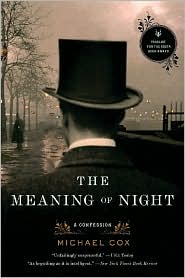
I have finished Michael Cox's Victorian thriller The Meaning of Night in one final tense, tearing-through-the-pages sitting. Even with all the mysteries revealed as I started the final 200 pages, Cox still has some surprises to throw our way. As they were uncovered I literally winced with agony for our poor anti-hero. My jaw was clenched. I should have gone to sleep but I just had to know how it would all turn out. In addition to a great mystery, there are some wonderful libraries filled with old books, there is a good love story, the sense of period style is masterful but doesn't feel like an exhibit or a joke, it has integrity.

I won't spoil any plot details by telling you that there is a scene of childhood memory toward the end of the novel in which our hero remembers being a child and another child taunting him by stealing and destroying his favorite book. It is an agony to read. I wanted revenge on his behalf. Finally, I think that was Cox's larger point - creating
a meaningful story about the cost of having an enemy. The desire for revenge can rule one's life - and the very act that proports to assuage one's anger may only stoke the fire. Or as Cox's book is fond of quoting Donne:
Honour not the malice of thine enemy so much, as to say, thy misery comes from him...
This is a vastly entertaining read, thanks Katherine. Here are my other posts on The Meaning of Night 1, 2, 3.

No...really

I love this. Today is World Toilet Day. No... really. And it's sponsored by the World Toilet Organization, pay attention to those initials...WTO? There are some great jokes about the world economy in here just waiting to get out. The only way this is not a laughing matter is if you don't have one, a toilet that is, not a joke.

Hat tip: Morning Edition, National Public Radio

Tuesday, November 18, 2008

Is laughter the best medicine?

When is it ok to laugh? I remember everyone asking this question right after 9/11. When would it be ok for the late-night television joke-writers go back to work? In today's Science Times a psychiatry resident writes thoughtfully about the use of humor with patients.
If this were a friend or colleague, I would laugh easily. But this is a patient I barely know. He has bipolar disorder, a previous suicide attempt and a history of bizarre, impulsive behavior. In the context, his joke just feels inappropriate and overly familiar...I quickly glance around to take stock of the room. The nursing assistant laughs and the anesthesiologist grins broadly. The attending psychiatrist remains stone-faced and says, "Clearly he's improving."
"Laughter is always the best medicine" may be a familiar cliche, but that does not necessarily transfer into advice one can take into the trenches in every case. As a future clinician I always find these personal narratives about patient care fascinating. Maybe Dr. Brody should just play this for all his patients.

Monday, November 17, 2008

Blood lines and books (Books - The Meaning of Night by Michael Cox)

**SORT-OF PLOT SPOILER** There is probably someone out there with a good explanation for this: why do so many Victorian era stories hinge on lineage - cradle switches, people who are not who we think they are, and the like? I wonder if it's to do with Darwin or if it preceded his writing? Does anyone have a theory? Lineage certainly plays a key role in the plot of The Meaning of Night.
I had taken the decision to abandon my given name of Glyver, except of course with respect to those few, like Le Grice and Tom Grexby, who already knew me. It was not mine by birth but was a kind of alias, imposed on me, without my knowledge or consent by others. What loyalty did I owe the name of Glyver? None. Captain Glyver was not my father. Why, then, should I bear his name? I was who I was, whatever I chose to call myself; and so, until I could redeem my rightful name and title, I would put on whatever pseudonym suite my present purposes. My whole life would be a disguise, a daily change of dress and character. I would inhabit a costumed world, entering now as one character, now as another, as circumstance demanded. I would be Incognitus. Unknown.
The actor's fantasy! Do you know that when Dustin Hoffman was working on the film Tootsie (if you haven't seen it - see it. It is so much fun) he actually went out to lunch with someone - I think it may have been Sidney Pollack - to try out his female character and see if he he would be recognized? This idea of name, of blood, as identity is in one way an extension of the institution of class. One was born into ones class and traversing those blood lines was tricky business. This is an English story, born of a country with a royal family and a parliament, containing a House of Lords. So certainly pedigree takes some precedence in a different way than it would in a country founded on Whitman's creed of the individual:
I CELEBRATE myself, and sing myself,
And what I assume you shall assume,
For every atom belonging to me as good belongs to you.

[...]

I exist as I am, that is enough,
If no other in the world be aware I sit content,
And if each and all be aware I sit content.

One world is aware and by far the largest to me, and that is myself...

But in Michael Cox's wonderful story it is lineage that drives our narrator's sens of identity and it is reclaiming what he believes to be his lineage that gives him and the plot of this book its sense of purpose.

Another pleasure of this novel, is that our narrator and at least two other characters, are obsessed with books and in particular collecting rare books. One key twist in the plot has already hinged on a rare book. Another important character has a collection of rare antique erotic books. A third lives at Evenwood - the estate of the lineage in question - which houses a private library of immense size and value. Cox's descriptions of the library take up whole chapters and are a delight to this bibliophile. I am buried deep in the plot of this book now and it has me by the scruff of the neck.

Friday, November 14, 2008

A chinese box of a revenge novel, with footnotes (Books - The Meaning of Night by Michael Cox)

Michael Cox's The Meaning of Night is one of those books that invites comparisons. Maybe that's because it delights in playing with form, in this case the 19th century English saga of love, intrigue, and revenge. From the pages and pages of review quotes, critics also seemed to think so - Trollope, the Brontes, Wilikie Collins, Charles Dickens - I'll add two more to that list - Donna Tartt and Dostoyevski. Dostoyevski, and in particular, Crime and Punishment, because if this is a story of anything, it is a story of obsession. Our author is so dedicated to avenging the wrongs done him by his mortal enemy, that the first pages are devoted to an act of senseless murder that is a rehearsal for the eventual real one. The anonymous author's identity, we discover, is buried beneath layers of obfuscation aided by Cox's Chinese box structure for this book. As I wrote in my last post, the story is couched as an anonymous confession, written in the 1850s but discovered in 1948. It features a 'copy' of the original title page, an 'introduction' by an academic authority on Victoriana, and the story is liberally footnoted. The revenge our author seeks is against an old school chum who is, in the present day of the manuscript, a famous writer. This gives Cox the additional pleasure of providing some of the backstory of the relationship between our narrator and his erstwhile friend in the form of a memoir written by this friend. So while the first part of the book is by our narrator about the friend, we now peel back a layer and are offered a chapter about our narrator written by the friend. Supposedly. If we trust our narrator's sanity, and at this point I am beginning to doubt it. As our narrator says:
The boundaries of this world are forever shifting - from day to night, joy to sorrow, love to hate, and from life itself to death; and who can say at what moment we may suddenly cross over the border, from one state of existence to another, like heat applied to some flammable substance? I have been given my own ever-changing margins, across which I move, continually and hungrily, like a migrating animal. Now civilized, now untamed; now responsive to decency and human concern, now viciously attuned to the darkest of desires.
That is a pretty fair description of our narrator's state of mind, and our's if Cox is getting his way with us. His game is creating a delicious puzzle of read. Take this paragraph immediately following the manuscript by said writer/enemy/friend and future victim:
A touching account, is it not? And I am naturally sensible of the encomia that he has seen fit to bestow on me. We were friends for a time: I acknowledge it. But he come the litterateur too much - seeing significance where none existed, making much of nothing, dramatizing the mundane: the usual faults of the professional scribbler. This is memory scrubbed and dressed up for public consumption. Worse, he exaggerates our intimacy, and his claims on the matter of our respective intellectual characters are also false, for I was the careful scholar, he the gifted dabbler.

This playful little game is the aspect of the book that reminds me of Donna Tartt, that and the fact that it is keeping me up nights. This is the first book I have read in a while which creates in me that need to read just one more page, and then just the next chapter, and then next. I am nearly 200 pages in now, and more than 100 of them I read last night. The night before an exam on synaptic modulation by second messengers. What was I thinking?

Thursday, November 13, 2008

I am large, I contain multitudes...

btt button

I’ve asked, in the past, about whether you more often buy your books, or get them from libraries. What I want to know today, is, WHY BUY? Even if you are a die-hard fan of the public library system, I’m betting you have at least ONE permanent resident of your bookshelves in your house. I’m betting that no real book-lover can go through life without owning at least one book. So … why that one? What made you buy the books that you actually own, even though your usual preference is to borrow and return them? If you usually buy your books, tell me why. Why buy instead of borrow? Why shell out your hard-earned dollars for something you could get for free?

Why buy? A timely question as we approach the holidays during a recession - says the cynic in me. But I do buy. I love the library, but I love the bookstore more. I grew up using the library. I still use it for DVDs of films, for purely recreational reading, like most mysteries or thrillers. I recently read Christine Falls by Benjamin Black aka John Banville. That book came from the library. I don't read all that many mysteries and I don't tend to value most of them for their writing as I do other genres (although that was an exception). I'm just munching on them like snacks; I don't go to them for nourishment. I am planning to try a few novels of John Updike's that were mentioned in a recent review. Some of his earlier books are no longer in print and when I have tried to read his work before - buying a second-hand copy once in a shop - I didn't care for it and ended up re-selling that book. So in trying Updike on for size, I am going to use the library. But if I end up liking what I read, I will more likely buy future Updike novels.

I buy books because I value books and by extension the people who create them. I worked as a theatre artist for 23 years, (and may yet have some more blood in me). I always resented people simply expecting free tickets - do they expect free appointments at the dentist or free groceries? What I do as an artist (even the fun stuff) is serious, deeply considered, full of purpose and at times sacrifice, as is any other worthy pursuit. If my culture values it they should pay for it. That is how we show what we value in the American marketocracy. I love books. I prize what they contain as well as how that is fashioned in both a word-follow-word way and in terms of greater structure, voice, point-of-view. I marvel not just at the talent (whatever that is) that goes into their making, but also at the scholarship, the industry, the persistence, the ingenuity, the pieces of self that go into writing a good one. The people who do that work should be paid for it. So should those whose industry supports the producing and dissseminating of books.

I am curious about the world and am an information junkie. I want the information that most intersects with my interests at hand. I am particularly partial to people and their narratives, so I love fiction, drama, and biography. If I have enjoyed a book and gotten something from it, I want it around me. Partly that is so that I can refer to it again. Some books I might go to again for information, others for comfort, sustenance or inspiration. When I directed theatre and opera I needed Anton Chekhov, Clifford Odets, and Horton Foote around me. When I acted and taught I needed the books of the great acting teachers. I needed the biographies of the great composers, directors and actors whose stories could give me something to aspire to, remind me of what was possible, or what is valuable. They are my context. My history. If I do theatre, I build upon the foundations they laid. But also, I want the simple pleasure of their company. Each book contains a whole world in it. I can look at their spines and smile or sigh as I partake of that world again by reference as I pass.

The variety of my interests and they way I apply my intellect to them is a driving force behind my personality, for better or for worse. In that way my home library is also identity constructing. The books around me are part of the narrative of who I am. They house me, they add certain colors and textures materially to my environment, they lend me support, comfort, and provide the information that my work requires that I have at hand, but if they are my context, they also project that context to anyone who sees them. My house if full of shelves and those shelves are full of books because I am full of what they contain. That is who I am. 'I am large, I contain multitudes.' So said Walt Whitman, and so say the books that surround me.

Tuesday, November 11, 2008

Malcolm Gladwell - guru or parasite? & Is the notion of genes just a lot of baggage?

Malcolm Gladwell (The Tipping Point, Blink) has a new book - Outliers - about what makes a superstar - genes? happenstance? 99% perspiration? Some think he is a pop-psych guru, he thinks he's just a parasite, according to a New York Magazine profile by Jason Zengerle.

Hat tip: Books, Inq.

And speaking of genes, what an awful segue, today's Science Times devotes itself to the subject.

Article on RNA interference - proteins are supposed to be the foundation of what happens in our body. Many proteins are the switch for whether a gene facilitating a certain process is "turned on" or "turned off." Our RNA provides a template for the construction of proteins. This process would not try to destroy proteins once their made but instead would inhibit their formation altogether.

Carl Zimmer writes informatively on The Rest of the Genome, which includes a good primer on terminology you might see tossed around in reading about the latest genetic news in the popular press - genome, chromosome, intron. The article addresses the fact that although the decoding of the genome was announced in 2000, that covered only the parts that carry the information for encoding proteins, leaving nearly 99% of gene as terra incognita. Now what?

Natalie Angier's shorter article is my favorite of the three. She explores the more philosophical side of the subject. If genes don't account for every cell in the body - what does?
Scientists are also learning that many of the gene-free regions of our DNA are far more loquacious than previously believed, far more willing to express themselves in ways that have nothing to do with protein manufacture.
Historian of science, Evelyn Fox Keller says that the language of genes is a holdover from chemistry and physics:
The language is historical baggage...It comes from the expectation that if we could find the fundamental units that make stuff happen, if we could find the atoms of biology, then we would understand the process.

But the notion of the gene as the atom of biology is very mistaken...DNA does not come equipped with genes. It comes with sequences that are acted on in certain ways by cells.
Most of our understanding of science likes to reference common structures. Atomic structure is like the solar system, crystal structure is like tinker toys, and we love to anthropomorphise the mechanisms of pretty much everything in the body. Neurons are said to "talk." The brain's processes are described to resemble thinking. RNA is said to "read" sequences of amino acids encoding proteins. This article says that if we try to reduce a gene to something we already know, we may never understand its complexities.