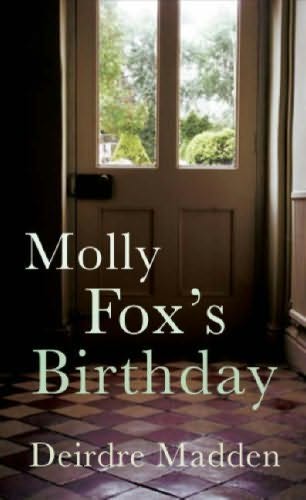
I would like to draw your attention to Steven Erlanger's tender portrait in The New York Times of nearly 100-year-old Hans Keilson, novelist, poet, child psychiatrist, and German Jewish exile now living in the Netherlands. Two of his novels now some 50 years old, The Death of the Adversary and Comedy in a Minor Key, have been re-released and were lauded in the New York Times Book Review a few weeks back by Francine Prose. I, for one, ordered them immediately. I admired Erlanger's perspective on Keilson's cultural heritage, life's work in psychology, and legacy of guilt, all of which combined their influence upon his writing.
Saturday, September 4, 2010
Hans Keilson re-appreciated...
I would like to draw your attention to Steven Erlanger's tender portrait in The New York Times of nearly 100-year-old Hans Keilson, novelist, poet, child psychiatrist, and German Jewish exile now living in the Netherlands. Two of his novels now some 50 years old, The Death of the Adversary and Comedy in a Minor Key, have been re-released and were lauded in the New York Times Book Review a few weeks back by Francine Prose. I, for one, ordered them immediately. I admired Erlanger's perspective on Keilson's cultural heritage, life's work in psychology, and legacy of guilt, all of which combined their influence upon his writing.

How the homogenization of the sacred diversity of India may impoverish our world (Books - Nine Lives by William Dalrymple)
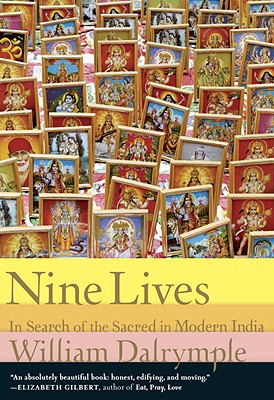 English-born historian and travel writer William Dalrymple has spent 25 years writing about Asia, particularly India. His Nine Lives bemoans the erosion of the many idiosyncratic and little-known practices of faith, some ascetic, some hedonistic, some bloody, some obsessively non-violent, some monotheistic, others pantheistic, that have co-existed in the region comprising India, Pakistan, and Tibet. One price of the region's modernization is the homogenization of these traditions. Each of the nine lives he chronicles:
...is intended to act as a keyhole into the way that each specific religious vocation has been caught and transformed in the vortex of India's metamorphosis during this rapid period of transition, while revealing the extraordinary persistence of faith and ritual in a fast-changing landscape.I have read his writing compared to Tracy Kidder, the author of Mountains Beyond Mountains, a brilliant portrait of the admirable but difficult activist Dr. Paul Farmer, and I would agree. One of Kidder's talents was putting himself into the narrative just enough to make give his reader access to the opinions and the feelings that are the fuel of his narrative, but not so much that the writing becomes about himself instead of his subject. Dalrymple claims that he wishes to absent himself from his narrative. I would say that he fails in that aim, but beautifully and usefully. He is exquisitely open to each of his subjects, yet his writing flows from the sense of impending loss he feels of each way of life that he records here. His narrative is colorful and specific, combining characterization, exposition of back story, or details about the culture or history pertinent to it, yet his economy of narrative gives reader the sense that they are in the presence of his subject, as it mimics the way we quickly get the essence of a person by the information we can take in with our senses when in their presence:
I had seen the tiny, slender, barefoot figure of the nun in her white sari bounding up the steps above me as I began my ascent. She climbed quickly, with a pot of water made from a coconut shell in one hand, and a peacock fan in the other. As she climbed, she gently wiped each step with the fan in order to make sure she didn't stand on, hurt or kill a single living creature on her ascent of the hill: of of the set of rules of pilgrimage fro a Jain muni or ascetic.It is this combination of economy and vividness that gives Nine Lives, as a series of separate portraits, such a sense of flow as the depiction of the single and various place that is modern India. Books like this are exactly what keep me reading - insight into people and places completely different from my own realm of experience. A sense of wonder suffuses Dalrymple's expertise as we encounter the subjects of Nine Lives: Hari Das, a theyyam dancer of sacred stories, is worshiped as the evocation of a Hindu god when practicing the ritual, but the rest of the year he digs wells and works as a guard in a highly dangerous prison (jobs typically taken by the lowest classes in India). The devadasis, a once exclusive tradition in medieval Hindu practice of celebrating fertility and sexuality, are in Modern India little more than sex workers, at high risk for STDs. This once sacred tradition is now seen by most as little more than exploitation. The bhopas, singing bards of epic poems like the Mahabharata:
When this 4,000-line courtly poem is recited from beginning to end - which rarely happens these days - it takes five full nights of eight-hour, dusk-till-dawn performances to unfold. Depending on the number of chai breaks, bhajans (devotional hymns), Hindi film songs, and other diversions added into the programme, it can on occasion take much longer. But the performance is not looked upon as just a form of entertainment. It is also a religious ritual invoking Pabuji as a living deity and asking for his protection against ill-fortune.Most of the bhopas are illiterate, many are still believed to have healing powers.
But lest you believe that Nine Lives is nothing but a travelogue of arcane and esoteric mystical practices, I also found the book illuminating about differences between Judeo-Christian traditions, Islam, Hindu, and Buddhism in ways that are useful to understanding some of the cultural tensions that drive today's political violence. Dalrymple's portrait of Lal Piri, a Sufi mystic (Sufism is a mystical sub-sect of Islam that looks for the divine within the practicer and historically evolved to include poetic scriptures and meditative practices familiar to the local Hindus in an effort to reconcile the Muslim and Hindu faiths) is revelatory about the origins of tensions between Muslims and Hindus as well as Muslims and the West:
Religiously conservative Hindus and Muslims both suffered the humiliation of colonial subjugation and had to watch as their faith was branded degraded and superstitious by the victorious colonisers and their missionaries. In both faiths, reform movements re-examined and reinvented their religions in reaction to the experience of conquest; but while Hindu reformers tried to modernise their diverse spectrum of theologies and cults to more closely resemble Western Christianity, Islamic radicals opted instead to turn their back on the west, and return to what they saw as the pure Islamic roots of their faith. In the aftermath of the brutal massacres by the British following the Great Uprising of 1857, Islamic radicals left the ruins of Delhi and the demolished Mughal court, rejecting both the gentle Sufi traditions of the late Mughal emperors and the ways of the West.I found Dalrymple's analysis of the religious influences of a struggle that impacts all of our lives at present very insightful. It is the roots of these conflicts in the realm of faith that drives the willingness of people to suicidal acts of violence. It is usually non-rational bases of experience that motivate people to hysteria and the certainty that they are right and all others wrong. It is among the, for want of a better phrase, practical uses of Dalrymple's observant and fluidly written book that he can use the political and cultural context of his nine portraits of seemingly irrelevant Asian mystics to give one blogger in New York City insight into his own life and some of the more pressing forces impacting it. Equally interesting was the conflict of Hindu traditions valuing asceticism in some instances and celebration of the sensual on the other - a tension evident in my own Puritain-founded country in the context of contemporary culture's celebration of diversity and tendency to reveal all.
Instead, disillusioned refugees from Delhi founded a Wahhabi-like madrasa at Deoband which went back to Quranic basics the rigorously stripped out anything European from the curriculum. One hundred and forty years later, it was out of Deobandi madrasas in Pakistan that the Taliban emerged to create the most retrograde Islamic regime in modern history, a regime that in turn provided the crucible from which emerged al-Qaeda, and the most radical fundamentalist Islamic counterattack the modern West has yet had to face...
If it is the Islamists' assaults on India and the West that has understandably absorbed the Western press, it is sometimes forgotten that the Taliban are also at war with rival comprehensions of Islam...
Tuesday, August 31, 2010
Hurrah for positive deviance
 Just a quickie today to say, if you haven't seen the piece in the Science Times on clinician and researcher Dr. Donald Redelmeier, take a look. I have a thing for people who can not just think out of the box (because that can be as hasty and end up as wrong as sticking with cherished notions - just because you think something or belive something doesn't make it true) but those who bother to question accepted wisdom and who put their hunches to the test. Here is one of those positive deviants that our belief-obsessed world so desperately needs in a nicely written profile by Katie Hafner.
Saturday, August 28, 2010
The presence of the artist in the art - developing talent versus promoting it (Exhibits - Matisse: Radical Invention & Film - A Single Man)

I just stared and stared at this painting at the stunning show currently on at MoMa - Matisse: Radical Invention, 1913-1917. Exploring its pleasures intertwined with the experience of the film I watched two night ago - A Single Man - to reveal to me something essential about my aesthetic taste. I like it when the act of creation shows (by design) in the work of art. Perhaps that is just because I made art myself for such a long time and because creative process is an obsession of mine. Perhaps the relationship goes the other way round - maybe I became obsessed with process because I have always been drawn to this kind of work. Whatever the case, this was very much evident in Matisse's work of this period. As he developed these paintings he adjusted the placement of figures as well as their form, he obscured details that he had earlier spent much effort in representing, and what's radical is that he leaves evidence of these changes rather than covering them up. It is a practice which creates a conversation between the subject of the art and the mode of its making, something I find interesting as well as inspiring. It is also a way for the artist to develop their talents, as awareness of technique progresses in parallel with the making of art, not separately from it. The simultaneous dialogue of the two is the artists' daily reality. That doesn't necessarily mean that it will always produce satisfying art, nor does it necessarily mean that this dialogue will be of interest to every member of the audience, but it is of great interest to me.
Matisse: Radical Invention is thoughtfully curated - it has a narrow thematic focus and therefore it is not too big (a pet peeve of mine with museum shows), it brings together different works of Matisse, not just the greatest hits, it creates a thoughtful narrative in tracing its theme of interest - a period of creative transformation in Matisse's art - seen against the backdrop of cubism in the art world and World War I in the world-at-large.
 This experience was very much in contrast to that of watching A Single Man, photographer Tom Ford's feature film debut as both writer and director, adapted from the novel by Christopher Isherwood. I had heard a few interviews with Ford and his lead actor Colin Firth on the radio and was hoping for something better. The story concerns the last day in the life of a gay college professor in the 1960s who decides to commit suicide because of the sudden and devastating death of his partner of 16 years, and the unusual perspective that gives him on the things commonly around him in his daily life.
Ford, a visual artist, seems to have been captured by the notion of a unique perspective on the ordinary and perhaps felt his vision would express the lead character's heightened experience of the day. This was the film's defining feature, but the lack of access to other techniques was also its downfall. Every person in the film was beautiful - ridiculously so. Nicholas Hoult as the young student who becomes obsessed with his professor, was an expensive haircut draped in a pink mohair sweater that was glowed like cotton candy against his California tan. In fact, desserts are a good metaphor for the little visions of sweetness that Ford made of everyone George encountered, but there was no meal to accompany them. One could call this the heightened reality called for by the story, but I experienced it creating only an icy remove that destroyed any emotional impact this film could have had, despite Firth's intelligence, deep investment, and subtle portrayal. While this aspect of George's experience is important, it seems to me one should also be moved and this film's attempt at visual perfection held everything at arm's length.
One choice I particularly appreciated in this film was the lack of attention called to the sexuality of the lead character. Although his relationship was with another man and created interesting conflicts in the relationship between him and Charley (the female friend played by Julianne Moore), Colin Firth simply played George's circumstances and character qualities but did nothing to telegraph his gayness. He was middle aged, fastidious if a bit controlling, and was masculine. No limp wrist, no lisp. Thank you, Colin. Together the two of them captured that wonderful kind of friendship possible between a straight woman and a gay man that is full of intimacy but not sex and can be sustaining but can sometimes tip over into frustration for the woman if it is her primary intimate relationship, she is attracted to the man, and it cannot be consummated.
The actors were on their own (that or Ford could express his insight into the lead character but no other). The result was a beautiful performance from Firth but Julianne Moore's performance suffered for it. I find Moore a glimmering but delicate talent. Capable of flights of transparent vulnerability, she also reads to me across her body of work as wildly insecure. When she collaborates with a good director it is a joy to watch her. Here, while she communicated some of Charley's desperation to the screen it was too decorous. Her character is at the point where she can no longer control herself yet Moore's performance reeked of the kind of control exercised by an actor who is afraid to be unattractive. This coupled with Ford's own repressive control, motivated by his strictly visual talents, did not allow Charley the rawness a director like John Cassavetes and actress like Gena Rowlands might have brought to this part and this story. That, in my estimation, is what this film lacked. I wanted to feel the artistry, as with Matisse's painting, but not the artiness. I wanted to see the actor and film maker work together to make this story. I wanted to witness the beauty of the little accidents of human behavior, see her eye makeup smudge, see her nose run a little, not look at a Calvin Klein perfume advertisement. The limits of Ford's filmmaking were also evident in his use of music. With two composers, a music advisor, and a music consultant listed in the credits I felt as though too many cooks may have spoilt the sound track. The result was a hodgepodge of unspecific but superficially arty choices. I thought the choice of the aria "Ebben? Ne andro lontana" from the opera La Wally a particularly misguided choice, so associated is it with another high style film (and one I happen to love) - Diva. Similarly self-conscious choices visual choices also clouded the integrity of this film. The slow-motion sequences of waving children seen from a moving vehicle seemed to be straight out of Blue Velvet.
The 'making of' extra provided on the DVD was particularly embarrassing - self-aggrandizing and affected, with Ford's narrative scripted to death, interviews with each of the actors edited down to nothing but glib praises of Ford's filmmaking talents. Me thought the ladies did protest too much. It read like an advertisement - over controlled and pretentious - exactly the same problems as with the film itself. There is a difference between leaving elements of the creative process present in the work so it becomes a discussion between the artistic content and the art-making, and using the work of art to showcase one's talents at the expense of the content. Ford doesn't yet have the talent to recognize the difference.
Friday, August 27, 2010
Correcting our misinterpretations of the world (Books - Full House by Stephen Jay Gould)
 As a working scientist, Stephen Jay Gould had a good deal of practice thinking about trends in the natural world in the language of statistics. Statistics get a bad rap as merely a fancy way to lie, but really they are a system of tools that allows us to infer the likelihood of something occurring in our world as a rule (and hence in the future) given what has already happened before in some subset of that world. For example, the likelihood that Drug X will cure a case of malaria can't be tested in the abstract, it must be tested by actually administering the drug to a group of people with malaria for, say, two weeks. At the end of that period, the number of people who survived or succumbed to the disease are counted. But we still don't know everything because a certain portion of any group would live or die anyway, those numbers will be estimated by comparing them to a group who does not receive the drug. This group should, if they are like most, have the same chance of living or dying as the other group. Then we can begin to infer how many people as a rule will survive because of the drug. Some math is applied to adapt the number from that small group and apply it to everyone, since it is impossible to give everyone the drug. The result is stated as a probability, the language of science, as it acknowledges the ubiquity of error and the inferential nature of estimates, as we can never know all the cases of anything.
Paleontologist, biologist, and science writer Gould was diagnosed with peritoneal mesothelioma at age 40, a disease with the median mortality rate of eight months. As most general readers of probablistic statements would, Gould first interpreted this statistic to mean he was likely to be dead in eight months however, his training as a scientist made him think twice about this interpretation of the median or the mid point of a group of numbers. This is one of three ways statistics describe the central tendency of any group of numbers - baseball scores, people who earn $30,000/year or more, people who will vote for Charlie Rangel in the next election, etc. Central tendencies are statistics way of summarizing what is usual in nature with one number. However, after thinking, Gould realized:
I am not a measure of central tendency, either mean or median. I am one single human being with mesothelioma, and I want a best assessment of my own chances - for I have personal decisions to make, and my business cannot be dictated by abstract averages. I need to place myself in the most probable region of the variation based upon particulars of my own case; I must not simply assume that my personal fate will correspond to some measure of central tendency.Full House is a 190-page disquisition of what one might assume to be dry and obscure notions - means, modes and medians, spreads of scores, skewed averages - but because they spring from a personal confrontation with mortality as well as Gould's love of baseball, and because they are written in Gould's down-to-earth prose, this book is anything but dry. It is a lively, entertaining narrative on our tendency to misinterpret the world given our misunderstandings about what statistics are telling us. The writing is cogent, the format concise, and the references various as they are learned. Plato, Shakespeare, Huxley, Darwin, nameless drunks weaving down the sidewalk, Bill Gates, and the Brooklyn Dodgers all put in an appearance in Gould's attempt to make plain to the lay-reader concepts like measures of excellence, the likelihood of survival, or whether development - of skills or species - means a trend toward greater complexity or less. These phenomena are continually misrepresented in everyday conversation and reporting about our world, sometimes unintentionally and sometimes with malice aforethought. If you have ever wanted a better understanding the daily missives we receive in the language of probability through our senses or our news sources then read this book. The next time I teach a class which would benefit from an understanding of statistics, Full House is going to be required reading.
Tuesday, August 17, 2010
The value of picturing others (Books - Getting the Picture by Sarah Salway)
 Sarah Salway's Tell Me Everything was not only my favorite novel of 2007, it introduced me to an artist who, like me, is fascinated by unusual human souls - the people life would typically try to ignore - obsessed with the creative process, and, through these common points I made a friend. So I read Sarah's recent novel Getting the Picture in that context (full disclosure complete).
The novel references a visit made by Maureen, a reserved, conventional, and married young woman, and her more adventurous friend, to Martin, a photographer who photographs woman nude. Martin not only ends up photographing Maureen, but also falling in love with her. Cut to the present day at Pilgrim House, a home to which Martin retires. There he writes long letters to Maureen, who has since died, and hatches a plan to be near George, her stern husband of many years, so that he may infiltrate her family. This body of the story is told through a series of letters, emails, and phone messages written by the book's cast of characters and in this way the reader uncovers the story (as Martin does), rather than reading a straightforward narrative account of it. This could be gimmicky but I found the form made the plot into a puzzle while at the same time making the novel very easy to read. One could call it a light read, but by that I don't mean insubstantial, because its themes are anything but. It deals with love and regret as seen from the perspective of the end of life. It observes the way people can close themselves off, how they can hide from the difficult experiences life throws one, particularly within families - and there are two families in this novel - one is Maureen's husband, daughters, and grand daughter and the other is the residents of Pilgrim House who themselves constitute a family. It also treats accessible human beings in a familiar, I would almost say ubiquitous situation - dealing with the needs of aging family members. It does so with realism and humor and it uses imagination to bring complexity and dignity to the aging characters; it does not rely on cliches, defining them by their diseases and limitations. In this way I would think Getting the Picture a shoe-in for book clubs. It is so much about our every-day experience. Upon finishing it, I immediately recommended it the Ragazzo's mother for her's.
I found Martin's need frighteningly desperate at times. He questions George trying to discover what he aspired to be in his youth. When he says "An accountant," Martin is incredulous:
I tried to look interested but not even his dreams were original. Remember you telling me you wanted to be the fairy at the top of the Christmas tree? And how you once spent all holiday crying because your father wouldn't put you up there. I would have made a tree big enough for you to stand on if you'd have spent even one Christmas with me. You know that. I felt like breaking down your window one Christmas when I saw you'd put up one of those artificial trees. I knew that wouldn't have been your choice.Later in the story Martin sets himself up as a creative mentor to Robyn, George and Maureen's grand daughter, in a way that first seems helpful but later turns manipulative and even abusive of her. I'm not sure if Sarah intended Martin to come off as manipulative in a quirky but charming way or somewhat pathological, but his treatment of Robyn ultimately came off the latter to me.
The photographs in the novel function as icons, as they do in life, symbols of people - they are not the people themselves. Photographs are frozen in a past time, so this book also treats the theme of memory and how as one ages life can become less about day to day activities and interactions and more about past ones. Artists too can rely on memory to fuel their imaginations and there were times I could imagine Sarah, although I dont' know whether this is true, having found a few sepia photos at a flea market, and how these may have unleashed her imagination to create this story. What she has made in this novel is not as integrated a creation as Tell Me Everything, it does not have as coherent a narrative thrust, but nor do I think it means to. It is like a visual art installation in which each message is an image or object we can pick up in our hands. I am more aware of the artist working in this piece. In fact, when Martin mentors the character of Robyn to to try to bring the sullen teenager out of her self, it is through imaginative writing exercises that he is successful. So Getting the Picture means to make the reader aware of its process, it means to show its seams, for in some ways it is about the creation of character - in life as in art.
The novel's leitmotif is a photograph and a negative, if you will: the superficial versus interior knowledge of another person. The snapshot one gets when knowing someone only from the outside in a single context, versus who they are inside, who they are when they relate to their intimates, who they are to themselves in their fantasies, and sadly, who they become when there is no one to whom they show their deepest selves. As a literary device the letters and messages are an appropriate form for this novel in that they are like snapshots, you need more than one to know the whole story. And while a nude picture is literally revealing, it does not necessarily give the viewer an intimate relationship with the subject. However the subject themselves possesses that whole story and so posing for that photograph feels a kind of risk, perhaps akin to the risk we take when we tell someone we love them, or the risk artists take when they put themselves into their work. That is the reverse image contained in the novel, the risk that it takes to be known. This is not just the artists' journey, it is everyone's and this novel's message is that the risk is worth it.
Sunday, August 15, 2010
Broadway in love and war (Theatre - South Pacific & A Little Night Music)


Two musicals in two weeks, and on Broadway no less, that has to be a record for me and the Ragazzo. We saw the Lincoln Center Theater revival of Rodgers and Hammerstein's South Pacific last week and last night, Sondheim's A Little Night Music with two heavily announced cast replacements - Bernadette Peters replacing Cathrine Zeta-Jones and Elaine Stritch replacing Angela Lansbury.
South Pacific is as classic as they come and this production demonstrates that Rodgers and Hammerstein (and the director Barlett Sher) really knew what they were doing. Set in the Asian theatre of war during World War II, it manages to spin out 11 great songs with memorable melodies, tell a classic Broadway love story, have some great laughs, break your heart, seriously treat the subject of racism in American (this was written in 1949, mind you), create a good amount of suspense, and although it lasts three hours I was scarcely aware of the time. It was great to hear secure singing voices that could handle legit as well as belt voice production rather than over-miked pop yelling. Paulo Szot who played Emile de Becque, the French plantation owner on the Island with whom American Ensign Nellie Forbush falls in love, is an opera singer (as Ezio Pinza who created the role was). He showed a range of vocal colors and an ease of stage presence not common to opera singers. Laura Osnes as Nellie was charming and open, if a little green as a performer.
The production was long on character development rather than establishing stereotypes through behavioral shorthand as so many Broadway productions do. This is important since one of its subjects of the show is racism. Even the smaller, non-singing roles of the commanding officers were given detailed, lived-in-the-moment performances. There was a large male chorus of soldiers and Bartlett Sher made the smart and, no doubt, accurate choice to usually have the black and white soldiers working separately on stage. The choreography for the male chorus was particularly strong. Christopher Gattelli found a masculine guy-like repertoire of movements that let them move like their characters - American soldiers in the 1940s - and not like Broadway dancers. I thought Danny Burstein a stand-out as Luther Billis - hilariously funny, but played as a person not a clown. Sher's production with its fluid, cinematic set design, its detailed characters, strong singing, and topical story would travel well. Since so many of Broadway's recent successful musical productions have been British imports, I left this one hoping that the exchange might go the other way - any chance for a London transfer?
A Little Night Music is as rich a concoction as Stephen Sondheim ever composed. The story is adapted from Ingmar Bergman's Smiles of a Summer Night, a farcical meditation on the experience of love as we age. His musical inspiration was Brahm's Liebeslieder Waltzes. The sophisticated lyrics are strictly Sondheim's own, intellectualizing the world to hold his heart at arms length from the rest of him. Trevor Nunn's production has been roundly criticized but I'm not sure why. The set was simple and flexible, panels like antique mirrors framed the stage, through which could be seen either wall surfaces when the setting was indoors or trees when the setting was outdoors. My one complaint of this production would be that it was over-miked. Alexander Hanson, as Fredrik Egerman was the perfect mixture of assured performer and clueless middle-aged man, chasing after his youth by marrying a girl of 18 who is so terrified she refuses to have sex. His singing and acting were seamlessly blended, although if he had sung behind the beat a bit less I wouldn't have minded. Leigh Ann Larkin brought a no-nonsense freshness to her playing of the maid Petra and sang her great song I Will Marry the Miller's Son with intelligence and aplomb.
Bernadette Peters plays Desiree Armfeldt, an actress with whom Fredrik had once been involved and to whom he returns in dismay when his new marriage is on the rocks. Peters is a veteran performer of Broadway and of Sondheim in particular (she created Dot in Sunday in the Park with George). She has made her reputation playing tart, perky characters with her trademark voice, a combination of a little-girl cry, a sweetly produced top, and a brassy Broadway belt. But she is over 60 now (although she doesn't look it) and when I heard she had taken this role, usually played by a non-singing actress, I envisioned that she might be trying to re-make herself. Right from her entrance, hidden in a company dance number of waltzing couples at the show's opening, I could feel her presence because when she switched partners, her contrasting relationships to each were clearly expressed (although only subtly demonstrated outwardly). The highlight of the evening was her deeply inhabited Send in the Clowns - living the wounded irony of her character with a devastatingly raw emotion.
The production's other star - Elaine Stritch - is surely no typecast for Madame Armfeldt, the worldly dowager who has dandled, it seems, most of the European continent's male royalty of her day to attain her position of power. Now in her late 80s, Stritch is known for her her wry, sarcasm-soaked, roar of a voice, and an utterly transparent vulnerability that bleeds touching desperation, but she is all-American. Not a touch of any other continent across the Atlantic in her voice or manner. I found this a strange, idiosyncratic, but gutsy choice. Unstereotyped, sure, but that is what exciting performing art is all about. As a director and actor I loved casting or playing against type to reveal things about character more common choices never would. What Stritch brought to the evening was an amazing ability to be sharply attuned to her present moment, always responsive along with the ability to imbued the past of her character with blood and bone. Armfeldt's reminiscences of men that she shares with her grand daughter are not just the charming lines read by an elderly actress. It's so easy to say the words "Oh, I remember when...." in a shaky voice and to be applauded for one's past roles. But when Stritch as Armfeldt remembers a man, her person glows from the inside with the pleasure of that memory. She gave every word she spoke sense, and depth, when she could remember her lines. I suspect Stritch may have occasionally read from the text, and that was okay with me. In fact, I wish she had read more so that she had been more secure. Stritch's weakness as an actress has always been a desire to give such import to her text that she plays every word rather than moment to moment. One could fault her for that in A Little Night Music, but I can't say that it diminished my pleasure of seeing her in this role, or my enjoyment of Sondheim's sophisticated confection of a musical.
Tuesday, August 10, 2010
Documentary and artifice to reveal and obscure (Film - The Beaches of Agnes & The September Issue)
By coincidence the Ragazzo and I ended up watching two documentaries last weekend:


They could not have been more different. Agnes Varda, the French film director, has made open, frank films with idiosyncratic subjects for her entire career - Les Glaneurs (The Gleaners), for example, follows people who live on the detritus of others, food from waste bins behind restaurants, the potatoes that are left over after the harvest for having the wrong shape to sell, those who furnish their homes from discarded tables left on the street. Varda was part of the Rive Gauche film movement including many artists who often collaborated with one another, like director Alain Resnais and writer Marguerite Duras. Varda was married to director Jacques Demy (The Umbrellas of Cherbourg).
Varda's film acknowledged its artifice from its opening scene, involving the placement of mirrors of all sizes on the beach with shots angled to catch their subject, framing her at odd angles - so that her image, an artificial concoction, appeared floating or sitting in the natural vast setting of the sand and the ocean. In another, Varda's office was taken out of its usual setting and reassembled in the middle of a street, carrying out its business there in a detailed but stylized manner. The film was peppered with these off-kilter touches that exemplified how Varda's films, a self-conscious artisitic form, worked amidst and against the bustle of real life that existed around it. They capture something that feels real from that juxtaposition of intentional art and happy accident. Varda traced her trajectory chronologically with the story of her parents, her schooling, her filmaking, her children and husband, and her political activism - revealing much along the way about herself, the images, people, and ideas important more to her internal life than to its external events, but not necessarily explaining them. For example, we learn the intimate detail that Demy died from complication due to AIDS in 1990. We learn not from Varda's words, but from her behavior, of her profound love for him but we are not explained the details of why he contracted the virus or what each week of his suffering was like. So the film is intimate without being explicative or invasive. The strength of The Beaches of Agnes is revealing the depth, the reality, and the beauty of an inner life through the strengths of a superficial medium, but not through narrative explanation.
This is polar opposite of The September Issue, made by R. J. Cutler., a film about Anna Wintour, the editor of Vogue, and her staff through production of the 2007 September issue - what is always the biggest issue of the year, that one that introduces the look of the year to come in fashion. Though this film pretended to get the gritty backstage view of operations of Wintour - their icy queen and her yes-saying minions - it was, as far as I was concerned, a superficial bore. It was highly set-up, not surprising for a film about fashion, but the artifice was about not revealing its subject, rather than offering us detail about its subjects or what moves them to act as they do. It wished to tell a story about Wintour as a cold, decisive pragmatist who will never show the workers around her admiration to their face, even though she values their talent. Rarely are we permitted a glimpse through her dark sunglasses. The story is void of human detail, I know that she holds a Starbucks coffee, but I don't ever see how it got there, which would be an interesting detail for a celebrity who seems not to like to interact with others. I know that she comes into the office, but not at what time. I know she is muscular and perversely thin but don't know if she does that through exercise, sports, or dieting. There was one nice touch, a brief moment in Wintour's home with her daughter who tells the interviewer that she has no interest in fashion and intends to go to law school. Mama Wintour gives a mild, embarrassed smile, "we'll see," she says.
The film reveals Andre Leon Talley, Wintour's former editor-at-large as a clownish, self-obsessed egotist who does nothing but pose for the camera. The operation appears to be largely dependent on Sarah Coddington, former model and now creative director, a down-to-earth, imaginative worker who gets her personal opinion out of the way and gets the job done. In the end, the film was an utter failure to me because it called itself a documentary and yet it lied. For example, it gave the impression of Wintour as an ice queen with no sense of humor however, in either a scene that ran beneath the closing credits, or it may have been a cut scene included on the DVD, following a meeting with a nervous designer Wintour quips "give that man a drink!" A sense of humor! If you are going to develop a character, always show the flip side, or any discerning audience member will know you're lying. The biggest failure of the film was its biggest lie. Unfortunately, a key staff member commits suicide during the period during which the film was made. This was undoubtedly a terrible event tragic on both a corporate and on a personal level for people we never meet, so I do not believe that this should have been dwelt on or that people who knew the deceased should have had their lives pried into in any way, however, it was an event that had undoubted real and human consequences in this artifice-obsessed factory. Its occurrence had to touch the lives of the film's subjects and was part of the story behind their behavior which revealed their stresses and pleasures through their movement, their words, their emotions. And yet, we were made to think that all these behaviors revealed nothing but the story the filmmaker wished to tell about the production of the September issue of Vogue. What a big fat lie. Varda gave a perfect example in her film about how one can be intimate without getting specifically personal. Here was one of those tragic accidents of life that would have offered an artist a real opportunity to document who these people and this organization really were. This was purportedly the reason this film was made. It might have revealed them as more human than we suspected or perhaps as more ugly, but at any rate, the filmmaker ignored the real story thrust upon him by life and tried to stick to one he had in his head, or the one Vogue's lawyers told him he could tell. As a result we watched not a documentary but rather a big wet kiss on Vogue's butt. What a bore.


They could not have been more different. Agnes Varda, the French film director, has made open, frank films with idiosyncratic subjects for her entire career - Les Glaneurs (The Gleaners), for example, follows people who live on the detritus of others, food from waste bins behind restaurants, the potatoes that are left over after the harvest for having the wrong shape to sell, those who furnish their homes from discarded tables left on the street. Varda was part of the Rive Gauche film movement including many artists who often collaborated with one another, like director Alain Resnais and writer Marguerite Duras. Varda was married to director Jacques Demy (The Umbrellas of Cherbourg).
Varda's film acknowledged its artifice from its opening scene, involving the placement of mirrors of all sizes on the beach with shots angled to catch their subject, framing her at odd angles - so that her image, an artificial concoction, appeared floating or sitting in the natural vast setting of the sand and the ocean. In another, Varda's office was taken out of its usual setting and reassembled in the middle of a street, carrying out its business there in a detailed but stylized manner. The film was peppered with these off-kilter touches that exemplified how Varda's films, a self-conscious artisitic form, worked amidst and against the bustle of real life that existed around it. They capture something that feels real from that juxtaposition of intentional art and happy accident. Varda traced her trajectory chronologically with the story of her parents, her schooling, her filmaking, her children and husband, and her political activism - revealing much along the way about herself, the images, people, and ideas important more to her internal life than to its external events, but not necessarily explaining them. For example, we learn the intimate detail that Demy died from complication due to AIDS in 1990. We learn not from Varda's words, but from her behavior, of her profound love for him but we are not explained the details of why he contracted the virus or what each week of his suffering was like. So the film is intimate without being explicative or invasive. The strength of The Beaches of Agnes is revealing the depth, the reality, and the beauty of an inner life through the strengths of a superficial medium, but not through narrative explanation.
This is polar opposite of The September Issue, made by R. J. Cutler., a film about Anna Wintour, the editor of Vogue, and her staff through production of the 2007 September issue - what is always the biggest issue of the year, that one that introduces the look of the year to come in fashion. Though this film pretended to get the gritty backstage view of operations of Wintour - their icy queen and her yes-saying minions - it was, as far as I was concerned, a superficial bore. It was highly set-up, not surprising for a film about fashion, but the artifice was about not revealing its subject, rather than offering us detail about its subjects or what moves them to act as they do. It wished to tell a story about Wintour as a cold, decisive pragmatist who will never show the workers around her admiration to their face, even though she values their talent. Rarely are we permitted a glimpse through her dark sunglasses. The story is void of human detail, I know that she holds a Starbucks coffee, but I don't ever see how it got there, which would be an interesting detail for a celebrity who seems not to like to interact with others. I know that she comes into the office, but not at what time. I know she is muscular and perversely thin but don't know if she does that through exercise, sports, or dieting. There was one nice touch, a brief moment in Wintour's home with her daughter who tells the interviewer that she has no interest in fashion and intends to go to law school. Mama Wintour gives a mild, embarrassed smile, "we'll see," she says.
The film reveals Andre Leon Talley, Wintour's former editor-at-large as a clownish, self-obsessed egotist who does nothing but pose for the camera. The operation appears to be largely dependent on Sarah Coddington, former model and now creative director, a down-to-earth, imaginative worker who gets her personal opinion out of the way and gets the job done. In the end, the film was an utter failure to me because it called itself a documentary and yet it lied. For example, it gave the impression of Wintour as an ice queen with no sense of humor however, in either a scene that ran beneath the closing credits, or it may have been a cut scene included on the DVD, following a meeting with a nervous designer Wintour quips "give that man a drink!" A sense of humor! If you are going to develop a character, always show the flip side, or any discerning audience member will know you're lying. The biggest failure of the film was its biggest lie. Unfortunately, a key staff member commits suicide during the period during which the film was made. This was undoubtedly a terrible event tragic on both a corporate and on a personal level for people we never meet, so I do not believe that this should have been dwelt on or that people who knew the deceased should have had their lives pried into in any way, however, it was an event that had undoubted real and human consequences in this artifice-obsessed factory. Its occurrence had to touch the lives of the film's subjects and was part of the story behind their behavior which revealed their stresses and pleasures through their movement, their words, their emotions. And yet, we were made to think that all these behaviors revealed nothing but the story the filmmaker wished to tell about the production of the September issue of Vogue. What a big fat lie. Varda gave a perfect example in her film about how one can be intimate without getting specifically personal. Here was one of those tragic accidents of life that would have offered an artist a real opportunity to document who these people and this organization really were. This was purportedly the reason this film was made. It might have revealed them as more human than we suspected or perhaps as more ugly, but at any rate, the filmmaker ignored the real story thrust upon him by life and tried to stick to one he had in his head, or the one Vogue's lawyers told him he could tell. As a result we watched not a documentary but rather a big wet kiss on Vogue's butt. What a bore.
Sunday, August 8, 2010
Recent acquisitions...
I really should be writing about Stephen Jay Gould's Full House which I just finished, and which is a fantastic book on two subjects I consider myself not at all interested in - statistics and baseball. But I have so many recently acquired treasures that I am going to do one of THOSE posts. This is a look-at-all-the-wonderful-books-I-have-to-read post.
 William Dalrymple's Nine Lives consists of nine portraits of contemporary Indian mystics of different sorts. It describes how their religious lives have changed in India's transformation to a world-economy. This Scottish-born travel-writer/historian/journalist has a history of writing highly respected books set in the Middle East and Asia on the intersection of spiritual practice and contemporary cultural life. I don't know exactly what drew me to this book. Probably it was the extraordinary people Dalrymple wrote about.
I have so been looking forward to Sarah Salway's next book since reading her Tell Me Everything which I have raved about ad nauseum. From what I can tell, Getting the Picture is a love story that tries to unravel the mystery of why the unrequited love of its narrator had to remain unrequited. It's present time frame is set in a retirement community and the past revealed through letters and emails. Sarah has a remarkable eye for what makes difficult and idiosyncratic people lovable. Her literary vision is singularly humane among her contemporaries which is why I love it so much.
 Sybille Bedford's prose is revered by writers as various as Evelyn Waugh, Bruce Chatwin, and David Leavitt. Many of her novels are loosely based on her life and that of her ancestors in pre-war Germany. A Legacy observes three families - one Jewish and two Catholic - one urban the others rural - whose lives intertwine. She is interested in how the Germany that eventually spawned National Socialism evolved from simple lives such as the characters she portrays.
 The award-winning book The Beak of the Finch follows Peter and Rosemary Grant, two biologists, as they collect data from finches on Daphne Major, one of the Galapagos Islands. These are among the species originally observed by Charles Darwin in the isolated biosphere of the Galapagos. Weiner portrays the work of the Grants as observing the process of natural selection in real time. His writing is respected for revealing scientific complexity to the general reader without over-simplifying it. Really looking forward to this one.
 Jennifer Egan's A Visit from the Goon Squad is a highly praised new novel of interlocking short narratives concerning a former musician in middle-age trying to connect to the things that used to matter and the woman he employs who compulsively steals and has a thing for Orpheus and Eurydice. It's not the subject matter itself that compels me but rather Egan's eagle eye for the zeitgeist and this novel's reputed success at fusing individual narratives into a meaningful melange about art, self-destruction, and transformation.
I have Jude the Obscure and Carl Zimmer's book on E. Coli in progress too. Once I get done writing up my patient today, it seems I have a bit of reading to do. Happy Sunday.
 William Dalrymple's Nine Lives consists of nine portraits of contemporary Indian mystics of different sorts. It describes how their religious lives have changed in India's transformation to a world-economy. This Scottish-born travel-writer/historian/journalist has a history of writing highly respected books set in the Middle East and Asia on the intersection of spiritual practice and contemporary cultural life. I don't know exactly what drew me to this book. Probably it was the extraordinary people Dalrymple wrote about.
In Kannur in northern Kerala, I met Hari Das, a well-builder and part-time prison warden for ten months of the year, who polices the violent running war between the convicts and imprisoned gangsters of the two region's reival political parties, the far-right RSS and the hard-left Communist party of India. But during the theyyam dancing season, between January and march, Hari has a rather different job. Though he comes from an untouchable Dalit background, he nevertheless is transformed into an omnipotent deity for three months a year, and as such is worshipped as a god. Then, at the end of March, he goes back to the prison.Or the remarkable Jainist nun he writes about who, as she walks, sweeps a peacock feather fan before each step to be sure to brush every insect out of her way so that she doesn't kill a single living thing. This book has me mesmerized. Remarkable stuff written in crystal-clear prose that, as Dalrymple points out in his introduction, makes every attempt to focus on the subject portrayed rather than on the portraitist's experience of meeting them.
I have so been looking forward to Sarah Salway's next book since reading her Tell Me Everything which I have raved about ad nauseum. From what I can tell, Getting the Picture is a love story that tries to unravel the mystery of why the unrequited love of its narrator had to remain unrequited. It's present time frame is set in a retirement community and the past revealed through letters and emails. Sarah has a remarkable eye for what makes difficult and idiosyncratic people lovable. Her literary vision is singularly humane among her contemporaries which is why I love it so much. Sybille Bedford's prose is revered by writers as various as Evelyn Waugh, Bruce Chatwin, and David Leavitt. Many of her novels are loosely based on her life and that of her ancestors in pre-war Germany. A Legacy observes three families - one Jewish and two Catholic - one urban the others rural - whose lives intertwine. She is interested in how the Germany that eventually spawned National Socialism evolved from simple lives such as the characters she portrays.
 The award-winning book The Beak of the Finch follows Peter and Rosemary Grant, two biologists, as they collect data from finches on Daphne Major, one of the Galapagos Islands. These are among the species originally observed by Charles Darwin in the isolated biosphere of the Galapagos. Weiner portrays the work of the Grants as observing the process of natural selection in real time. His writing is respected for revealing scientific complexity to the general reader without over-simplifying it. Really looking forward to this one.
 Jennifer Egan's A Visit from the Goon Squad is a highly praised new novel of interlocking short narratives concerning a former musician in middle-age trying to connect to the things that used to matter and the woman he employs who compulsively steals and has a thing for Orpheus and Eurydice. It's not the subject matter itself that compels me but rather Egan's eagle eye for the zeitgeist and this novel's reputed success at fusing individual narratives into a meaningful melange about art, self-destruction, and transformation.
I have Jude the Obscure and Carl Zimmer's book on E. Coli in progress too. Once I get done writing up my patient today, it seems I have a bit of reading to do. Happy Sunday.
Monday, August 2, 2010
Send in the Clowns - Judi Dench
From Sondheim's A Little Night Music - Judi Dench singing Send in The Clowns.
and, oh my god, Simon Russell Beale, Daniel Evans, Julien Ovenden, and Bryn Terfel in Everybody Ought to Have a Maid from the Sondheim Proms.
and, oh my god, Simon Russell Beale, Daniel Evans, Julien Ovenden, and Bryn Terfel in Everybody Ought to Have a Maid from the Sondheim Proms.
Sunday, August 1, 2010
More than just speaking the speech (Theatre - The Winter's Tale by William Shakespeare)
 A bunch of us did a quintessential summer in New York thing Saturday. We waited on line in Central Park for free tickets for Shakespeare in the Park. There are two shows to see. One of them is the line. The cast: New Yorkers - interested in what's going on in their city, always the expert on it, not too nosy, generally respectful of the rules (you have to be in a city of 8 million people). There were Risk players, people playing guitar quietly to themselves, nappers, those studying up for the play, those who brought their New York Times (half of it is printed Saturday), their laptops, library book readers, bookstore book readers, kindle readers, those who brought their picnic (us - whole wheat french bread with nutella, and fruit), and those who called the local deli which actually delivers to the line. They sat on benches, lay on blankets, reclined in beach chairs, and snoozed on inflatable mattresses. There were the line monitors employed by the theatre, the tourists capturing the line on their video cameras, the saxophonist playing Mozart and Cole Porter, and the conspiracy theorist parading up and down the line playing for our sympathy. Then, of course, there was also The Winters Tale by William Shakespeare.
 I would call The Winter's Tale Shakespeare's redemptive comedy. It offers one of the most complex plot of any of his plays, probably his strongest female character (Paulina), and it could perhaps be thought a more "modern" play in that the dramatic situation and character trump the beauty of poetry. While I could take a bath in the language of Shakespeare's Richard II or Antony and Cleopatra, one cannot get away with just 'speaking the speech' in this play. In it Leontes, a king, is visited by his childhood friend Polixenes. He becomes rabidly suspicious that his queen Hermione is having an affair with Polixenes and eventually condemns her to death and banishes her newborn child. The child is taken away by a trusted servant and grows up the daughter of a peasant in Polixenes's country named Perdita. She eventually falls in love with Florizel, the son of Polixenes. Meanwhile, Leontes becomes a penitent and Paulina, unbeknownst to any soul, has kept Hermione alive. 16 years pass and this time it is Polixenes who becomes angry when he discovers his son wishes to marry a peasant. So the former advisor to Leontes brings the couple back to Leontes's country where the peasant is revealed as Leontes daughter, Paulina brings Hermione back to life, and the two kings are reunited in friendship, the two children marry. The end.
I find this tale of unrestrained impulse turning to regret one of Shakespeare's deepest and most touching. The plays success relies on the arc of Leontes's feelings being deeply and believably invested by the human being that plays him and in this director Michael Greif was unlucky with the casting of Ruben Santiago-Hudson who strutted about with his heart empty of anything that Shakespeare asks for, apparently unaware that he was asked to do more than speak the words loudly and clearly with some variation in inflection. The fact the playing space was well designed, making good use of the Delacorte theatre's outdoor setting, that Marianne Jean-Baptiste gave a strong performance as Paulina, that Perdita was played with intelligence and vulnerability by Heather Lind, and that Tom Kitt composed a lovely score, played live didn't matter in the end because Leonte's grief is the spine of this play. The one turn that saved the evening for me were the antics of Hamish Linklater as the clown Autolycus. He brought the text to life with colloquial ease, was responsive in the moment to what is going on around him, and filled himself with the circumstances of his character, ridiculous as those are. Usually the stagebusiness of Autolycus who is not only a rustic clown but also a conman, pickpocketing everyone around him, takes up so much energy that I don't know who the man actually is. Not in this case. Linklater seems born to the stage. His performance exuded joy. I'm looking forward to seeing him play Bassanio to Al Pacino's Shylock when the other play of this summer's season, The Merchant of Venice, transfers to Broadway later this season.
Saturday, July 31, 2010
Delightful scientific romp...without costs (Books - Journey to the Centre of the Earth by Jules Verne)
 I re-read Jules Verne's delightful scientific romp (for the first time since I was about 12 years old) in connection for a project at my lab. The connection between the book and my lab is a long story I won't get into, but I found myself drawn in all over again to the combination of curiosity about the facts that describe the actual we inhabit and a confection of suspense and adventure by the father of science fiction.
The story concerns a nineteenth-century German geologist and his naive nephew on a journey they try to make to the earth's core when they uncover an ancient cipher that gives them directions via the crater of an icelandic volcano (ring any bells?). Many of the details of the book are faithful to the mid-nineteenth century understanding that Verne's contemporary measurers and thinkers possessed. But there are also flights of sheer fancy that don't remotely conform to anything that could be possible. Progressing that far, I found that I was invested enough in the progress of the narrative to believe in them for the sake of the story.
Two things struck me about this fantasy. One was the preponderance not just facts we know and the hypotheses that flow from the knowledge naturally curious minds possess, but also the quality of thinking which we would term today "critical." For example:
"There is a positive pleasure even in feeling one's self getting into a denser atmosphere. Have you noticed the wonderful clearness of sound here?"There is a propensity to question, to doubt, out of respect not disrespect, that is evident in this book. There was a time criticism was deemed valuable to the accumulation of knowledge. I was also struck in this novel with this fact. When faced with a wall of granite that stood between them and the knowledge they sought, the solution of the professor and his nephew was dynamite. Symptomatic of all that is good but also all that has been destructive in our acquisition of knowledge - they blew it up. The result is that they gain the knowledge they seek but much havoc has been wrought in our attempt to understand the way the world works. Nuclear energy is one such example. With the hindsight of nearly 150 years, this novel offers clear examples of this urge naively pursued. Journey to the Centre of the Earth remains a fantastical entertainment but is unwitting about the potential costs of such exploration. However, these were salient to me in the light of the recent BP disaster, although this being what one would define in a literary sense as a comedy - there are no lasting consequences.
"Yes, indeed. A deaf man would soon get his hearing again."
"But this density will of course increase?"
"Yes, according to a somewhat indefinite law. It is true that the intensity of the weight will diminish in proportion as we descend. You know that it is on the surface that its action is most felt and at the centre of the globe objects have no longer any weight..."
"How shall we descend then?"
"Well, we must put stones in our pockets."
"I declare, uncle, you have an answer for everything."
I did not dare to go any father into the field of hypothesis, for I should have been sure to have stumbled on some impossibility, which would have made the professor start out again.
But it was quite evident that the air, under a pressure of possibly a thousand atmospheres, would pass at last into a solid state; and in that case, even supposing that our bodies might have held out, we should be forced to stop in spite of all the reasonings in the world.
But it was no use advancing this argument. My uncle would have met me with that everlasting Saknussemm, a precedent of not the slightest value, for even quoting the truth of the learned Icelander's narrative, this simple answer might be made to it: "In the sixteenth century neither barometers nor manometers were invented, consequently, how could Saknussemm know that he had reached the centre of the earth?"
Thursday, July 29, 2010
Martha Argerich, Joshua Bell, Mischa Maisky, Henning Kraggerud, Yuri Bashmet in Shotakovich
This will get your blood flowing. Gorgeous.
Wednesday, July 28, 2010
Novelties IX
Haven't done this in a while:
Eating:
 Since they are available in abundance right now - zucchini sauteed in olive oil, cook until just tender, a little green onion for the last two minutes, then lots of mint and some basil mix it in for a minute, juice of a lemon, mash with a potato masher, eat on toast with ricotta or feta cheese or on pasta w/ parmesan and some pasta water. Mmmmmmm
Drinking: Lately I've been going for strong, black iced coffee - no sugar, no nothing.
Looking: My obsession with Almodovar's films has led me to the wonderful singer Caetano Veloso. Here he is singing Cucurrucucu Paloma in a scene from Almodovar's Talk To Her
Listening: I don't know if you ever listen to The Tavis Smiley Show on NPR, but he had on a panel discussion last weekend about the non-violence movement and the likelihood of a peaceful world in this century. Follow the link above. What I found most interesting about it was hearing a room full of adults talk with idealistic passion. It reminded me of something I have lost. In my late teens and early twenties I shared this same hope. My expectations of human nature, unfortunately, currently predispose me toward a more cynical view.
Surfing: 1, 2, 3, 4
Learning:
It's sex week at The Loom so go and learn something!
Don't believe everything you read.
 And in the No... really department. Who can resist: MRI scans of fruits and vegetables? Not I. This is canteloup. Veggies are not just for eating any more.
Hat tip: Better Health via The Happy Hospitalist.
Eating:
 Since they are available in abundance right now - zucchini sauteed in olive oil, cook until just tender, a little green onion for the last two minutes, then lots of mint and some basil mix it in for a minute, juice of a lemon, mash with a potato masher, eat on toast with ricotta or feta cheese or on pasta w/ parmesan and some pasta water. Mmmmmmm
Drinking: Lately I've been going for strong, black iced coffee - no sugar, no nothing.
Looking: My obsession with Almodovar's films has led me to the wonderful singer Caetano Veloso. Here he is singing Cucurrucucu Paloma in a scene from Almodovar's Talk To Her
Listening: I don't know if you ever listen to The Tavis Smiley Show on NPR, but he had on a panel discussion last weekend about the non-violence movement and the likelihood of a peaceful world in this century. Follow the link above. What I found most interesting about it was hearing a room full of adults talk with idealistic passion. It reminded me of something I have lost. In my late teens and early twenties I shared this same hope. My expectations of human nature, unfortunately, currently predispose me toward a more cynical view.
Surfing: 1, 2, 3, 4
Learning:
It's sex week at The Loom so go and learn something!
Don't believe everything you read.
 And in the No... really department. Who can resist: MRI scans of fruits and vegetables? Not I. This is canteloup. Veggies are not just for eating any more.
Hat tip: Better Health via The Happy Hospitalist.
Saturday, July 24, 2010
Chronicling our lives (Books - The Imperfectionists by Tom Rachman)
With the amount of writing I have to do in the rest of my life right now, my reading and writing are both a bit curtailed. However, I did manage to finish one book this steamy Friday evening.
 Tom Rachman's debut novel The Imperfectionists is about the lives of those who work for an American-owned, English-language newspaper in Rome and the progress of paper from an age of literary print-journalism to the electronic age. His writing is specific and observant:
The themes - memory, loss of past, the need to chronicle our existence and, at times, the seeming waste of that activity too.
It is evident from this intelligent and somewhat nostalgic book that Tom Rachman places great value on the way that we record the events of our lives. His own move from journalist to novelist is an interesting coda to it. I would enjoy hearing him speak about the difference between the values a journalist and a fiction writer each bring the job of chronicling our memories and why he switched forms.
 Tom Rachman's debut novel The Imperfectionists is about the lives of those who work for an American-owned, English-language newspaper in Rome and the progress of paper from an age of literary print-journalism to the electronic age. His writing is specific and observant:
Lloyd shoves off the bedcovers and hurries to the front door in white underwear and black socks. He steadies himself on the knob and shuts his eyes. Chill air rushes under the door; he curls his toes. but the hallway is silent. Only high-heeled clicks from the floor above. A shutter squeaking on the other side of the courtyard. His own breath, whistling in his nostrils, whistling out.Come on. Don't tell me you're not interested. The soap-opera that is that lives of his characters, who range from the veteran hack journalist to the obituary writer, from the CFO to a board member, to a reader, is passionate and often quirky. The way the set-pieces that constitute each chapter intersect with their era of newsmaking, and with each other, is the captivating accomplishment of this novel.
Faintly, a woman's voice drifts in. He clenches his eyelids tighter, as if to drive up the volume, but makes out only murmurs, a breakfast exchange between the woman and the man in the apartment across the hall. Until, abruptly, their door opens: her voice grows louder, the hallway floorboards creak - she is approaching. Lloyd hustles back, unlatches the window above the courtyard, and takes up a position there, gazing out over his corner of Paris.
She taps on his front door.
"Come in," he says. "No need to knock." And his wife enters their apartment for the first time since the night before.
The themes - memory, loss of past, the need to chronicle our existence and, at times, the seeming waste of that activity too.
"What I really fear is time. That's the devil: whipping us on when we'd rather loll, so the present sprints by, impossible to grasp, and all is suddenly past, a past that won't hold still, that slides into these inauthentic tales. My past - it doesn't feel real in the slightest. The person who inhabited it is not me. It's as if the present me is constantly dissolving. There's that line of Heraclitus: 'No man steps in the same river twice, for it is not the same river and he is not the same man.' That's quite right. We enjoy this illusion of continuity, and we call it memory. Which explains, perhaps, why our worst fear isn't the end of life but the end of memories."The chapters are stand-alone pieces. The choice detail capturing character or situation, the efficient passage of time, the perfect little twist that comes at their endings (occasionally a little too perfect) - all feel very much like short stories. I wouldn't say that every story is equally successful, but their final accumulation is quietly affecting and entertaining. I was particularly taken with the story **SPOILER ALERT** of the obsessive widow of a diplomat who has read each copy of the paper since the day in 1976 her husband was posted to Saudi Arabia, only it takes her so long that in the present day of the story, around 2007, she is still stuck on April 23, 1994 unable to move on because the following day was a traumatic landmark in her own life. **SPOILER OVER**
It is evident from this intelligent and somewhat nostalgic book that Tom Rachman places great value on the way that we record the events of our lives. His own move from journalist to novelist is an interesting coda to it. I would enjoy hearing him speak about the difference between the values a journalist and a fiction writer each bring the job of chronicling our memories and why he switched forms.
Sunday, July 18, 2010
Artistic attempts to render the void and then fill it (Theatre - Teorema & Film - Up in the Air)
The two works of art I saw this weekend could not have been more different, but they both concerned people with lives of outer perfection but inner emptiness for whom a key event shatters their complacency.
 One of the theatre directors I admire most, Dutch director Ivo van Hove, has a love of raw emotion exploding into unsuspecting lives and an interest in adapting either classic theatre works in provocative multi-layered ways or turning great film into theatre. I have seen many of his works - Ibsen's Hedda Gabbler, Eugene O'Neill's More Stately Mansions, Tennessee Williams's A Streecar Named Desire, Alice in Bed by Susan Sontag, and one of the best pieces of theatre I have ever seen, his adaptation of John Cassavettes cruel film Faces. Last night, members of his company Toneelgroep Amsterdam and a live string quartet, Blindman, performed his adaptation of Pier Paolo Pasolini's Teorema as part of this year's Lincoln Center Festival, one of the opportunities to see really interesting cutting edge international performing arts in New York every summer. Pasolini was an Italian avant-garde filmmaker, poet, and political activist who both led a life and composed work of passion and complexity. In Teorema a mysterious visitor enters the lives of a wealthy suburban family and shakes their empty routine to the core - for some of them this means awakening them to their basic drives for connection and sex, and for others it means stripping them clean of their trappings of wealth so that only their naked need remains. A large, grey, carpeted modern-home-like set was plopped into a large warehouse on Governor's Island in New York. So, as with many van Hove productions, the space played an important role in the theatrical experience. One had to take a Ferry and then walk 20 minutes on an Island with a compound that used to belong to the Coast Guard and now houses various artistic venues - it looks a little bit like something out of the Others compound in Lost.
In the Pasolini film, Terrence Stamp played the visitor, and his power was very much a religious one and the urges he released divine. In van Hove's adaptation, the visitor is a young vigorous man with the darker complexion and tight curls of someone who could be of Arab descent, his exact place of origin isn't all that important, what is important is that he is the "other" to the white, upper class family he visits. It is this otherness that seems to encourage these protected suburbanites to see this force in their visitor. In this production the force is more animal than divine, represented in this production by a scene the visitor enacts with a ferocious looking German Shepherd.
The visitor undoes each character in turn, but while the actors describe the acts he performs on them, in actuality it is they themselves that manipulate the visitor. He seems to become an excuse for them to release themselves, though they don't have to blame themselves for it, they can blame the unruly "other," unlike them with his darker skin, his freedom from possessions, his ease with his body. This is frequently a role "others" are given in societies. The magic and wealth that have been fictitiously given all Jews to possess, the violence and sexuality credited the black male, the bacchanalian carnality credited gay people, it seems to me that they project upon their other the force in themselves they desire most and are therefore most afraid of releasing (how Freudian of me). In any event, I found this choice a very effective one.
The text is a poetic, third-person narrative spoken by each character about himself over a microphone, creating a distance between them and their story. Yet while they narrate themselves they participate emotionally in what the character experiences in the story, so there is an alienating meld of voice-over and character, of closeness and distance that seems very much the point of the production. The people walk about holding themselves at arms length never entering their story, yet they are filled with fierce passions lying just beneath the surface. Once he has unburdened each of them of course he leaves. The cast then rip up the walls and the floor of the mod set, creating a passion-torn landscape. Then each ritualistically perform an extended monologue of where their unleashed passion took them after he had left, how they searched for him and never found him. Each character is liberated but finally undone, except for the servant, who I will discuss in a moment. Some of the images were quite effective. As the father walks naked through the rubble of his house, which is also the train station in his city, and tries to unleash a scream that can be heard above the roar of complacency, the stage picture evoked the violence of a Francis Bacon painting. Visceral, bloody like a piece of meat, a single agonized person in a space where modular walls are often visible against a larger and less clear background. I also very much enjoyed the use of a live string quartet, a rich sonority contrasting the otherwise cold palette of sound, lighting, and set, whose repertoire moves from becomes ever more atonal as the evening's dissolution progresses.
Unfortunately, I found the production somewhat undone by its own ideas. It was tied too slavishly to its pictures and theatrical rituals and shortchanged the story telling too much for my taste. The formality of having the visitor first encounter each of the family in turn and then having each of them ritualistically take turns in describing their unraveling (in the same order) became too predictable. The monologues' length did not sustain their interest given the repetitive structure and the familiarity of the physical trappings in this production which, although they partook of the language of experimental theatre, were well used cliches of the form. I have found many of van Hove's productions startlingly original, but this was not one of them. Van Hove also chose to depart from Pasolini's more religiously infused ideas, but with the character of the servant he never succeeded in replacing them with anything else. In the film, she goes home to her village and performs miracles, in this adaptation, she climbs stairs behind the set to theatrically approximate floating on a cloud, but then returns to the rubble of the set and sits smiling beatifically. I loved the performance of Frieda Pittoors, who played her, but bringing her back into the world seemed a poor choice. The cast was adventurous and I loved how generously and undemonstratively they brought themselves to the large passions of the play while speaking third-person narrative. This is a play about transformation and the actors did just that, they transformed inside and out. It gave a piece about emptiness a great deal of fullness which was very much the opposite experience that I had of Jason Reitman's film Up in the Air.
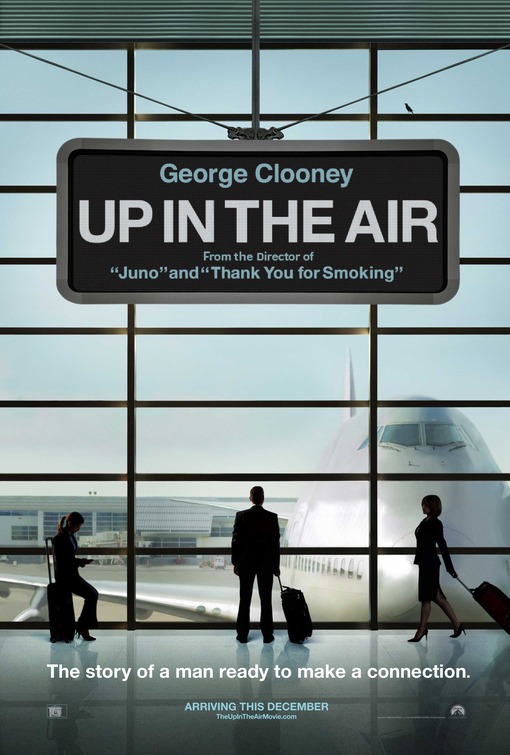 Everyone has been discussing this film as a break-through performance for George Clooney who plays Ryan Bingham, a man who fires people for a living while delivering them a cock-and-bull spiel about this being the first day of the rest of their lives opportunity. His only ambition in life is to become a 10 million mile frequent flyer. What are they talking about? I found this film a vapid exercise that never made a choice to reveal a character through complex dialogue or idiosyncratic behavior if it could do so through edited montage or cliched mannerism. And if Clooney ducked his head and shyly grinned one more time I was going to go for a long walk.
Although I don't choose to live in Omaha or Des Moines, I spent ten years in the middle of my large and various country and I thought Reitman was incapable of depicting what he put forward as average American life without mocking it. His characters perform empty rituals whether they fire people for a living or hold average jobs and aspire to fill condos and cars. Then they get married and everyone is filled with emotion for a day. No wonder all these loonies talk about the "sanctity of marriage," it seems to be one of the only times they're alive, if we are to believe this film. The combination of being the brother of the bride, discovering that his freewheeling-on-the-road-occasional fuck-buddy who he thought had the same values as he actually has a family, and the threat of becoming professionally redundant himself by a call center is supposed to humanize Clooney's character, but if he changes I didn't see it. And if he doesn't - what's this film about anyway?
Thursday, July 15, 2010
Hot enough for you...?

Well, folks, I don’t know about where you are, but right here, it’s HOT. So … when you think about “hot reading,” what does that make you think of? Beach reading? Steamy romances? Books that take place in hot climates? Or cold ones?
It's hot here too and that doesn't lead me to think of a particular genre but rather of just one book and one scene in that book:The next day was broiling, almost the last, certainly the warmest, of the summer. As my train emerged from the tunnel into sunlight, only the hot whistles of the National Biscuit Company broke the simmering hush at noon. The straw seats of the car hovered on the edge of combustion; the woman next to me perspired delicately for a while into her white shirtwaist and then, as her newspaper dampened under her fingers, lapsed despairingly into deep heat with a desolate cry. Her pocket-book slapped to the floor.
"Oh my!" she gasped.
I picked it up with a weary bend and handed it back to her holding it at arm's length and by the extreme tip of the corners to indicate that I had no designs upon it - but every one near by, including the woman, suspected me just the same.
[...]
"The master's body!" roared the butler into the mouthpiece. "I'm sorry Madame but we can't furnish it - it's far too hot to touch this noon!"
What he really said was "Yes,...Yes...I'll see."
He set down the receiver and came toward us, glistening slightly, to take our stiff straw hats.
"Madame expects you in the salon!" he cried, needlessly indicating the direction. In this heat every extra gesture was an affront to the common store of life.
The room, shadowed well with awnings, was dark and cool. Daisy and Jordan lay upon an enormous couch, like silver idols, weighing down their own white dresses against the singing breeze of the fans.
"We can't move," they said together.
Jordan's fingers, powdered white over their tan, rested for a moment in mine.
"And Mr. Thomas Buchanan, the athlete?" I inquired. Simultaneously I heard his voice, gruff, muffled, husky, at the hall telephone.
Gatsby stood in the center of the crimson carpet and gazed around with fascinated eyes. Daisy watched him and laughed her sweet exciting laugh; a tiny gust of powder rose from her bosom into the air.
"The rumor is," whispered Jordan, "that that's Tom's girl on the telephone."
If you hadn't realized it at first, you have probably figured out by now that this is from F. Scott Fitzgerald's The Great Gatsby. It is THE hot scene in a novel, in my estimation. As I was walking in the 103 degree heat last week, I thought of Daisy and Jordan lying on their sofa with the fans whirring saying, "it's too hot to move." Later they all decide to drive into town (New York City) and go to the Plaza Hotel and Daisy wants to "hire five bathrooms and take cold baths," and that turns into an idea to have mind juleps. The heat, not only of the weather, but of the story with Daisy's dangerous affair with Gatsby coming to the boiling point. Such a fantastic book; there are scenes in it I can touch they are so real to me, and this is one of them.
Tuesday, July 13, 2010
A knowing heart and a forceful pen... (Books - Little Monsters by Charles Lambert)
 Charles Lambert's 2008 debut novel Little Monsters is about how the quality of love we receive in our formative years can impact the love we express to others in the rest of our lives, whether that is in personal relationships, creative art, or political acts. I began writing my thoughts about it here. Through the book, we observe Carol, whose father murders her mother in parallel time periods: in the future immediately following the murder when she lives in the pub owned by her resentful Aunt, and forty years hence, when she seems forcefully compelled to rescue a young refugee at a 'humanitarian' camp where she works. This book's prose has a driven quality, although its pleasures are quieter than Any Human Face, Lambert's recent thriller-love story. His strength is an unflinchingly sensitive eye for the deepest layers of his characters' psyches.
 For the first time in our lives together, we have made love in a greedy, selfish way I'd never imagined possible with Jozef, as though we have been starved and are fighting over food. Or maybe not selfish, but self-centred, when we have always been so aware of the other, of the other's pleasure, even at the cost of our own. Now I find what we do both exciting and repellent and these are somehow the same feeling; there is no contrast between them, as there should be. But what I feel, when we have finished and turn our backs to each other to sleep, consumed, is loneliness. I feel I have never known him and will never understand him; that my love for him has been built on gratitude, because he was there when I needed him, and looked after me. And I wonder, with a resentment that borders on despair, why he has never told me the truth about his life.Lambert writes of the pain of existential longing with a knowing heart and a sure, forceful pen. He knows, as one character says to another in Little Monsters, that 'people are not simple,' and that's why I loved this beautiful novel. I feel I've discovered a deep well in Lambert. Sometimes his work evokes Hermann Hesse for me, although he is less of an innocent. How can it be so plain to an outside eye how we live out of the circumstances that formed us, while we are such a deep mystery to ourselves, he asks?
Saturday, July 10, 2010
Books on becoming... (Books - Microcosm by Carl Zimmer, The Statue Within by Francois Jacob, & Little Monsters by Charles Lambert)
Crazy week. I've been writing a paper in the lab (which means a lot of work-related reading), and it has been hot enough here in New York City to fry an egg on my face. I have read for fun here and there, on my commute and before I go to sleep, but not enough to finish anything. Here's what's at the top of the pile at bookeywookey:
 Carl Zimmer writes eloquently in Microcosm of the biology, particularly the evolution, genetics, and the experimental manipulations applied to the single-cell microbe E. coli and what we can learn about our own species by studying it.
I've particularly enjoyed learning about the ways in which E. coli fashioned of identical DNA in the identical environment develop individual differences. Zimmer also makes the important point that it is E. coli that has allowed us to study the process of evolution directly. To see it before our eyes and collect evidence for it. We don't live tens of thousands of years and were not around for the entire process described by Darwin and his scientific descendants, and so we have relied on the evidence left behind in fossils. However, in an average month E. coli will produce more than 500 generations. We can see them reproduce, replicate their DNA, produce random mutations, and generate more of those mutations over time that favors their more effective survival in that environment, and this can happen on the scale of years rather than millennia.
 Biologist Francois Jacob was one of the team who uncovered the mechanism by which genes regulate the production of proteins by studying E. coli. He trained as a doctor, fighting in the free French forces against the Germans in Africa in World War II. The serious injuries he sustained prevented him from work as a surgeon and so he ended up a microbiologist, eventually winning a Nobel Prize for his work. The Statue Within is his elegant philosophical memoir.
 Another elegant and thoughtful wordsmith is atop the bedside pile. I wrote last week of Charles Lambert's most recent book Any Human Face, a thrillerish love story with serious moral underpinnings. That led me to finally read his first novel, Little Monsters, which I have owned for a year or more. I have quickly gotten half way into this fictional memoir of a somewhat cruel and isolating childhood. It was obvious to me upon picking up this book that I had never even read the opening paragraph:
 Carl Zimmer writes eloquently in Microcosm of the biology, particularly the evolution, genetics, and the experimental manipulations applied to the single-cell microbe E. coli and what we can learn about our own species by studying it.
The threats faced by a starving E. coli are much like the ones our own cells face as we get old. Aging human cells suffer the same sorts of damage to their genes and ribosomes. People who suffer Alzheimer's disease develop tangles of misshapen protein in their brain - proteins that are deformed in much the same way some proteins in starving E. coli are deformed. Life not only grows and reproduces. It also decays.Zimmer's writes writes a different kind of popular science book than many of those that gain popularity today. He fashions an elegant narrative line while not holding the reader's hand. If his story includes the role of the ribosome in protein synthesis or the notion of a genetic switch and you don't know what that means, he expects you to look it up. He also doesn't adhere to the scientific paper model of writing - say what you're going to do, do it, and then say what you have done - I appreciate this because it affords his narrative less excess verbiage and a greater sense of flow.
I've particularly enjoyed learning about the ways in which E. coli fashioned of identical DNA in the identical environment develop individual differences. Zimmer also makes the important point that it is E. coli that has allowed us to study the process of evolution directly. To see it before our eyes and collect evidence for it. We don't live tens of thousands of years and were not around for the entire process described by Darwin and his scientific descendants, and so we have relied on the evidence left behind in fossils. However, in an average month E. coli will produce more than 500 generations. We can see them reproduce, replicate their DNA, produce random mutations, and generate more of those mutations over time that favors their more effective survival in that environment, and this can happen on the scale of years rather than millennia.
 Biologist Francois Jacob was one of the team who uncovered the mechanism by which genes regulate the production of proteins by studying E. coli. He trained as a doctor, fighting in the free French forces against the Germans in Africa in World War II. The serious injuries he sustained prevented him from work as a surgeon and so he ended up a microbiologist, eventually winning a Nobel Prize for his work. The Statue Within is his elegant philosophical memoir.
My obsession: a life that shrivels up, slowly rots, goes soft as a pulp. This worry about decline grabs me by the throat as I awake. In the brief interval between dream and waking, it flaunts before my eyes the frenzied dance of everything I would have liked to do, and did not do, and never will. As I turn over and over in my bed, the fear of the too-late, of the irreversible, propels me to the mirror to shave and get ready for the day. And that is the moment of truth. The moment for the old questions. What am I today? Am I capable of renewal? What are the chances I might still produce something I do not expect of myself? For my life unfolds mainly in the yet-to-come, and is based on waiting. Mine is a life of preparation. I enjoy the present only insofar as it is a promise of the future... Starting to work in Andre Lwoff's laboratory at the Pasteur Institute, I found myself in an unfamiliar universe of limitless imagination and endless criticism. The game was that of continually inventing a possible world, or a piece of a possible world, and then of comparing it with the real world. Doing experiments was to give free rein to every idea that crossed my mind...What mattered more than the answers were the questions and how they were formulated; for in the best of cases, the answer led to new questions. It was a system for concocting expectation; a machine for making the future. For me, this world of questions and the provisional, this chase after an answer that was always put off to the next day, all that was euphoric. I lived in the future. I always waited for the result of tomorrow. I had turned my anxiety into my profession.Isn't that gorgeous? Old fashioned perhaps, the prose is purpler than what we would expect in a scientist's memoir today (or any memoir), but what passion and drive he conveys.
Another elegant and thoughtful wordsmith is atop the bedside pile. I wrote last week of Charles Lambert's most recent book Any Human Face, a thrillerish love story with serious moral underpinnings. That led me to finally read his first novel, Little Monsters, which I have owned for a year or more. I have quickly gotten half way into this fictional memoir of a somewhat cruel and isolating childhood. It was obvious to me upon picking up this book that I had never even read the opening paragraph:When I was thirteen, my father killed my mother. Three days after that, I was taken away from the hospital by two people I had never seen before and would never see again, a man and a woman who used my name each time they spoke to me - Are you warm enough, Carol? Have you got your case, Carol? Carol, come along with us now - as if they knew me, although they didn't tell me their names. I must have shown willing somehow. I expect I nodded and did what I was told. I was put into a car that smelt new and then, when I was sitting alone in the back, they told me I was going to stay with Aunt Margot, who ran a pub called the Mermaid. I supposed I'd known that I wouldn't be taken home, but I was still surprised, and shocked, as I would have been no matter what the destination. They spoke about my aunt as though I was supposed to know all about her. They laughed when the man said I'd be able to get tipsy for nothing. That was the joy, he said, of living in a pub.Well, he certainly knows how to get one's attention. I would have kept going had I read that paragraph before. The novel evokes for me themes of memory, loss, rescue, and what propels one to become the kind of adult they become. I am excited to read on.
Subscribe to:
Posts (Atom)